Every vintage motorcycle lover has a moment of they are familiar. That is that half-second delay between kicking the starter lever and letting the engine pick up. When it does–when the machine coughs itself into a rhythmic idleness, and the odor of the unburned hydrocarbons blends in the morning air–it is pure magic. It is not merely transportation, but time traveling.
Yet, what we see on Instagram does not always paint the dirty picture so well. The finest vintage motorcycle is not necessarily the one that appears the most important in the museum display or is the most expensive under the hammer at a Bonhams sale. To the rider with intentions to literally place rubber on asphalt, the best definition takes a drastic turn. It is a question of co-existing with the machine.
Do you find that the slide diaphragm of the carburetor tears? Will the charging system force you to be stuck on a Sunday morning? Is the chassis capable of going at high speeds on the highway, or does it tip over like a shopping cart?
This guide goes beyond the shiny images to review the ownership experience of 8 automotive icons. We do not only rank them by their history, but rather by the fact of preserving them in the 21st century.
What Defines the “Best” When You Actually Ride It?
We should first lay the ground rules before moving on to the models in particular. Mechanical reliability can be disregarded in the event that you are purchasing a motorcycle to serve as a work of art in your living room. However, when you are going to ride against traffic that includes modern traffic, there are three important factors that define happiness.
The ownership experience can be divided into a Vintage Viability Matrix, to allow us to give you a visual representation of the trade-offs:
| Factor | Description | Why It Matters for You |
| Mechanical Character | The sound, vibration, and feel of the engine. | A bike with high reliability but zero soul (like some 80s commuters) isn’t worth the vintage hassle. You need an emotional return on investment. |
| Parts Ecosystem | The availability of OEM or high-quality reproduction parts. | This is the #1 dealbreaker. If a specific gasket or piston is “unobtainium,” your bike becomes a paperweight. |
| Modern Traffic Viability | Brakes, lighting, and cooling capabilities. | Can the bike stop quickly when a modern SUV cuts you off? Can it sit in traffic without overheating? |
The 8 Best Vintage Motorcycles Every Collector Needs to Know
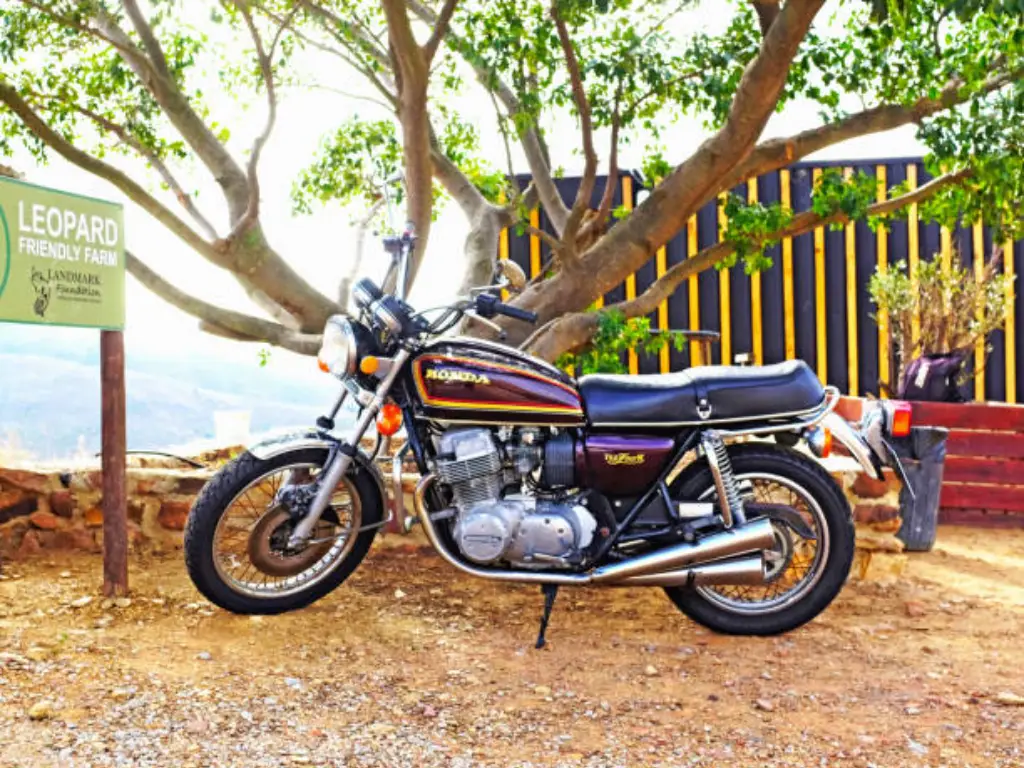
1. Honda CB750, 1969-1978
- Current Value: $15,000 – $35,000 (Mint Condition)
- Weight (Wet): 499 lbs (226 kg)
- !Known Issues!: Charging system rotors, cracked intake manifolds, carburetor diaphragm aging, and master cylinder leaks.
Honda released a product through the Paris motor show in 1968, but when they introduced the CB750 at the Tokyo motor show, it basically killed the British motorcycle industry overnight. It was the inaugural Superbike, and it brought the mass market to a transverse inline-four engine, a leakless overhead cam design, a front disc brake, and even an electric starter that actually functioned. The CB750, with its turn-key usability and vintage looks, embodies the ideal combination of both elements for the modern collector. It is the Universal Japanese Motorcycle (UJM) made perfect.
CB750 life is very painless compared to its competitors. The engine is turbine smooth and could run at 80mph all day long without shaking your fillings out of your mouth. Since Honda made more than 400,000 units, the knowledge base in the community is enormous. But no matter how reliable the bulletproof is, age is the foe. The most infamous example is the rubber intake boots that join the carburetors to the engine block; they tend to become brittle and crack open, resulting in leakages of vacuum, causing the bike to operate lean and overheat; a classic case of component age being a factor more than the number of miles.
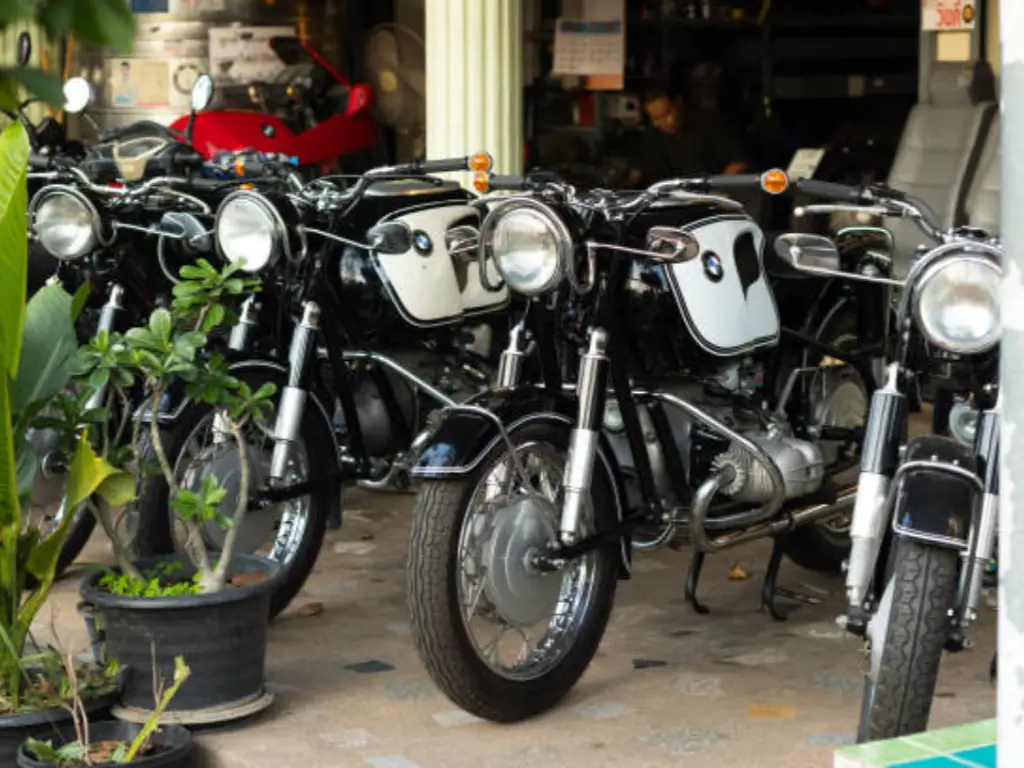
2. BMW R-Series /5, /6 & /7, 1970-1995
- Current Value: $6,000 – $18,000
- Weight (Wet): ~462 lbs (210 kg)
- !Known Issues!: Pushrod tube seal leaks, speedometer failure, alternator brushes, and diode board vibration failure.
The BMW “Airheads” are widely considered the gold standard for a motorcycle road trip. Made in the German fashion of precision, these bikes were created to go over the scenic route across the continents and not to race each other over a quarter of a mile. It is characterized by the shaft drive, which removes the dirty work of chain maintenance, a time-consuming task, and the horizontally opposed Boxer engine, which puts the cylinders into the wind so that they cool.
R-Series ownership is a logical game lesson. Everything is accessible. The rear suspension on subsequent models is quite squishy, and it is a comfortable mile-eater that is capable of carrying luggage and a passenger. You can not get an electronic cruise control here, but the mechanical throttle lock screws on some models were the grand-father of the same, so that you can rest your wrist on long stretches of highways.
These bikes have generated huge local communities of followers who exchange knowledge and parts. Nevertheless, they are liable to certain problems. The seals of the pushrod tubes are made of rubber, and after dozens of heating and cooling, they become hard and spill oil on your boots. The electrical system is strong yet simplistic; do not expect any form of navigation and heated grips unless you upgrade the alternator.
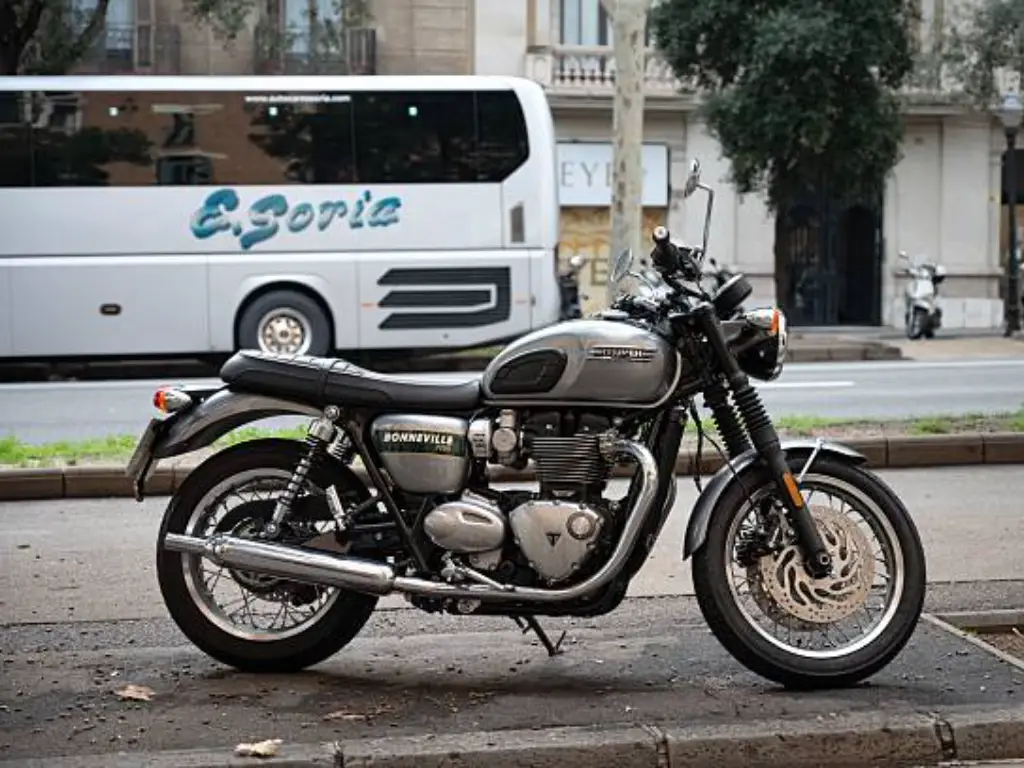
3. Triumph Bonneville T120, 1959-1975
- Current Value: $10,000 – $22,000
- Weight (Wet): 387 lbs (175 kg)
- !Known Issues!: The infamous “Lucas” electrical gremlins, vibration-induced cracks, oil leaks from engine cases, Amal carburetor degradation.
It started in the UK, and it is the prototype of the naked bike. The parallel twin engine provides a punchy output and an intoxicating soundtrack. It is not the modern Triumph Speed Twin or the liquid-cooled retro models made in Thailand; it is the original British iron, made in Meriden.
The T120 is a bike that talks to the soul. It is fast, lightweight, and arguably, one of the most beautiful machines that has been built. However, the possession of an old Triumph Bonneville needs patience and a good toolbox. The wiring harnesses originally used are infamously weak (due to Lucas, the Prince of Darkness). Moreover, since the engine cases are divided vertically, it is a constant struggle not to spill the oil on the ground in your garage and leave it inside the engine.
The original Bonnie also requires a rider who is eager to keep his hands dirty, in comparison with a modern Royal Enfield Interceptor 650 that is copying this appearance with the help of modern technology and the guarantee of reliability, which is provided by the vast manufacturing power. It is an unadulterated ride with no ABS, no rider modes, and only you, the throttle, and the road.
4. Kawasaki Z1 900, 1972-1975
- Current Value: $20,000 – $40,000
- Weight (Wet): 542 lbs (246 kg)
- !Known Issues!: Cam chain tensioner failure, hardened intake rubbers causing lean running, rusted exhaust systems, swingarm bushing wear.
Provided that Honda was the first to take the shot in the battle of the superbikes, Kawasaki was the one who threw the bomb, the Z1. The Z1 was developed as a more expensive car called New York Steak to compete directly with Honda on their level. It had a 903cc Double Overhead Cam (DOHC) engine that made huge horsepower during that era, and its top speed was awed by the other cars. This was the one who was unquestionably the king of the streets back in the early 1970s.
It is a chilling experience riding on a Z1 in these times and days, only to realize how long the chassis tech has evolved. The engine is a masterpiece of power, and it pulls strongly up to high rpm; however, the steel tube frame and skimpy forks could be easily overwhelmed by it (giving it the nickname “The Widowmaker”).
A Z1 needs specific care over its top end to be restored. This was weakly made cam chain tensioners, and, in the absence of pliable, airtight seals, the Z1 becomes more of a rocket ship than a coughing, sputtering frustration. It is a bike worth consideration only in case you are serious about the performance history, and you are able to afford it. It is an animal that has to be respected.
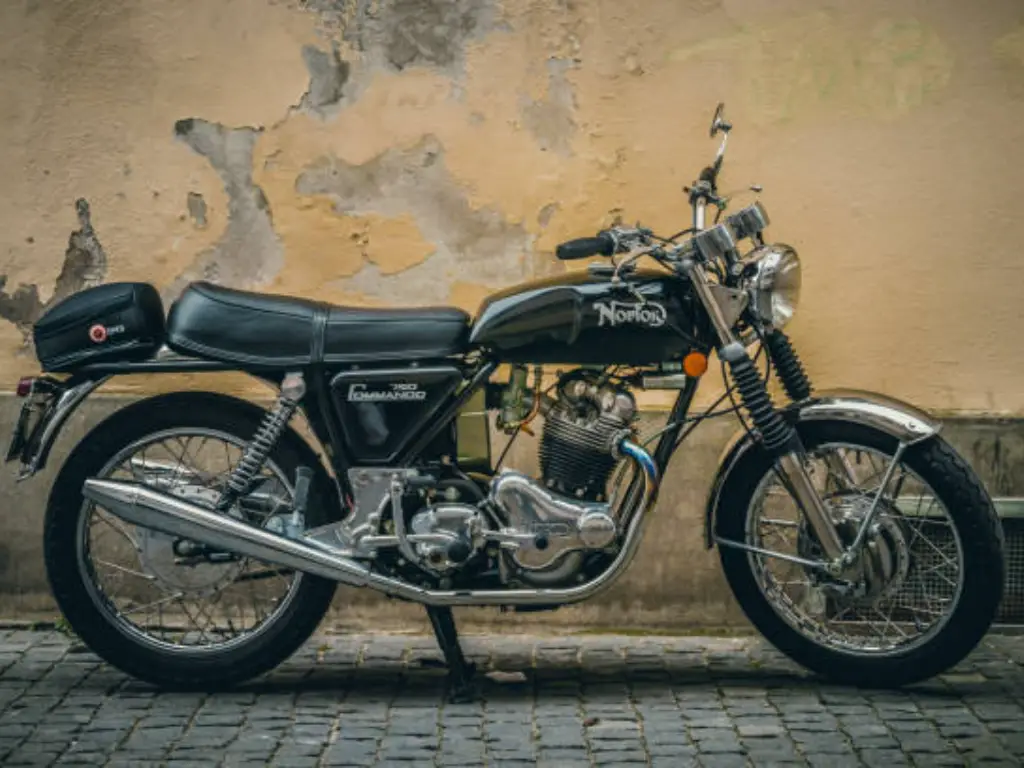
5. Norton Commando 750/850, 1967-1977
- Current Value: $12,000 – $25,000
- Weight (Wet): 415 lbs (188 kg)
- !Known Issues!: Isolastic rubber mount degradation, main bearing failures (on early models), gearbox shimming, “wet sumping” after sitting.
Norton Commando addressed the greatest issue of large British twins’ vibration. Norton fitted the engine, gearbox, and swingarm on rubber bushes with the cleverly designed system, which kept the rider out of the shaking frame. What this has created is a glass-smooth ride at high speed, and a bike that handles better than virtually anything of its era. It won 5 years in a row as the Machine of the Year, not without a reason.
But the Achilles heel of the genius of the Isolastic system is also its Achilles heel. The whole handling ability of the motorcycle hinges on the state of such rubber mounts. When the rubber dies or forms excessive play, the bike forms a horrifying weave as it accelerates. Further, Nortons are said to wet sump, which is the release by the tank of oil into the crankcase during long-standing stationary periods, necessitating a dubious drain-out process prior to ignition.
6. Yamaha SR400/500, 1978-1999
- Current Value: $4,000 – $9,000
- Weight (Wet): 348 lbs (158 kg)
- !Known Issues!: Hard starting (kickstart technique required), vibration loosening bolts, CDI unit failure, petcock vacuum leaks.
The Yamaha SR is the ultimate thumper- a single-cylinder that glorifies the simplicity of the mechanics. It is very light, slim, and has a relatively low seat height, which makes it an excellent first motorbike for vintage enthusiasts, maybe before you even receive your full unrestricted licence. It does not have a slipper clutch or electric start on older models, and you have to learn the kickstart ritual (finding the top dead center by using the compression release lever).
The canvas is a popular choice of scrambler or cafe racer construction because it is easy to modify the frame, and it has smooth lines. Although mechanically strong, the large single piston generates a musical vibration, which is like a natural Loctite remover, which is in constantly attempting to unscrew the fenders, lights, and license plates. It is a bike that is flexible to use in the city, but it needs frequent nut and bolt maintenance. Contrary to the high-tech wizardry of a new Yamaha MT series, the SR is a homage to the simplicity of motorcycling: one cylinder, one carburetor, two tires.
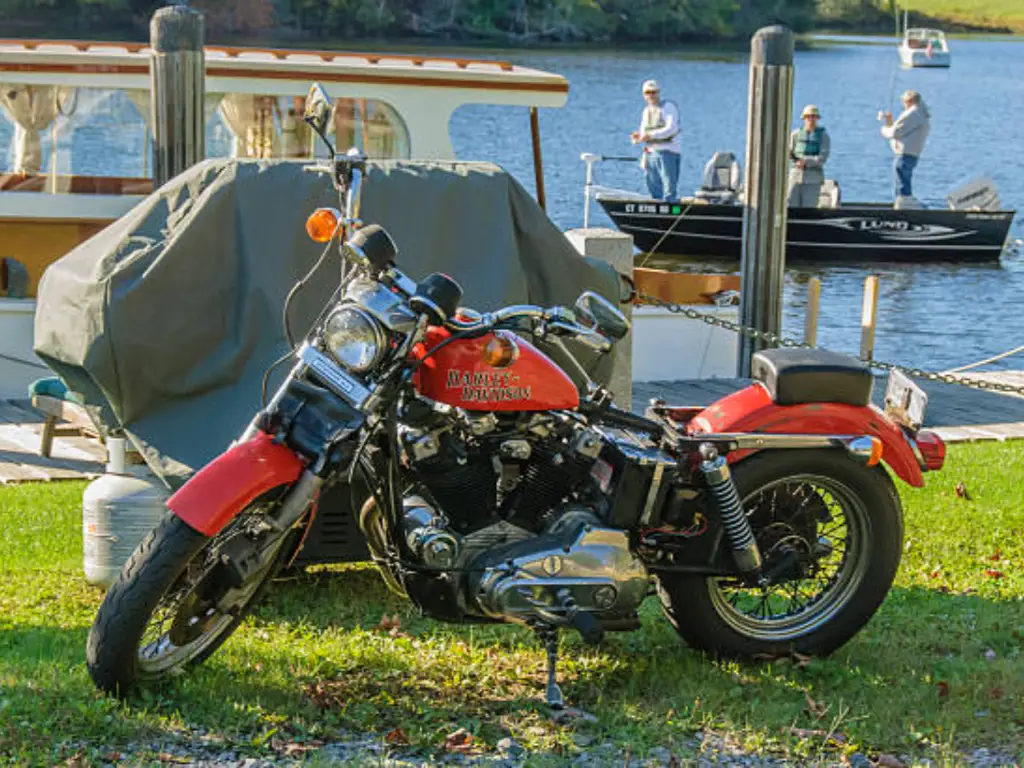
7. Harley-Davidson Sportster Ironhead, 1957-1985
- Current Value: $5,000 – $12,000
- Weight (Wet): ~500 lbs (227 kg)
- !Known Issues!: Generator failure, transmission issues, primary cover gasket leaks, and head gasket failures.
The Ironhead Sportster is crude, loud, and admittedly American. The negative aspect is that the Harley V-Twin (with its V-twin) generates torque (in heavy lb-ft) that you can feel in your chest, unlike the smooth Enfield or Honda. It provides a sensory attachment to the road, which is difficult to mimic.
The Ironhead is reputed to be hasty. It needs a rider who doubles up as a mechanic. Older models have a common failure point in the form of the generator system, which commonly results in a dead battery. Moreover, the tolerances of these engines were less strict than those of the present time, and gaskets and seals are constantly subjected to pressure and heat. It is a point of pride among Harley mechanics to have an Ironhead oil-tight.
It is the era in which the motorcycle manufacturers made the motorcycles in a way that they can be reused rather than thrown away. It is a respectable machine, almost like the heavy BSA singles of old, only with a very American flavor.
8. Ducati 900SS, 1975-1982
- Current Value: $30,000 – $60,000+
- Weight (Wet): 414 lbs (188 kg)
- !Known Issues!: Complex bevel drive shimming, brittle electrics, extreme scarcity of engine internals, fuel tank delamination.
The Ducati 900SS is mechanical art. With its long wheelbase, clip-on handlebars, and that distinct 90-degree L-Twin engine, it looks fast standing still. The “Desmodromic” valve actuation system (where valves are mechanically closed rather than using springs) allows for high RPMs and creates a unique mechanical sound. This is a bucket-list bike for serious collectors.
However, the 900SS is a demanding mistress. The bevel-drive engine is incredibly complex to set up; shimming the gears requires a level of precision that few modern mechanics possess. Parts availability is also a significant challenge. Unlike the Honda CB750, you cannot simply buy engine internals off the shelf at a local shop. Owning a 900SS is an investment of both money and significant effort to source components.
| Model | Engine Type | Wrenching Difficulty | Best Application |
| 1. Honda CB750 | Inline-Four | 🟢 Low | Daily Riding & Reliability |
| 2. BMW R-Series | Boxer Twin | 🟢 Low | Long Distance Touring |
| 3. Triumph Bonneville | Parallel Twin | 🔴 High | Short Weekend Rides |
| 4. Kawasaki Z1 | Inline-Four | 🟡 Medium | Performance Investment |
| 5. Norton Commando | Parallel Twin | 🔴 High | Handling & British Soul |
| 6. Yamaha SR400 | Single Cylinder | 🟢 Very Low | City Commuting & Beginners |
| 7. Harley Sportster | V-Twin | 🟡 Medium | Raw Torque & Customization |
| 8. Ducati 900SS | L-Twin | 🔴 Expert | High-End Collecting |
The Reality Check: Overcoming Vintage Component Failure
After reviewing these 8 legends, a clear pattern emerges in the “Known Issues” sections. Regardless of whether the bike was built by high-volume motorcycle manufacturers or boutique shops, regardless of whether it hails from the UK, Japan, or the US, the failure points are identical: Rubber cracks, seals leak, and metal corrodes.
This is the unavoidable entropy of vintage machinery. Even a “New Old Stock” (N.O.S.) part found on eBay is often a poor solution. A rubber intake boot for a Z1 might look perfect in the package, but on a molecular level, it has hardened over the last 40 years. Install it, and it will likely crack within months of heat cycling.
Why modern reproduction parts beat N.O.S.
The best approach to ensuring the sustainability of these icons on the road is to blend their traditional engineering with the new science of materials. This is where the industry has moved to, and companies such as Sunway Autoparts have become important to the restoration ecosystem.
Sunway Autoparts has been known to fill this gap between vintage and modern durability since 2007. Instead of searching through trashy original components, intelligent restorers are now resorting to high-quality reproduction components that employ supply chains that integrate more than 200 specialized manufacturers.
The Value of Modern Engineering in Old-Fashioned Skins:
- Material Superiority: The aftermarket manufacturers can create gaskets and seals that are resistant to the modern ethanol-blended fuels, yet in the 1970s, rubber could not withstand it, using modern UV-resistant silicones and fluoroelastomers (Viton).
- Precision Manufacturing: Sunway makes use of CNC milling, EDM (Electrical Discharge Machining), and high-end injection molding. This would guarantee that a spare component of a 1920s Harley or a 1990s Ducati would fit within much tighter tolerances than the original, which is less precise but somewhat loose, factory tolerances.
- Aesthetic Durability: In the case of chrome components, the current plating methods applied by the best suppliers of the product are more of a bluer reflective mirror finish, which has a much higher level of corrosion resistance than the single-stage plating of the past.
In the case of trying to find that exhaust bracket to fit a Triumph or that turn signal lens to fit a BMW, being able to search a centralized list of the American, European, and Japanese brands will save dozens of hours of forum browsing. It gives you the ability to substitute a defective part with one that seems to be the same as the original, but with a design that should last the next 50 years.
How to Choose the Right Vintage Motorcycle for Your Collection
The correct selection of the bike depends on being truthful to yourself about two variables: your Budget and your Wrenching Ability.
This is a fast decision guide that can be used to reduce your search:
- The “I want to ride immediately” Buyer:
- Recommendation: Honda CB750 or BMW R-Series.
- Why: High parts availability, robust engineering, and they handle modern traffic well.
- The “I want to learn mechanics” Buyer:
- Recommendation: Yamaha SR400 or Triumph Bonneville.
- Why: Simple engines. Everything is accessible. You will learn how to fix them because you will have to, but the learning curve is manageable.
- The “Investment & Preservation” Buyer:
- Recommendation: Ducati 900SS or Kawasaki Z1.
- Why: These models are appreciating rapidly. High restoration costs are justified by the increasing asset value.
Final Buying Tip: You can use a so-called Reverse Search before handing over the money to purchase any vintage motorcycle. Do not only seek the bike, seek the parts. Visit a full-fledged catalog of suppliers such as Sunway Autoparts and find the head gasket, intake boots, and electrical switches of the model. When you find a complete list of parts of the reproduction, purchase the bike. When you get no results on the search, leave the building unless you have a machine shop.
Conclusion
The ultimate vintage motorcycle is the one that is running. These machines were constructed so that they can be ridden, heard, and experienced. They are kinetic history.
Although the fear of breakdowns may continue to scare away a number of potential owners, the truth is that the vintage ownership is closer than ever before with the right approach. They might not have the ABS, traction control, and rider selections that the modern bikes have, but they do pay a genuine tribute to a golden age of motoring.
By knowing the foibles of these 8 icons and collaborating with current parts gurus such as Sunway Autoparts to remedy the natural aging of parts, you will manage to leave a lasting legacy of these machines in their present state to be enjoyed by the next generation of locals. Do not accumulate them; ride them.