
When searching for the best place to buy OEM Chevy parts, most lists point you toward the lowest listed retail price. This is a trap. Experienced mechanics and parts distributors know that the sticker price is irrelevant. To evaluate the true best purchasing channel, you must calculate the Landed Cost.
True Cost = Part Price + Freight/Shipping + Hazmat Taxes + Core Charge Return + Vehicle Downtime
The Ultimate OEM Chevy Parts Sourcing Strategy
If you need an immediate answer to get your vehicle off the lift or to stock your distribution warehouse, bypass the research and use this quick decision matrix based on your exact procurement goal:
| Your Procurement Goal | The Best Sourcing Channel | Primary Strategic Advantage |
|---|---|---|
| Individual DIYers: Repairing a personal daily driver, prioritizing low unit price and fast retail shipping. | RockAuto / Local Dealer | Deep retail discounts on single-unit consumables, or immediate local pickup for heavy items (avoiding freight). |
| Distributors & Suppliers: Securing wholesale inventory, sourcing classic car parts, and overcoming discontinued (NLA) bottlenecks. | Direct OEM Manufacturers (e.g., Sunway) | Bypasses retail markups, solves classic car part shortages through reverse engineering and flexible supply chain control. |
Fitment First: Decoding VIN and RPO Codes to Buy the Right Chevy Parts
The “best” purchasing channel becomes the worst if their catalog system sends you the wrong component. A vehicle occupying a service bay for an extra week due to a fitment error destroys profit margins and daily utility.
For Chevy and GM vehicles, the 17-digit VIN is merely the starting line. To guarantee absolute precision for suspension, driveline, and interior trims, you must verify your RPO (Regular Production Option) Codes.
- Step 1: Locate the silver Service Parts Identification (SPID) sticker (usually inside the passenger glovebox).
- Step 2: Identify the 3-character alphanumeric codes (e.g., Z71 for off-road suspension packages, or GU6 for a 3.42 axle ratio).
- Step 3: Cross-reference these exact codes with the official catalog before authorizing any purchase.
Evaluating the Top-Rated Online Vendors for OEM Chevy Parts
The retail e-commerce market is dominated by three main ecosystems. Understanding what each platform is uniquely engineered to sell—and what they fail at—is the key to smart procurement.
GMPartsDirect & GM Dealer Networks
These platforms are online storefronts operated by massive brick-and-mortar GM dealerships. They offer close to wholesale pricing due to sheer volume.
- The Advantage: 100% genuine GM parts tied directly to the factory database.
- The Best Place For: Highly sensitive core components. If you are replacing catastrophic failure points like AFM/DFM valve lifters or leaky Tahoe Magneride shocks, this is your only safe retail option. Aftermarket knock-offs in these categories will inevitably lead to secondary engine teardowns.
RockAuto: The DIY Mechanic’s Go-To
Renowned for its brutally functional interface and massive catalog, RockAuto is the undisputed king of cheap, fast-moving consumables.
- The Advantage: Unbeatable unit pricing for brake pads, filters, and spark plugs.
- The Trap: The Warehouse Truck Icon. RockAuto drop-ships from fragmented warehouses. If your brake rotors ship from Warehouse A and your oil filter from Warehouse B, the stacked shipping fees will instantly consume your discount. You must micro-manage your cart to align those truck icons.
Amazon and eBay: The Counterfeit Minefield
These platforms offer unparalleled convenience but carry an unacceptable level of mechanical risk due to “Commingled Inventory” fulfillment practices.
- The Risk: Authentic sellers and counterfeiters often have their inventory mixed. Installing a fake 8L90 transmission thermal bypass valve bought here won’t just trigger a Check Engine Light; it will fail to regulate the 194°F fluid temperatures, resulting in a $4,000 transmission replacement.
- The Verdict: Reserve these marketplaces strictly for non-critical cosmetic pieces, interior trim clips, or detailing supplies.
The “Shipping Cost Trap” & When the Local Dealership Wins
The illusion that “online is always cheaper” shatters when you factor in physical logistics. The physical properties of your Chevy part dictate the smartest purchasing geography.
Scenario A: The Lightweight Sensor (Online Wins). If you need a primary O2 sensor, an online dealer network will always win. The part weighs ounces, ships for pennies, and the 30% discount off MSRP goes straight into your pocket.
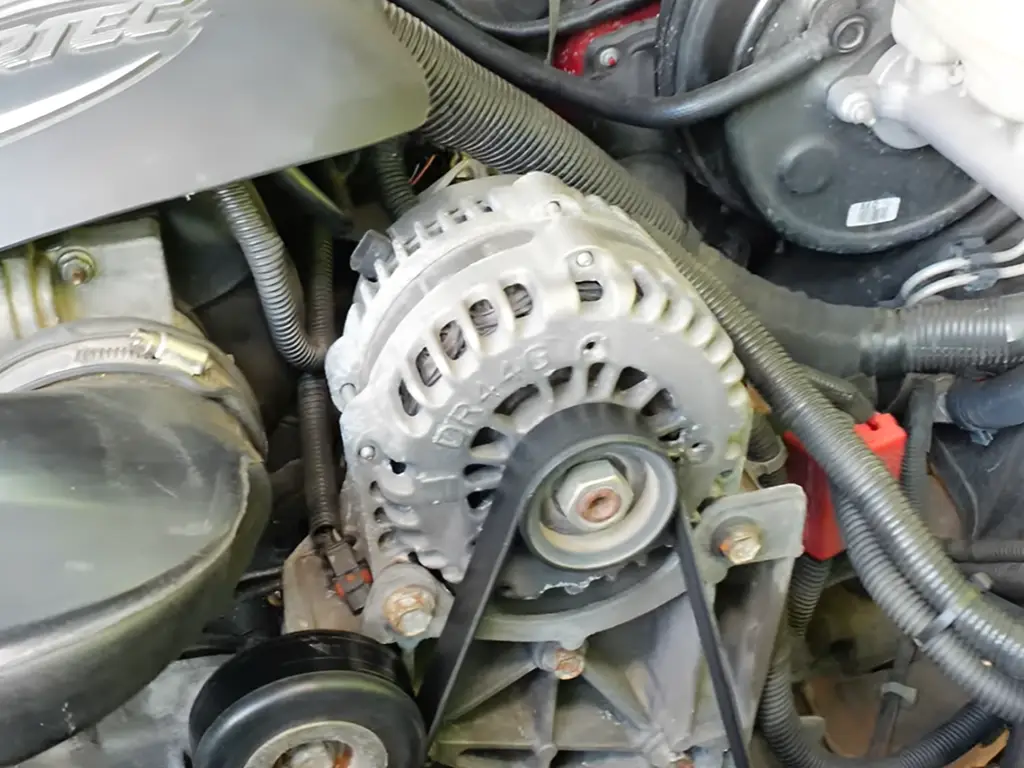
Scenario B: The Heavy Cast Iron & Hazmat Trap (Local Wins). If you are buying heavy cast-iron brake rotors or a lead-acid battery, the online sticker price may be $40 cheaper. However, adding $60 in LTL freight charges or mandatory Hazmat fees instantly flips the math. Furthermore, parts like alternators carry a Core Charge. Paying return shipping to send your heavy, broken alternator back to an online retailer wipes out your refund. Walking into your local Chevy dealer and executing an on-the-spot Trade-In is the mathematically superior choice.
GM Genuine Parts vs. ACDelco: Understanding the Hierarchy
A frequent point of confusion is whether ACDelco is “true OEM.” General Motors has restructured its parts hierarchy into three distinct tiers. You must know what is inside the box before you buy:
GM Genuine Parts (Original Equipment)
The absolute identical part your Chevy was built with on the assembly line. This is the non-negotiable standard for critical powertrain sensors and internal engine components.
ACDelco Gold (Formerly Professional)
High-tier aftermarket alternatives engineered to meet stringent OE specifications. The optimal choice for high-quality, cost-effective routine maintenance.
ACDelco Silver (Formerly Advantage)
An economy line designed for older vehicles and extreme budget repairs. Not recommended for modern, heavy-duty applications.
Strategic Purchasing Guide: From Retail Carts to OEM Manufacturing
The definition of the “best place to buy” completely fractures depending on your scale. We must separate the individual garage mechanic from the commercial parts distributor.
For Individual Buyers: Navigating In-Stock Retail (Price & Speed)
If your goal is to repair your personal daily driver, your priorities are simple: absolute unit price, immediate availability, and a generous return policy. For you, the retail channels analyzed above—leveraging RockAuto for consumables and authorized GM sites for electronics—remain the optimal strategy.
For Distributors & Suppliers: Prioritizing Supply Chain Capability
Procuring components for a modern Silverado is merely a pricing game. However, if you operate a regional auto parts distribution network or a commercial repair facility, relying on retail B2C shopping carts will systematically crush your profit margins. Distributors do not just buy “parts”—they buy Supply Chain Capability.
To secure a reliable pipeline, you must optimize your procurement strategy around two core pillars:
- Overcoming High MOQs via SKU Consolidation: Do not let factory minimums lock up your cash flow. Partner with manufacturers that offer flexible batching, allowing you to negotiate mixed-SKU orders to maintain a broad inventory catalog without accumulating dead stock.
- Establishing Non-Negotiable Quality Standards: “OE Spec” is a marketing buzzword; you need engineering proof. Before committing to bulk wholesale orders, demand transparent material audits. If you are sourcing cast-iron exhaust manifolds or polyurethane suspension bushings, the alloy composition and durometer ratings must be verified via spectrum analysis to match factory decay rates.
While modern parts sourcing requires diligence, the true high-margin battleground lies in older and classic Chevy models (e.g., C10 pickups, OBS trucks, and 90s Camaros). As these iconic vehicles age, your primary threats are not MSRP markups, but rather unpredictable availability and the catastrophic inventory blackouts that plague the classic car restoration market.
Conquering NLA Parts: Why Sunway is the Ultimate OEM Partner
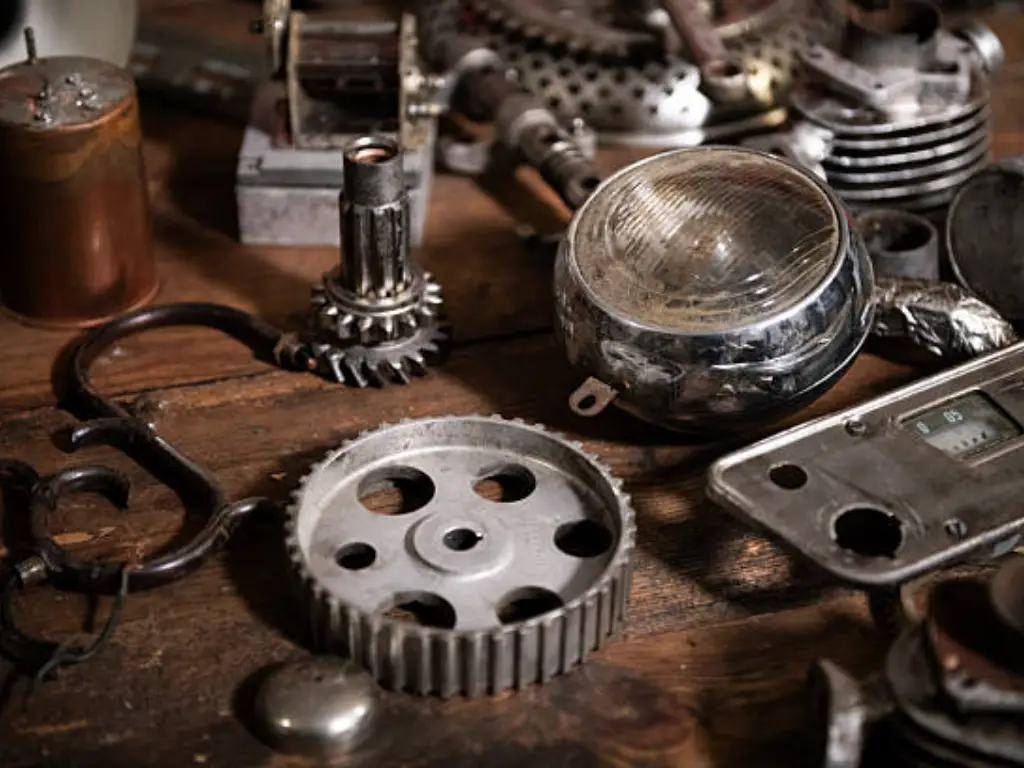
The ultimate test of procurement is the NLA (No Longer Available) designation. When GM officially discontinues a classic Chevy component—whether it is a custom dash bezel, a specific weatherstripping seal, or a specialized suspension bushing—every retail website on earth becomes useless.
To survive NLA scenarios, classic car suppliers must bypass distributors entirely and partner with a manufacturer capable of industrial-grade reverse engineering. This is exactly where Sunway Autoparts bridges the gap for global distributors. When auditing your OEM supply chain, Sunway delivers on the three non-negotiable standards for classic car parts:
- In-House Tooling & Reverse Engineering: Outsourcing molds leads to IP theft and quality control disasters. Sunway controls the tooling under its own roof, utilizing 3D laser scanning to capture micron-level tolerances directly from your discontinued original samples.
- Guaranteed Lifecycle Supply & Mold Preservation: The greatest enterprise fear is solving a supply chain crisis today, only to have the manufacturer vanish next year. Sunway doesn’t just execute one-off runs; we securely archive your custom molds and maintain dedicated long-term production capabilities. This guarantees a stable, repeatable supply chain year after year, ensuring absolute quality consistency across every future batch you order.
- Rigorous QC & Material Audits: “OE Spec” is just a marketing buzzword without engineering proof. Through material spectrum analysis, we ensure our newly manufactured polymers and alloys perfectly match the factory original’s decay rates and durability, drastically minimizing B2B return rates.
Stop losing revenue to discontinued Chevy parts. Transform NLA obstacles into exclusive, high-margin product lines with a true OEM manufacturer.
Explore Sunway’s Reverse Engineering Solutions


 English
  Spanish
  French
  German