It is stressful to have a huge estimate on powertrain repair, and you are not sure whether it is the source or the price of the problem is in the engine or in the transmission. The key to this is understanding the difference as there is no better defense against overpaying than to understand that your engine is the heart and that the transmission is the brain that controls and spreads this power to the wheels. This manual will dissect away their fundamental mechanical distinctions, tangible failure symptoms, actual repair costs and no cost driving habits to enable you to precisely identify the problem and maximize your automobile life span.
Understanding Your Powertrain: Basics & Synergy
You can never be able to correctly diagnose a weird clunking noise or a sluggish gear change without having a basic idea of what these systems are and how they talk to each other. They are not the separate components that operate independently instead, they are very closely coordinated and integrated as a machine.
Engine vs. Transmission: The Core Differences
In order to appreciate the powertrain of your vehicle, you need to go past the simple applications of the essentials and realize the vastly divergent mechanical character of these essentials. The difference between the generation of power and its management is a fundamental shift in the manner these two elements of operation work and eventually disrupt:
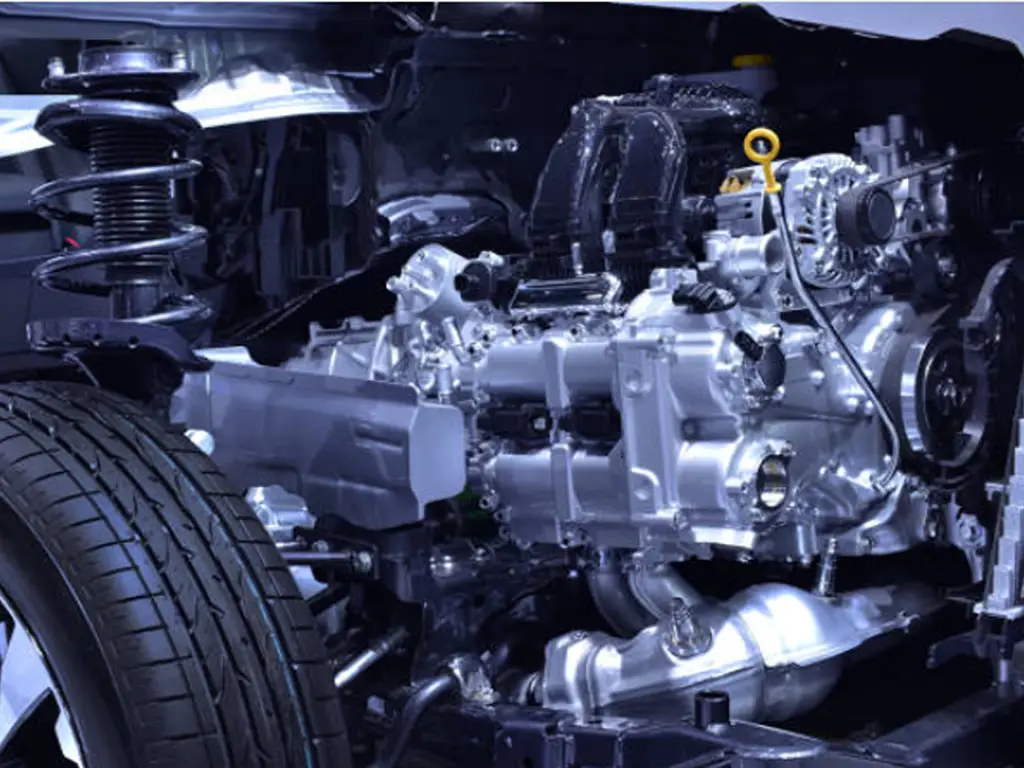
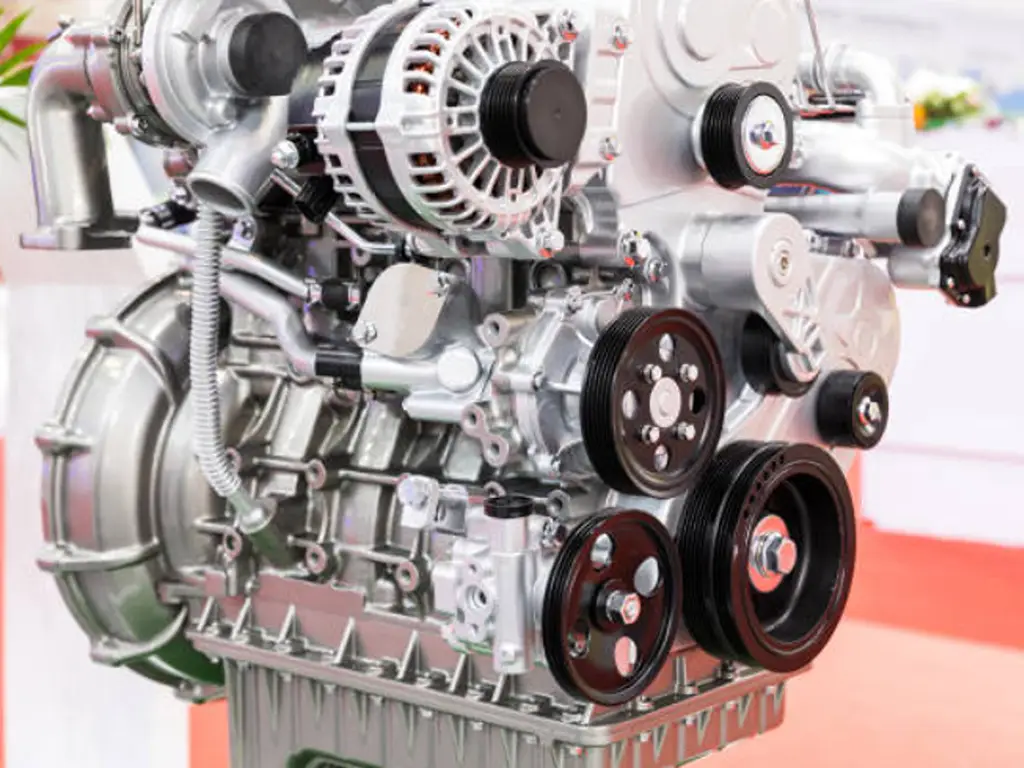
The Engine: The Brute-Force Generator
- Core Role: Converts the latent chemical energy of fuel into uncooked, mechanical rotational force (torque).
- Mechanism: Gets air and fuel mixed in hard cylinders, and uses controlled and violent explosions to push pistons violently up and down.
- Structure: Built like a heavy-duty vault. It is very tough and designed to constantly withstand extreme combustion heat and explosive pressure.
- Failure Mode (Chronic): Tends to degrade gradually over time. An aging engine might burn oil or idle roughly, but it will often continue to run and get you safely home despite these chronic issues.
- Maintenance Focus: Centers on managing long-term wear, thermal stress, and carbon buildup through routine, fundamental oil changes.
The Transmission: The Precision Manager
- Core Role: Intelligently manipulates the engine’s raw power to perfectly match the vehicle’s speed and torque demands.
- Mechanism: Utilizes a complex matrix of gear ratios—sacrificing speed for massive torque to get you moving, and later compromising torque for efficient high-speed cruising.
- Structure: Acts as a highly sensitive, microscopic maze of hydraulic channels and delicate friction clutches that operate with surgical precision.
- Failure Mode (Acute): Has almost zero tolerance for neglect. A single drop in hydraulic pressure can cause complete gear slip, instantly leaving you stranded with a catastrophic failure.
- Maintenance Focus: Extremely sensitive to fluid quality; requires strict, preventative hydraulic fluid maintenance to prevent catastrophic internal friction.
This is the primary distinction in mechanical sensitivity that should be understood to understand the reason why powertrain maintenance cannot be a one-size-fits-all process.
The Synergy: How They Work Together
The perception that the engine and the transmission are two separate distinct machines that are sitting in the neighborhood under your hood is a common misconception. In the real world, they are physically screwed together in such a way that they act as one, operating in higher gears within a very interdependent mechanical ecosystem. A high horsepower engine, which can generate huge horsepower, is of no use at all when this violent power cannot be captured, controlled and driven; similarly, an extremely developed transmission is nothing more than a heavy empty gearbox without a raw rotating power to control. They do not simply work side by side, but by one another.
This continuous, uninterrupted sequence of kinetic energy is the actual magic of the powertrain of a vehicle. The following is the physical flow of power step-by-step that takes place when you press the accelerator:
- Generation: The mixing of fuel and air takes place in the cylinders of the engine pushing the pistons downwards at a fast rate rotating the crankshaft from a standstill.
- Connection: This rotational energy is transferred to the rear of the engine and it contacts the flywheel, and in the case of an automatic-powered car, the torque converter, or in a manual-powered car, the clutch. This serves as an important mechanical solution, as it enables the engine to disconnect temporarily with the wheels when you are at a red light to prevent the engine stalling.
- Manipulation: The unprocessed power gets into the transmission. The transmission then picks the ideal gear ratio, either to compound the twisting force (when accelerating at a heavy and slow speed) or to accelerate the rotational velocity (when accelerating at a fast and efficient highway speed).
- Distribution: The optimized power is distributed out of the back of the transmission and through the driveshaft.
- Propulsion: The power is driven to the differential and axles which ultimately turns the wheels and drives you forward.
Diagnosing the Problem: Symptoms & Repair Costs
Although the two parts in your car act as one in smooth running, such harmony does not last long. When a motor vehicle begins behaving in a way that is unpredictable, it is highly crucial to determine who is at fault. The symptoms of failure of the engine and the transmission are rather different as they have no common physical functions.
A table containing the diagnostic comparison between the actual symptoms of engine failure and transmission failure along with the realistic, data-oriented cost estimates within the US market are detailed in the table below.
| Diagnostic Category | Engine Failure Symptoms | Transmission Failure Symptoms |
| Audible & Visual Signs | – Knocking/Ticking: Sharp, rhythmic metallic tapping from under the hood (indicates oil starvation or rod bearing failure). – Colored Smoke: Blue smoke (burning oil), white smoke (leaking coolant/blown head gasket), or black smoke (burning too much fuel). – Check Engine Light: Frequently flashes for severe misfires. | – Clunking/Whining: Harsh metallic grinding or a high-pitched whine when the vehicle shifts gears. – Fluid Leaks: Puddles of bright red, dark brown, or sweet-smelling fluid under the middle of the vehicle. – Transmission Light: A specific gear icon or “O/D Off” light may flash on the dashboard. |
| Physical & Drivability Symptoms | – Rough Idle: The car shakes violently when stopped at a red light. – Stalling: The engine suddenly dies while driving or refuses to start. – Loss of Power: Pressing the gas pedal results in sluggish acceleration and sputtering (misfires). | – Gear Slipping: You press the gas, the engine revs loudly (RPMs spike), but the car doesn’t accelerate. – Delayed Engagement: You shift from Park to Drive, and it takes 2 to 3 seconds for the car to actually move. – Hard Shifting: The car violently jerks or “kicks” you when moving from one gear to the next. |
| Minor Repair Costs (Average) | $150 – $600 (e.g., Replacing spark plugs, ignition coils, oxygen sensors, or fixing minor vacuum leaks.) | $200 – $800 (e.g., Fluid flushes, replacing a faulty shift solenoid, or patching a minor transmission pan seal leak.) |
| Major Repair / Replacement Costs | $3,000 – $7,500+ (e.g., Blown head gasket repair, complete engine block rebuild, or installing a replacement engine.) | $1,500 – $5,000+ (e.g., Complete transmission rebuild, replacing broken planetary gears, or installing a new transmission unit.) |
Critical Warning:
When you have a flashing Check Engine light immediately stop because this means that you are having a serious engine misfire that will cause your catalytic converter to be destroyed within minutes. When you have an inkling that there is a transmission problem, draw the transmission dipstick (assuming your car has one). In case the liquid appears deep red cherry then it is healthy. When it is dark brown, black and even smells of burnt toast, then internal friction is actively killing your transmission clutch packs.
Preventative Maintenance: Fluid Changes & Habits for Longevity
These huge repair bills can be avoided without it being costly. As a matter of fact, the only two elements that matter in prolonging the life of your powertrain are fresh fluids and intelligent day-to-day driving.
Essential Fluid and Filter Maintenance
Fluids are the blood of your engine, and it is not enough to tell your mechanic that you need to do a change of some fluid. In order to actually lengthen the life of your car, you need to select the particular fluid formula that precisely fits your everyday driving, the kind of climate you are in and the age of your mechanical parts.
| Maintenance Factor | Engine Oil | Transmission Fluid |
| Core Function | Acts as a hydraulic fluid to enable pressurized gear shifting, cools internal clutches, and lubricates gears while serving as an essential lubricant. | Acts as a hydraulic fluid to enable pressurized gear shifting, cools internal clutches, and lubricates gears. |
| Formulation Guide | – Full Synthetic: Essential for severe stop-and-go city commuters, extreme hot/cold climates, and modern turbocharged engines. – High-Mileage/Conventional: Best for aging engines (75,000+ miles) or classic cars, as they contain special additives to swell old seals and prevent oil leaks. | – OEM-Spec ATF: Best for standard daily driving. You must use the exact specification listed in your manual (e.g., Dexron, Mercon). – Heavy-Duty Synthetic ATF: Absolute necessity for drivers who tow trailers, haul heavy loads, or drive in steep mountainous areas where transmissions run dangerously hot. |
| Environmental Stress | High contamination. Constantly exposed to raw fuel, exhaust gases, and extreme combustion temperatures. | Low contamination. Operates in a relatively sealed environment, but degrades slowly from heat cycles and internal friction. |
| Replacement Interval | Every 5,000 to 7,500 miles (depending on synthetic vs. conventional use). | Every 30,000 to 60,000 miles. (Ignore “lifetime fluid” marketing claims; all chemical fluids degrade over time). |
| Average Service Cost | $50 – $120 per service. | $150 – $300 per service (typically includes dropping the pan and replacing the filter). |
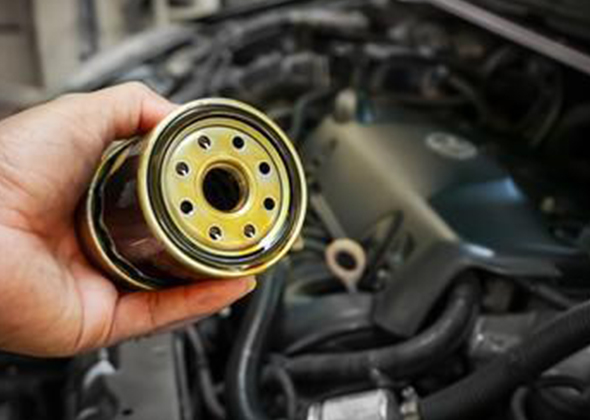
A Note on Filtration: Even the costliest and high quality synthetic fluid can be totally useless when it is pushed through a plugged low-quality filter. In carrying out such important fluid modifications, never forget to use your fresh oil together with high-precision replacement filters and gaskets.
Golden Driving Habits to Extend Lifespan
It is possible to purchase the priciest synthetic oils available in the market, yet bad driving will still ruin a powertrain. The following are behavioural modifications that are free and can be implemented today in order to extend the life of your vehicle:
- The Complete Stop Rule (Transmission Saver): This is the first leading cause of premature transmission failure. By reversing In and out of a driveway (Reverse) and accelerating (Drive), the vehicle should be brought to a complete, utter halt and then the gears changed. to maintain maximum torque. Moving on wheels that are in motion strains the fragile internal planetary gears of the transmission to take up all the kinetic momentum of a 4,000-pound car and shear and break during usage.
- The Cold Start Patience (Engine Saver): When your car is left over night, all the oil is emptied into the oil pan bottom. The oil pump requires approximately 10-20 seconds to be pumped to the top of the engine when you switch the key. Always wait at least half a minute, then accelerate violently, to avoid scraping of metals with metals.
- The Incline Parking Technique ( Transmission Saver): Use your foot over the brake pedal, the first action when parking on a hill is use a handbrake (parking brake), and then pull your lever to Park. This makes sure that the weight of the vehicle is supported by the brake pads and not the transmission with its small metal pin (which is considered the parking pawl) which can easily break under heavy load (a small metal pin).
Classic Cars vs. Modern Vehicles: Key Drivetrain Differences
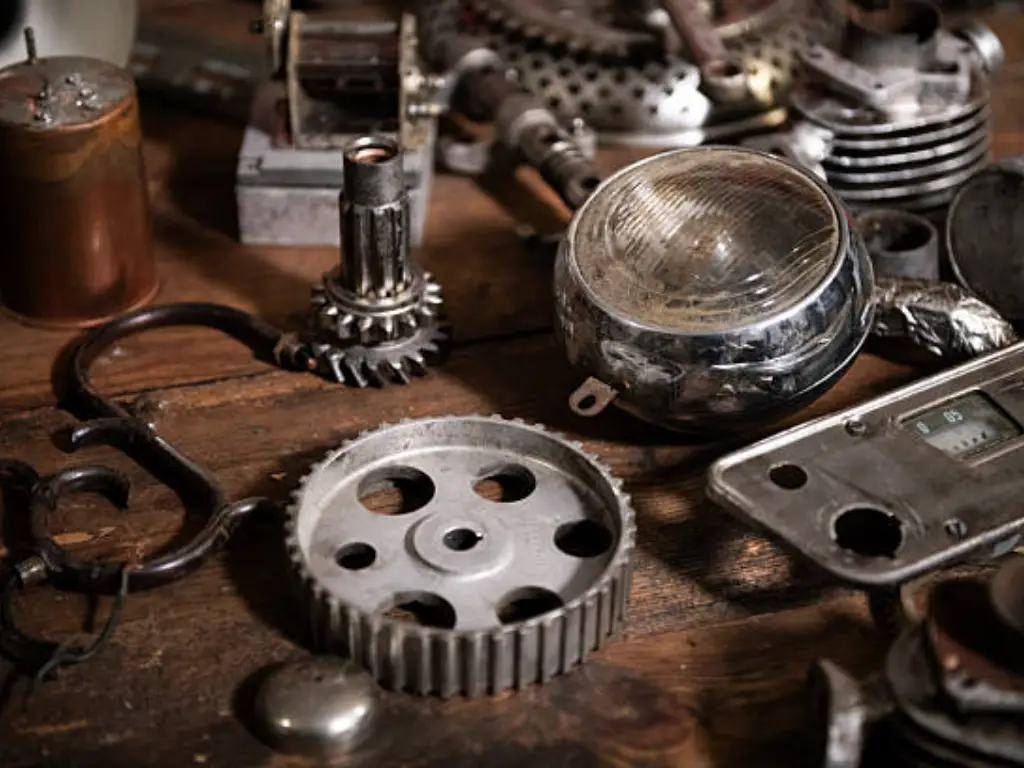
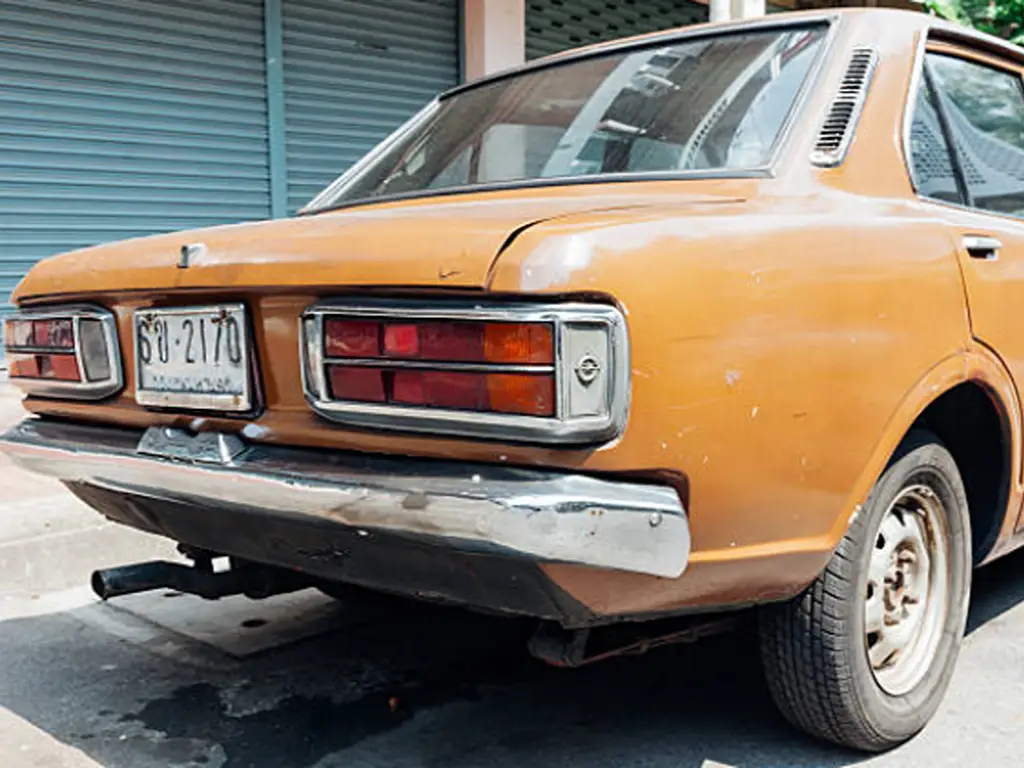
Although the car of today is an essentially rolling computer controlled by ECUs and TCMs, the car of yesterday (before 1990) is controlled by nothing but pure mechanical ingenuity- carburetors, vacuum lines and physical centrifugal governors. Although it has a simple analog drive experience that is raw and soulful, the maintenance of these older powertrains is another significant challenge to repair shops nowadays.
With these vehicles aging beyond the 30 or 40 years, it is only natural that decades of thermal cycling as well as being exposed to the environment cause extreme corrosion of metals, brittle seals, structural fatigue. Better still, it is a nightmare to have to locate old parts of the factory. Desperation causes mechanics to resort to the inexpensive aftermarket alternatives, only to discover that bad mechanical tolerances result in annoying leakage as well as hours of frustrating shop work to get the part to go.
Tackling Classic and Aging Car Powertrain Issues
To the auto repair shops and restoration experts, such mechanical setbacks may conspire to transform an otherwise easy restoration project into an extremely irritating liability that is also time-consuming. Herein, an alliance with a specialist in the supply of automotive parts such as Sunway Autoparts entirely transforms the reality of operation. Instead of spending hours in search of hard to find parts, professionals can use a carefully selection of parts that have a history dating back to 1920 including car, truck, and motorcycle parts.
The answer is not to strap some aftermarket copycat part design into an engine or transmission part that has become entirely obsolete. Sunway has a professional in-house ODM and OEM mold design group to reverse-engineer and produce remanufactured components of the exact specifications. This will enable the technicians to utilize their precious bay hours in the activities that they are most skilled in; that is to install perfectly matched components, instead of altering poorly made replacements to fit to be installed.
Other than just a perfect fit, these old age powertrains need to have materials capable of enduring the contemporary environmental pressures. In order to battle the excessive corrosion which has afflicted old metals, Sunway applies high-tech vacuum metallization and the stringent chrome-plating techniques. The resultant extremely reflective surface is made incredibly durable in hostile environments through an elaborate procedure of polishing, acid washing and copper plating. The components of Sunway are supported by stringent quality checks in the warehouse and a 12-month warranty which can guarantee a shorter time of turnaround, original quality and save a lot of expensive customer returns.
Conclusion: Making Informed Repair Decisions
Mechanical differences between your engine and your transmission are not something that you simply need to know in the field of automotive trivia, but it is also a very valuable financial instrument. You can guard against disastrous breakdowns, predatory repair bills, by identifying the physical symptoms of failure that are unique, by knowing what realistic costs you will incur in doing minor and major repair, and by being in the habit of using zero-cost preventative maintenance.
Knowledge and good resources are the only sure assets you possess, whether you are a daily commuter, trying to maintain your modern sedan running smoothly, or an auto repair professional and looking to find reliable and corrosion-resistant parts to replace the complex vintage vehicle restoration project.