
Being a classic car owner is a romantic, romantic move, but the process of restoring a classic car requires dedication as it is a financial and logistical minefield that can swiftly empty the pockets of an amateur car lover or ruin the bottom line of a professional auto repair shop. The essence of this guide is the absolute risk mitigation. This data-driven blueprint, by eliminating the innocent sentimentality, offers you the precise tactics to evade the so-called money pit projects, avoid exploding labor expenses due to incorrectly fitting components, and manage the overly fragmented supply chain today. Having the scientific pre-refurbishment check-up to the determination of the actual ROI of the contemporary upgrades, this article will present the practical acquisition secrets that will ultimately spell the difference between lucrative, highway-ready masterpieces and garage catastrophes that cost more than the budget can absorb.
The Reality Check: A Pre-Refurbishment Inspection Checklist
A project has to undergo a stringent feasibility test before any single bolt is turned. The main idea in this is risk control, either is a vehicle a potential candidate or a financial black hole, especially in terms of corrosion risks.
Check the foundation of the project with the help of this diagnostic checklist:
- [ ] Structural Integrity & “Terminal” Rust: Surface rust is an expected budget item; structural rot is a project killer. Use a magnet and a borescope to inspect frame rails, cowls, and A-pillars. Heavy metal fabrication often exceeds the vehicle’s eventual market value, and it’s important to check for any dents that could affect the overall integrity.
- [ ] Powertrain Authenticity (Matching Numbers): For Concours-level builds, verify the engine and transmission serial numbers. In the high-end auction market, a non-original engine can trigger a devastating 30% to 50% decrease in final valuation.
- [ ] Parts Availability & Sourcing Viability: Search for NLA (No Longer Available) trim pieces or unique switches before buying the car. If proprietary electrical relays are missing from the global market, your project will stall at the 95% completion mark.
- [ ] Documentation & Title History: Ensure the VIN perfectly matches the chassis stampings and the paperwork is legally sound. A flawless restoration on a car with a clouded title negates your entire investment
- [ ] Defining the “Project Scope”: Are you building a reliable “Driver,” a “Show Car,” or a “Restomod”? Failing to rigidly define this early leads to “scope creep,” which typically inflates restoration budgets by an average of 40%.
The choice of the one to perform the restoration is equally crucial as the object of the restoration. You need to know the hidden cost of each, before deciding the direction to take, to suit your budget with your end-game.
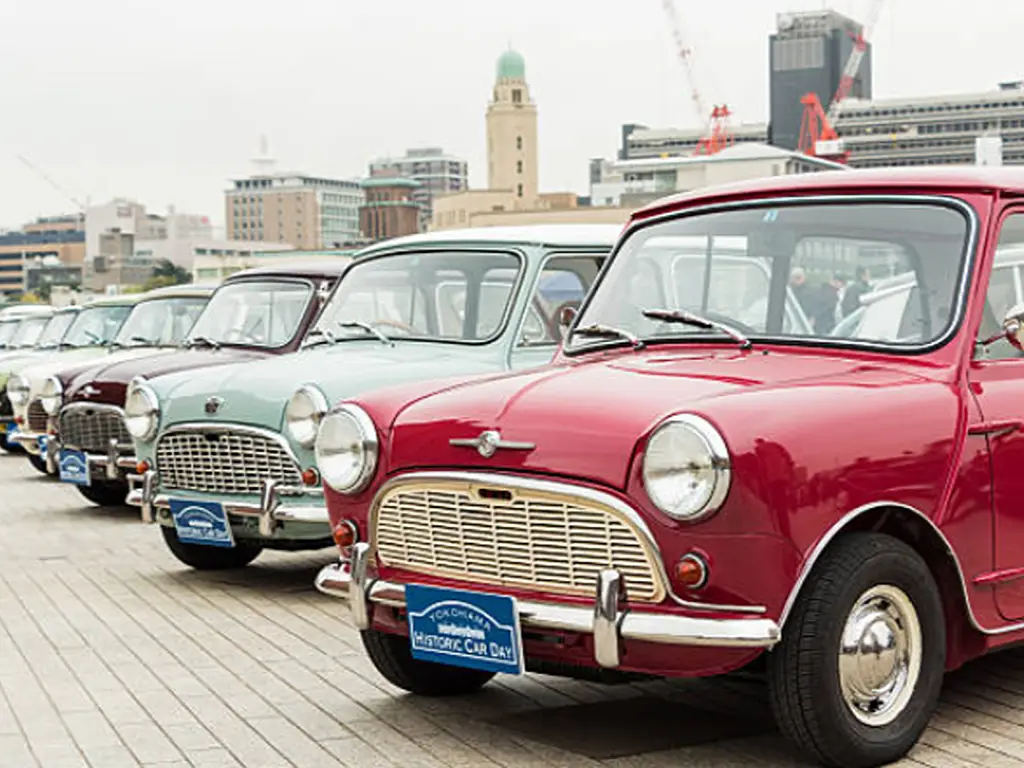
DIY Reality: Time, Tools & Sourcing Exhaustion
Users typically opt to go DIY in order to save money yet the hidden tax is enormous. A frame-off is a 1,500 to 2,500 man-hour process, a four-year laborious undertaking of 10 hours per week. Special equipment (compressors, welders) is not difficult to spend more than 5000 dollars, and having basic hand tools on hand is essential for various tasks. Finally, the greatest trap is exhaustion sourcing. Extensive usage of internet forums and junkyards to find rare parts may result in project burnout directly as a result of spending 20 hours a week.
The Professional Route: Labor Rates & Bay Stagnation
The career path sells assurance and quickness. A shop, however, is not only the rate per hour equation of $85-150/hour but of also the build efficiency that ensures preservation of quality work. Cases where a disassembled car takes the place of a premium lift and the technicians are waiting on a backordered 50 switch, the shop is losing money. Profit stagnation is a killer of profit margins. The success of any business depends solely on an anticipated supply chain in which parts are perfectly fitting on the first attempt.
In order to establish feasible goals and avoid mid-project budget overruns, set your restoration level according to the suggested direction and financial obligations below:
| Restoration Level | Recommended Path | Parts Requirement | Estimated Budget Range |
| Driver Class | DIY / Hybrid | High-Quality Aftermarket | $15,000 – $30,000 |
| Show Class | Professional Shop | OEM / Top-Tier Reproduction | $50,000 – $80,000+ |
| Concours | Specialist / Expert | NOS (New Old Stock) | $100,000 – $200,000+ |
| Restomod | Pro-Shop (Engineering req.) | High-Performance Modern Upgrades | $70,000 – $150,000+ |
The True Cost and Timeline: A Stage-by-Stage Breakdown
The process of a systematic restoration also takes a very predictable order. In order to present a tangible financial and logistical outlook, we will be applying the industry-standard measures to a base-level 100,000 Restomod construction with a professional price tag, which would give timelines and clear warnings to each step.
Phase 1: Teardown, Sandblasting, and Rust Repair
The car is brought down to a bare metal frame and totally dismantled. To the technicians, careful inventory control is the most important. Not bagging and tagging components reflects wasted money in an hourly labor expense in the future in attempt to locate hardware that has been lost.
- Timeline Estimate: 15%–20% of the total project time. Expect 200 to 300 man-hours (approx. 1 to 2 months of dedicated shop time).
- Budget Allocation: $10,000 to $15,000.
- Pitfall Warning (Precautions): Watch out of hot shot media blasting and low-cost sheet metal. The wrong sandblasting media or pressure would forever bend the archaic sheet metal panels, destroying the body before the construction even starts. Moreover, when cheap poorly stamped sheet metal patch panels are used, it will only save pennies, yet thousands of dollars will be spent. A misalignment of the metal by simply 2mm would cost technicians days of cutting and bending of the metal in order to get the doors to fit.
Phase 2: Mechanical Overhaul and Powertrain
This stage restarts the heartbeat in the machine, concentrating on the rebuild of the engine, the transmission job and the suspension geometry and the braking systems.
- Timeline Estimate: 20%–25% of the total project time. Expect 300 to 400 man-hours (approx. 2 to 3 months of dedicated shop time).
- Budget Allocation: $25,000 to $30,000.
- Pitfall Warning (Precautions): Always increase horse power with the same increase in stopping power and never experience fatigue as a secondhand good. The combination of a high-horsepower V8 of the modern era in a car with the 50-year-old drum brakes and the original suspension geometry is deadly. Also, procuring worn, used mechanical components is a huge financial liability. When the aftermarket alternator bracket is poorly casted, a mechanic will take hours grinding it to fit. This is a waste labor that quickly surpasses the savings in the first place.
Phase 3: Bodywork, Paint, and Brightwork
The emphasis is placed on preventing the body to have the perfect straight and evenly applying the paint and restoring the exterior trim to mirror finish. Existing paint work of the flawless, laser-strait paint job can raise the resale value of the vehicle by $20,000 to $30,000.
- Timeline Estimate: 25%–30% of the total project time. Expect 400 to 500 man-hours (approx. 3 to 4 months of dedicated shop time).
- Budget Allocation: $25,000 to $35,000.
- Pitfall Warning (Precautions): Speeding up the supply chain and curing process. The good of automotive paint is dependent on the primer. The paint would shrink, or blister, or crack months later, should you hurry on, and paint the clear coat over the undercoats which are not properly off-gassed. Additionally, the paint booth is the final constriction in terms of scheduling. The delay caused by the delivery of certain exterior items that are needed, say chrome light frames or emblems, may put the whole production line on hold several weeks.
Phase 4: Interior Restoration and Trim
The last step is the rebuilding of the cabin including the upholstering, the dashboard rebuilding, and the incorporation of the electrical wiring that has been modernized. The interior determines the day to day feel of the car.
- Timeline Estimate: 15%–20% of the total project time. Expect 200 to 300 man-hours (approx. 1 to 2 months of dedicated shop time).
- Budget Allocation: $15,000 to $20,000.
- Pitfall Warning (Precautions): The aged wiring fire hazard and fragile trim damage. Trying to save a 50 year old wiring loom which is brittle is a huge fire accident waiting to occur. The use of high quality, modernized wiring harnesses and new made relays is not a compromise on safety. Furthermore, attempting to install a modern audio or climate control into an old dash may need high-precision brackets, which may cause the tearing of precious original dash pads.
Modern Drivability (Restomod): Strategic Upgrades
A classic car must survive in a modern world of high-speed highways and aggressive stop-and-go traffic. Intelligent “Restomod” upgrades bridge the gap between classic aesthetics and modern reliability.
Elevating the Drive: The Aftermarket ROI
The NLA (No Longer Available) is the harsh reality of the market. Even in the rare cases where you find some “New Old Stock” (NOS) parts, the seals, ignition coils, etc, are probably long since hardened, dried out, or withered away, on a shelf in a warehouse 40 years.
That is where the high-quality aftermarket is needed. Through the use of modern production techniques: aerospace grade alloys, high-technology polymers, and the 3D modeling of exact shapes and forms, reproduction components are much better than original factory specifications. They provide better heat dissipation, increased stability and electrical stability without compromise. The ROI argument is straightforward: Spending 1500 dollars on a re-designed electronic ignition and high efficiency aluminum radiator would increase reliability by 200% that serves as an immediate reason insuring a 10,000 engine failure due to overheating.
Protecting the Build: The Labor-to-Part Ratio
It is a colossal gamble trying to save on buying a tired 40-year-old steering box in a scrapyard. A worn component has invisible and microscopic fatigue and internal wear.
Moreover, the aftermarket parts of low quality do need to be re-engineered. In the workplace, labor charges tend to be two or three times the price of the components. The financial loss is realized at the end of saving a stamp of $50 on a poorly stamped bracket and adding three hours of labor (at $100/hour) which ended up making the financial cost of the project reach $250.
High-precision aftermarket parts, or more likely, bolt-on parts are not only time-saving, but an essential financial policy. It offers a sleek engineering style with a nostalgic look, assures the structural health of the vehicle and saves the shop a great deal of wasted, non-billable time that is contributing to the low profit margins of a shop.
This leads us to the last problem facing the industry, which is: With NOS parts becoming worn out and aftermarket parts creating labor expenses through the roof, where do you get reliable and high-tolerance parts?
Sunway Autoparts: Removing Restoration Bottlenecks
It is this supply chain gap that led to the existence of Sunway Autoparts. As has been determined, sourcing exhaustion (the part is not found) and the cost explosion (the part does not fit) are the two biggest threats to any restoration project. We provide value in the form of specialized supply chain integrator to ensure the systematic eradication of these bottlenecks by directly addressing the NLA (No Longer Available) crisis. We have more than 15 years of industry experience and we focus on the hard to find niches that the general factories do not work. We reverse-engineer and produce the lost parts your project needs to make it across the finish line using our own OEM and ODM services. but merely to cut out a rarity is inadequate, and we know very well the vital Labor-to-Part ratio. We maintain strict dimensional tolerances to ensure that the shop technicians do not spend valuable hours thereafter in modifying ill-cast parts. Our quality control process involves three-staged process with the utilization of CMM (Coordinate Measuring Machines), secondary 2D projectors, and digital calipers we achieve true-bolt-on perfection that directly safeguard the profitability of the workshop and the budgetary pocket of the owner.
In addition to the precision manufacturing, we also get rid of the sourcing exhaustion with the extensive one stop integration. The shops and builders can use our integrated industrial chain, instead of searching through dozens of unreliable suppliers and connecting them with fragmented logistics. We handle hundreds of lines of products in classic cars/motorcycles and bring your procurement under one and trusted source. , and finally, we are aiming at absolute risk control. We substitute the monetary dice of using tired dirty components with designed confidence and we provide a one-year warranty to our parts and a clear and friendly policy of replace or refund. This total quality management approach guarantees that the components are timely, the first time fit, and the long-term functionality of any given component.
Conclusion: Securing Your Restoration Success
The perfect classic car restoration is the calculated outcome of a subtle formula: brilliant vision, master work and certainty of sourcing. Days when people were forced to pick up garbage in the dumps and take on poor-quality parts are long gone. Do not allow a dream build to degenerate into a halted nightmare through a broken supply chain. You have a professional workshop to manage, and have decided that a drastic reduction in bay turnover rates is necessary, or you may be a very serious collector that just wants the utmost reliability of your investment, but in any case, the gateway to the solution is Sunway Autoparts, and we will be happy to serve you with a no obligation free consultation.
Recent Blog
- Ford Mustang History Decoded: 60 Years of Chassis, Engine Swaps & Market Value
- How to Adjust Car Mirrors Properly: Eliminate Blind Spots for Modern & Classic Cars
- What Does GMC Stand For? The Full Story of GM’s "Professional Grade" Brand
- Antique Car VIN Lookup: The Forensic Guide to Decoding & Verification


 English
  Spanish
  French
  German