
Quick Answer: Knowing exactly where to buy Porsche parts protects you from the notorious “Porsche Tax” and catastrophic fitment errors. For absolute certainty on complex electronic modules, utilize Authorized Dealerships. For routine mechanical maintenance at up to 40% less cost, use General European Distributors (like FCP Euro) for OEM components.
Sourcing Porsche replacement parts is a high-stakes decision. The aftermarket is a minefield of extreme markups, hidden restocking fees, and sophisticated counterfeits that can jeopardize a $20,000 engine. Whether you are a 911 owner trying to optimize your total cost of ownership, or an independent shop fighting to protect profit margins and minimize bay downtime, you need a precise procurement strategy. This guide breaks down the exact online and offline retail channels, rigorous supplier verification methods, and distinct B2B/B2C strategies to future-proof your supply chain.
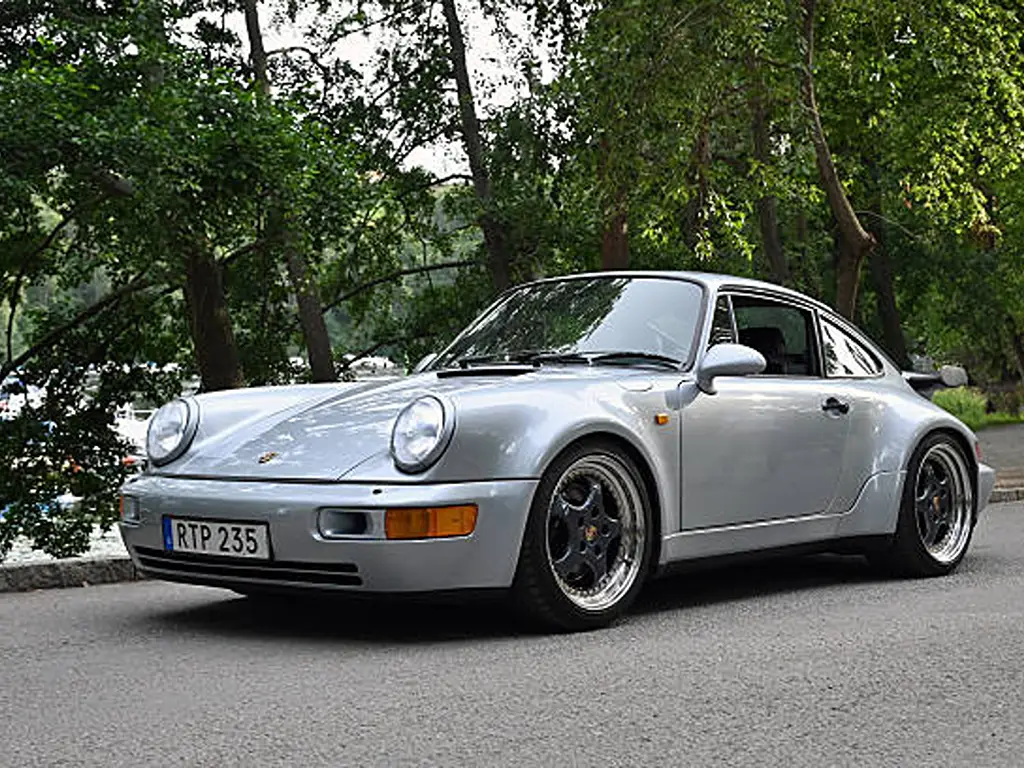
Where to Buy Porsche Parts: Evaluating Online and Offline Channels
Do not just look at the sticker price on a website. The true Landed Cost of a Porsche part includes shipping thresholds, core charges, installation risks, and potential return penalties. By evaluating channels through a unified baseline, you can make the right decision for your specific repair scenario.
Offline Channels: Local Dealerships vs. Independent Specialists
Local Porsche Dealerships (The Parts Counter)
- Best For: High-budget buyers needing zero lead time and 100% certainty.
- What to Buy: Immobilizer keys, PDK valve bodies, exact-match touch-up paint, and large body panels.
- Core Advantage: Immediate physical inspection and direct access to the Stuttgart PIWIS database for flawless VIN matching. Eliminates the risk of shipping damage on fragile/oversized items.
- Primary Risk: You will pay the absolute highest MSRP in the market, with zero room for negotiation.
Independent Porsche Shops (Indy Mechanics)
- Best For: Owners who lack a garage lift, specialized tools, or Porsche diagnostic computers.
- What to Buy: Parts that require complex coding (DMEs) or specialized calibration post-installation (like active suspension components).
- Core Advantage: Turnkey solutions. If the part fails, the shop handles the warranty claim and absorbs the labor to replace it.
- Primary Risk: Parts are subjected to a Jobber-to-Retail markup, and you pay high hourly labor rates.
Online Channels: Specialized Retailers vs. European Distributors
Specialized Porsche Retailers (e.g., Pelican Parts, Suncoast)
- Best For: DIY garage mechanics and vintage air-cooled enthusiasts.
- What to Buy: Comprehensive project kits (e.g., IMS bearing upgrade kits), chassis reinforcements, and specialized hardware.
- Core Advantage: They sell solutions, not just parts. They provide exhaustive DIY tutorials, custom-assembled kits, and community support that save you thousands in labor.
- Primary Risk: Routine consumables (like filters and oil) may be priced slightly higher than bulk generalist sites.
General Euro Distributors (e.g., FCP Euro, AutohausAZ)
- Best For: Daily drivers optimizing routine upkeep and deliberately stripping the “Porsche Tax.”
- What to Buy: Oil, cabin filters, spark plugs, and OEM brake rotor/pad sets.
- Core Advantage: Unbeatable volume pricing. Industry-disrupting policies like Lifetime Replacement Guarantees mean you only pay for consumable parts once.
- Primary Risk: Their generic catalog UI can lead to ordering the wrong variant if you do not rigorously cross-reference your specific PR-Code.
What to Buy: Decoding Genuine vs. OEM vs. Aftermarket Parts
To buy smart, you must understand the European automotive supply chain. Porsche is primarily an engineering and assembly firm. The actual components are manufactured by a network of Tier 1 suppliers. Understanding this hierarchy allows you to pay for performance, not just packaging.
These parts come in a box with the Porsche crest. They are the exact parts installed on the assembly line in Germany.
- The Advantage: 100% guaranteed fitment, the strictest quality control tolerances, and backed by a 2-year Porsche factory warranty.
- The Reality: Carries a massive premium, often costing 40% to 100% more than the identical OEM equivalent.
Brands like Bosch, Mahle, and Brembo manufacture parts for Porsche. An OES part is made on the exact same assembly line as the Genuine part, but is boxed in the manufacturer’s packaging. Often, you can even see where the Porsche logo was physically ground off the metal casting.
- The Advantage: Identical performance, metallurgy, and thermal capacity as Genuine, but at a fraction of the cost. This is the ultimate value hack for maintenance.
- The Reality: Does not carry the Porsche dealership warranty (though reputable online retailers offer their own warranties).
Aftermarket parts are built by companies that did not hold the original Porsche contract. This category requires extreme caution and discernment.
- White-Label (Avoid): Cheap, unbranded knock-offs found on discount marketplaces. High risk of premature failure and catastrophic engine damage.
- Premium/Heavy-Duty (Recommended): Brands like Meyle HD actually re-engineer factory parts to fix known Porsche design flaws (e.g., upgrading a plastic water pump impeller to metal, or reinforcing failure-prone control arm bushings).
The Component-Based Sourcing Matrix: Which Level Should I Actually Buy?
| Porsche Component | Required Quality Level | The Strategic Reasoning |
|---|---|---|
| Engine / Trans Internals | Genuine / OEM strictly | Extreme tolerances required. Never risk a $25,000 engine rebuild to save $50 on a timing chain tensioner or main seal. |
| Electronics & Sensors | Genuine (OE Priority) | Non-genuine electrical parts often cause micro-voltage fluctuations, triggering phantom dashboard codes. “Buy Genuine for electronics.” |
| Brakes & Suspension | OEM / Premium Aftermarket | Buy direct from OES brands like Textar, Sebro, or Lemförder. You get identical stopping power and ride quality without the logo markup. |
| Filters, Belts & Plugs | OEM / OES | Mahle, Mann, and Bosch manufacture these for Porsche. Buying the OES version is functionally identical and highly cost-effective for frequent intervals. |
How to Verify: Vetting the Supplier and the Transaction
The aftermarket is flooded with sophisticated counterfeits. If you want to protect your vehicle and your wallet, you must shift your focus from merely verifying the physical part to rigorously verifying the seller’s supply chain and transaction terms.

Verifying Fitment: The VIN and PR-Code Rule
Porsche models are notoriously complex. A 2018 911 Carrera and a Carrera S might use entirely different brake calipers and suspension knuckles. If a retailer’s website relies solely on a “Year/Make/Model” dropdown and does not mandate a VIN (Vehicle Identification Number) or PR-Code verification, abandon the cart. True Porsche suppliers integrate directly with ETK databases to prevent costly mis-orders.
Vetting the Seller & Transaction Nuances
Red Flags on Third-Party Marketplaces
Platforms like eBay or Amazon are rife with drop-shipping schemes. A seller may display a high-resolution photo of an authentic Bosch mass airflow sensor, but ship a dangerous white-label knockoff. Rule of thumb: If the price is 60% below standard wholesale, it is almost certainly a counterfeit.
The Restocking Fee Trap
Always read the return policy on electronic modules (DMEs) and oversized items. Predatory sites mask their margins behind 15%-20% restocking fees on opened boxes. If you buy a $1,200 module to diagnose a misfire and it doesn’t fix the issue, you could lose $240 just to return it, plus cross-country shipping.
How to Choose: The Ultimate B2C vs B2B Sourcing Strategy
Your procurement strategy must align entirely with your end goal. Here is the ultimate breakdown of how individual owners and commercial shops should navigate the market, using unified evaluation criteria.
B2C Strategy: Optimizing Total Cost of Ownership
If you are an individual Porsche owner, your primary goal is to buy the right part at the lowest Total Cost of Ownership (TCO). Never base your decision solely on the unit price.
- Factor in Shipping & Core Charges: A cheap alternator becomes expensive if you have to pay $80 in heavy freight to ship your broken “core” back across the country to get your deposit refunded.
- Leverage Lifetime Warranties: For parts you will replace multiple times (wiper blades, brake pads, oil), prioritize vendors like FCP Euro. You pay once, and future replacements are virtually free.
- Assess Your Tooling: Do not buy a complex PDK service kit online if you do not own the PIWIS diagnostic tool required to recalibrate the transmission afterward. In such cases, sourcing the part through an Indy Shop is the safer financial move.
- The “Do It Twice” Penalty: If a water pump requires 8 hours of labor to access, do not save $30 by buying an unproven aftermarket brand. The cost of doing the labor twice drastically outweighs the initial savings.
B2B Strategy: Margin, Uptime, and Supply Continuity
For independent repair shops and parts distributors, sourcing at scale requires a completely different calculus. You are optimizing for Jobber margin protection, bay uptime, and securing parts for high-net-worth restoration projects.
- Protect Your Margin Spread: Stop buying at retail. Ensure your tier-1 supplier offers isolated Jobber pricing that the public cannot see, allowing you to mark up OEM parts to MSRP ethically.
- Demand API Integration: Your supplier must integrate directly with your shop management software (Shop-Ware, Mitchell1). Live inventory visibility and 5 PM SLA cut-offs prevent cars from occupying your lifts for days waiting on standard maintenance parts.
- Enforce High Fill Rates: A commercial supplier is useless if they only have 60% of what you need. Audit your wholesale distributors to ensure >98% order fulfillment on standard Porsche maintenance wear items.
- Secure a Continuity Plan: When standard wholesale channels fail on discontinued parts, you must have a specialized manufacturing backup plan (detailed below) to prevent stalled projects.
The Ultimate Porsche Sourcing Summary Matrix
| Procurement Dimension | B2C Individual Owner | B2B Shop / Distributor |
|---|---|---|
| Primary Target | Buy the right part, eliminate repeat costs. | Secure stable supply, protect shop margins. |
| Core KPI | Total Ownership Cost (Price + Shipping + Returns). | Margin Spread + Uptime (SLA / Fill Rate). |
| Standard Volume Parts | General OEM/OES Retailers (Focus on warranties). | Wholesale OEM/OES Distributors (Focus on API/SLA). |
| High-Risk / Complex Fitment | Dealership (Prioritize strict VIN matching). | Authorized OE channels + Dedicated Tech Support. |
| Discontinued (NLA) Parts | Scouring classifieds and forums (High Risk). | Reverse Engineering (Custom Manufacturing). |
What About Older and Classic Porsches?
When an older Porsche part becomes NLA (No Longer Available), limited supply can drive up prices and make fitment difficult. For B2B distributors and restoration shops, Sunway Autoparts uses 3D scanning and reverse engineering to reproduce discontinued Porsche components to OE specifications without requiring original drawings.
Overcome NLA classic car parts shortages with precision reverse engineering.
Explore Sunway’s Custom Reproduction Solutions


 English
  Spanish
  French
  German