
Ask ten enthusiasts to name the best-looking Porsche and you’ll get ten different answers, and every one of them will be defended to the death. That’s the strange thing about Porsche design: almost every car the company has built has a serious claim to being beautiful. So instead of handing you another gallery, this guide does something the usual lists skip. It gives you a ruler first: the design language that runs through every great Porsche. Then it uses that ruler to judge the icons, settle the 911-generation argument once and for all, and answer the question everyone actually types: which Porsche is the best-looking of all time?
What Actually Makes a Porsche Beautiful
Before ranking anything, it helps to know what you’re looking at. Porsche’s beauty isn’t an accident of taste. It’s a small, consistent grammar of shapes, repeated and refined for more than seventy years.
Keep those five in mind. The best Porsches are simply the ones that express this grammar most purely, and the rare misfires, like the 996’s “fried-egg” headlights, are the ones that broke it.
The Non-911 Classics That Prove Porsche Beauty Isn’t Just the 911
Most “beautiful Porsche” lists are really 911 lists with a few guest stars. That’s a mistake. Some of the purest expressions of Porsche design never wore a 911 badge at all. Judge each of these by the ruler above, by how much it opened or distilled the design language, and it’s clear why they belong in any honest ranking.
Porsche 356 — The Shape That Started Everything
Built from 1948 to 1965, the 356 is the source code. Ferry Porsche shaped it around humble Volkswagen mechanicals, but the result was pure sculpture: a smooth, hand-formed teardrop with slim chrome trim and the round headlights that would define every Porsche to come. The open Speedster, with its chopped, low windshield, is the most beautiful of the family, minimal and upright and impossibly cool. Look at a 356 and you’re looking at the 911’s grandfather.
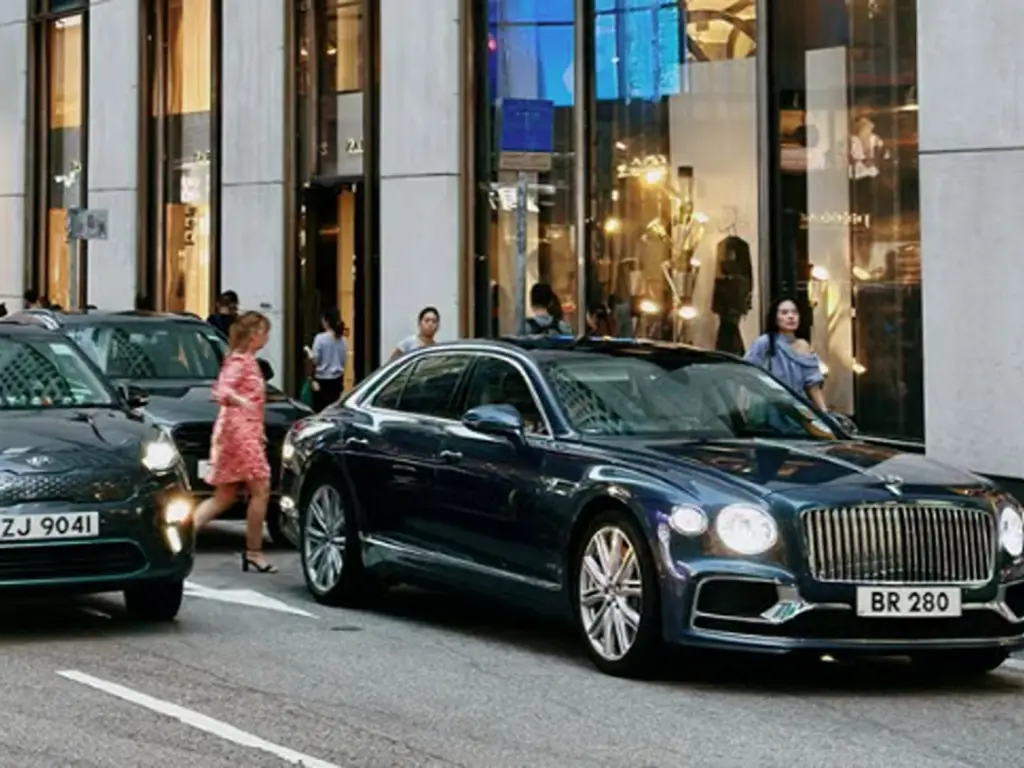
550 Spyder — Beauty Through Pure Minimalism
The 550 Spyder (1953–1956) proves that Porsche can win by subtraction. A featherweight roadster built to race, it wears almost nothing: a low, roofless body of clean curves, a silver skin, and just enough chrome to catch the light. There are no gimmicks to hide behind, which is exactly why it looks so right. It’s also the car James Dean was driving when he died, a tragic footnote that only deepened its legend.
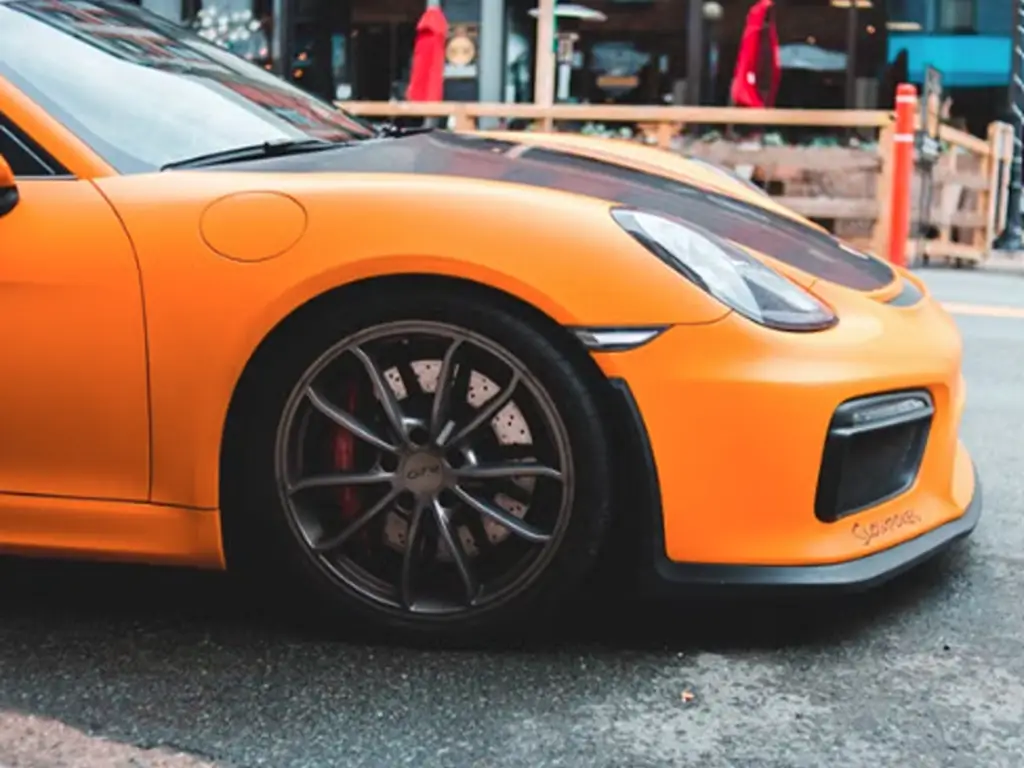
904 Carrera GTS — Porsche’s Italian Supercar Moment
If the 550 is minimalism, the 904 Carrera GTS (1964) is drama. Widely called the closest Porsche ever came to an Italian supercar, its low fiberglass body flows in one continuous, sensuous line from nose to tail. It was designed first as a race car, and won the Targa Florio in its debut season, but its shape is so resolved that it looks fast standing still. Rare, curvy, and criminally overlooked on most beauty lists.
Porsche 928 — The Beautiful Outlier
Porsche’s boldest what-if. The 928 (1977–1995) put a V8 in the front and was meant to replace the 911 outright. Enthusiasts howled, then slowly fell in love. Its soft, boneless surfaces, flush glass, and exposed pop-up headlights were radically modern for their day, and time has been kind to them. Named European Car of the Year in 1978, it remains proof that Porsche beauty has more than one bloodline.
The 911 Beauty Contest: Which Generation Looks Best
Now the argument you came for. The 911 has run for six decades across eight major generations, and picking the prettiest one is a genuine enthusiast blood sport. The cleanest way to referee it is to draw one line first: air-cooled versus water-cooled. Air-cooled cars (up to and including the 993) are the analog era: rounder, simpler, more emotional. Water-cooled cars (996 onward) are the digital era: sharper, faster, more complex. Both have their beauties, and here’s how they stack up.
| Generation (code) | Years | Cooling | Design signature & verdict |
|---|---|---|---|
| Original (F-series) | 1963–1973 | Air | The blueprint. Slim bumpers, upright glasshouse. The Carrera RS 2.7 “ducktail” (1973) is the definitive classic 911 shape. |
| G-series | 1974–1989 | Air | Impact bumpers; the 930 Turbo’s wide hips and whale-tail (and rare slant-nose) made “menacing” look elegant. |
| 964 | 1989–1994 | Air | The classic silhouette, smoothed and modernized. Clean and underrated. |
| 993 | 1995–1998 | Air | The last air-cooled 911, and, by wide agreement, the prettiest of them all. Melted, muscular, perfectly resolved. |
| 996 | 1997–2004 | Water | The low point: shared “fried-egg” headlights broke the round-lamp tradition. |
| 997 | 2005–2012 | Water | Porsche’s apology: round headlights return, proportions tighten. A return to form. |
| 991 | 2011–2019 | Water | Longer, wider, more grand-tourer; handsome if less delicate. |
| 992 | 2019– | Water | Muscular and modern; the wingless GT3 Touring is the current beauty champion. |
If you want a single verdict, the consensus, shared by enthusiasts and critics alike, is that the 993 is the best-looking 911 generation, with the RS 2.7 as the most iconic classic profile. Think of the air-cooled cars as film and the water-cooled cars as digital: both can be beautiful, but the analog ones carry a warmth the numbers can’t fully explain. The market agrees. When the 996 abandoned the round headlights, buyers voted with their wallets, and the 997 quietly put them back.
Beyond the 911: Halo Cars and Mid-Engine Icons
Porsche’s most extreme machines could have been vulgar. They aren’t, and that’s the point. When the performance is turned all the way up, Porsche still chooses discipline over decoration, which is precisely why the halo cars look beautiful rather than merely aggressive. Each of these earns its place by making function look effortless.
Porsche 959 — The Supercar That Looked Like the Future
The 959 (1986–1988) took the familiar 911 shape and made it look like it had arrived from ten years ahead. Its smooth, sealed, aerodynamic body — all-wheel drive, twin-turbocharged, technically overwhelming — turned engineering into sculpture. Where rivals were all wedges and edges, the 959 was seamless. It didn’t just perform like the future; it looked like it.
Carrera GT — The Analog Hypercar
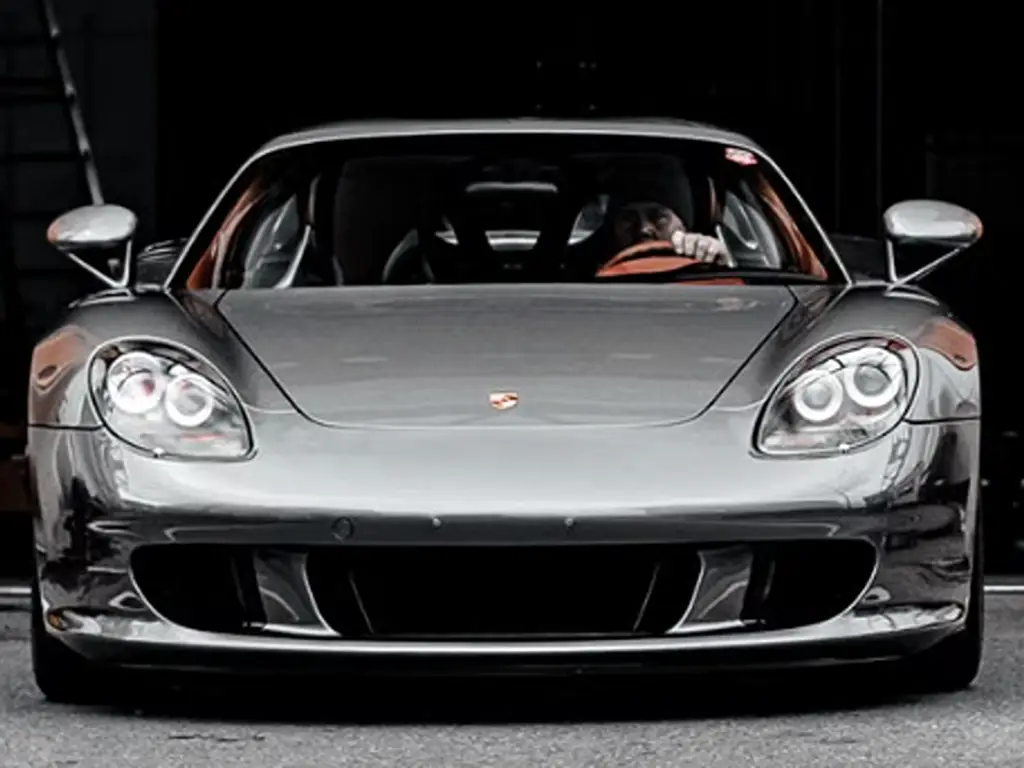
The Carrera GT (2003–2006) is what happens when Porsche builds a race car for the road and refuses to soften it. A screaming naturally aspirated V10, a manual gearbox, and a low, wide, purposeful body with a removable hardtop. Every surface has a job; nothing is there to show off. Details like the beechwood gearknob only underline the point. This is mechanical honesty as beauty, the last hypercar untamed by electronics.
918 Spyder — The Hybrid That Aged Flawlessly
One of the “holy trinity” of hybrid hypercars, the 918 Spyder (2013–2015) proved a technology showcase could still be gorgeous. Its sculpted body, top-exit exhausts, and rising rear humps look as fresh today as at launch. A decade of progress hasn’t dated it: the mark of design driven by function, not fashion.
718 Cayman GT4 — Mid-Engine Proportions Done Right
You don’t need six figures to buy Porsche beauty. The 718 Cayman GT4 has arguably the best proportions in the current range, because its engine sits in the middle, the layout that gives a car its most balanced, planted stance. Add a focused aero kit and a taut, compact body, and you get a shape that looks quick and complete from every angle. Its open sister, the 718 Spyder, is just as lovely.
The Catch Nobody Mentions: This Beauty Has to Be Maintained
Here’s what every beautiful-Porsche list quietly leaves out: most of these icons are now 30 to 70 years old, and their beauty is not permanent. Remember that much of a classic Porsche’s looks live in its brightwork: the chrome, the trim, the lenses, the badges. That jewelry is exactly what time attacks first.
| Component | Why it defines the look | What age does to it | Sourcing reality |
|---|---|---|---|
| Chrome bumpers & trim | The car’s “jewelry”; reflects light and reads as quality | Pits, hazes, and dulls to grey | Long discontinued; hard to find in OE quality |
| Headlight rims & lenses | Frame the family face | Rims corrode; lenses cloud and yellow | Rare for pre-1990 models |
| Emblems & badges | Small details that finish the look | Fade, flatten, and lose color | Model-specific; often unavailable |
| Window & vent trim | Sharpens the greenhouse and profile | Yellows, warps, or goes brittle | Reproduction quality varies wildly |
| Interior brightwork & switches | Where the “restored” feeling is won or lost | Wears smooth, cracks, discolors | Frequently the hardest parts to source |
A mechanically perfect 356 with dull chrome and yellowed trim looks tired; the same car with crisp, mirror-bright brightwork looks like a million dollars. Same shape, completely different car. That gap between “close” and “finished” is a sourcing problem, not a styling one, and understanding the financial reality by consulting a Porsche car parts price list is crucial before beginning any serious restoration.
This is where the market quietly splits. Concours-grade brightwork for a discontinued model usually can’t be bought off a shelf; it has to be remade. A handful of specialists reverse-engineer a part directly from an original sample, without factory drawings, and re-manufacture it to OE specification. Sunway Autoparts, focused on classic and vintage components since 2007, works this way, pairing that reverse-engineering with the deep, corrosion-resistant chrome that finally makes a restored piece look right. For an owner chasing correctness, sourcing classic Porsche parts built to original spec is often the difference between a car that looks close and one that looks finished.
So, What Is the Best-Looking Porsche?
Beauty is subjective, but consensus is real, so here’s an answer with some backbone. For the best-looking 911, it’s the 993, with the Carrera RS 2.7 owning the most iconic classic profile. For pure timeless shape, it’s hard to beat the 356 and the sculptural 904. For the halo cars, the Carrera GT and 959 are the peaks, and the 718 Cayman GT4 is the most beautiful Porsche most of us can actually reach. What ties them together is the same quiet grammar: proportion, round headlights, muscular hips, and total restraint, expressed as purely as each era allowed. In the end, the best-looking Porsche is often the one you love enough to keep looking new.
References
- Vogue. “How the Porsche 911 Came to Embody Timeless Style.” https://www.vogue.co.uk/bc/porsche-911-timeless-style
- The Drive. “What’s the Best-Looking Porsche 911 Generation?” https://www.thedrive.com/news/whats-the-best-looking-porsche-911-generation
- Sunway Autoparts. “Classic Porsche Parts.” https://sunwayautoparts.com/brands/porsche/
- Sunway Autoparts. “Production / Reverse Engineering & OE-Spec Manufacturing.” https://sunwayautoparts.com/production/
- Sunway Autoparts. Homepage. https://sunwayautoparts.com/
 English
  Spanish
  French
  German