
For decades, the Porsche crest has symbolized a unique blend of everyday usability and uncompromising performance. But navigating the brand’s rich history can often feel like learning a new language. From the iconic silhouette of the air-cooled 911 to the front-engine grand tourers and the modern electric revolution, every Porsche model tells a distinct story of engineering and passion. Whether you are a lifelong enthusiast, a prospective buyer, or a dedicated collector planning your next restoration project, understanding these model types is crucial. This comprehensive guide decodes the generations, badges, and underlying philosophies that make a Porsche a Porsche, while also exploring the realities of long-term ownership.
Walk into any Porsche gathering and you’ll hear a language of its own. 964. 993. G-Series. Targa. Carrera GT. To the uninitiated, it sounds like code. But behind every number and letter is a story — of engineering bets, racing glory, and one company’s relentless refusal to let the sports car die.
This guide walks you through every Porsche type that matters: the current lineup, the 911’s eight-generation journey, the classic models most guides skip, and — crucially — what owning each one actually means when it comes to keeping it on the road.
The Six Pillars of Porsche Today
Porsche today builds six distinct model lines. But they all trace back to a single idea: the driver comes first. From a rear-engine icon to an all-electric four-door, here’s how the family tree branches.
The Sports Car Core — 911 and 718
The 911 is Porsche’s north star. Rear-engine, 2+2 seating, and a silhouette that hasn’t fundamentally changed since 1963. That engine hanging behind the rear axle gives the 911 its signature personality — a car that squats under acceleration and pivots around a point most cars don’t have. It’s been called difficult, rewarding, and irreplaceable, sometimes in the same sentence.
The 718 family — Boxster (roadster) and Cayman (coupe) — takes a different path to the same destination. Mid-engine balance means neutral, predictable handling that flatters beginners while still rewarding experts. The 718 is Porsche’s gateway: more accessible, more forgiving, and for many drivers, all the Porsche they’ll ever need. Think of the 911 as a precision scalpel with a distinctive grip; the 718 is the balanced instrument that feels like an extension of your hands.
The Four-Door Revolution — Panamera, Cayenne, and Macan
Here’s a fact that surprises newcomers: without the Cayenne SUV, there might not be a 911 today. By the late 1990s, Porsche was losing money and losing relevance. The Cayenne — launched in 2002, built on a shared platform with the Volkswagen Touareg — reversed the company’s fortunes almost overnight. Purists winced. The balance sheet didn’t.
The Panamera followed in 2009, answering a question few had asked: what if a four-door luxury sedan drove like a 911? The answer sold well enough to prove the concept. Then came the Macan in 2014 — a compact SUV that became Porsche’s global bestseller. For many owners, the Macan is the first Porsche, and the 911 is the second.
The Electric Chapter — Taycan
When Porsche announced an electric car, the skepticism was predictable. The Taycan’s response was characteristically Porsche: make it faster than the argument. Launched in 2019 as the first production EV built on an 800-volt architecture, the Taycan proved that electric propulsion could feel urgent, precise, and unmistakably Porsche. Available as a sedan, Sport Turismo wagon, or Cross Turismo crossover, it’s the 356 of the electric era — not the final word, but the opening statement.
Decoding the 911 Alphabet — Body Styles, Trims, and What Those Letters Mean
Walk into a Porsche showroom and you’ll face a wall of letters: S, 4S, GTS, Turbo, GT3, and more. They’re not random. They form a ladder — from grand tourer to track weapon.
Three Body Styles, Three Personalities
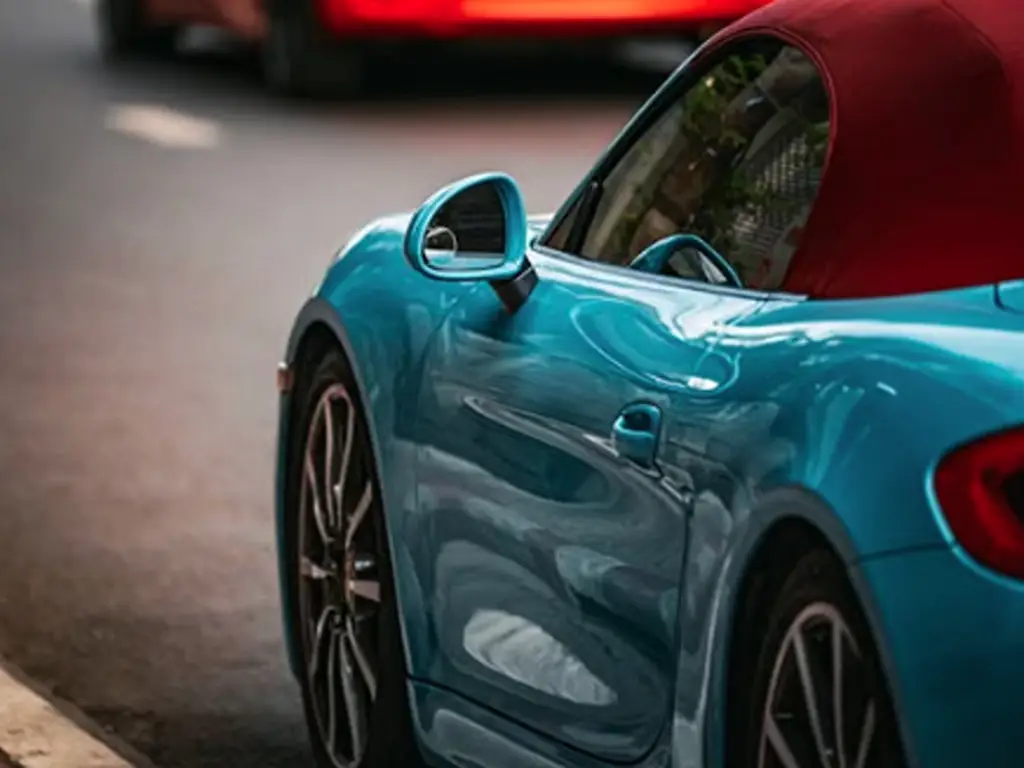
Before you think about trim, you choose your shape. The Coupe is the classic: fixed roof, purest structural rigidity, the silhouette everyone pictures when they hear “911.” The Cabriolet adds a fabric roof that opens or closes in about 12 seconds — for drivers who believe engine noise deserves an open sky. The Targa splits the difference: a distinctive roll bar, a removable roof panel, and a wraparound rear window with no C-pillar. It was born in 1967 as a safety compromise for the American market — rollover protection regulations threatened to kill the convertible 911 entirely. Porsche’s solution became an icon. The name means “shield” in Italian, borrowed from the Targa Florio road race where Porsche had triumphed.
The Performance Ladder — From Carrera to GT3 RS
Here’s how the trim hierarchy climbs, each step adding focus:
- Carrera — the baseline. Don’t let “base” fool you; a modern Carrera outpaces supercars from a decade ago.
- T (Touring) — less weight, manual transmission priority, purist spec. The driver’s choice for back roads.
- S (Sport) — more power, more standard equipment. The sweet spot for daily driving.
- 4S — S power, all-wheel drive. For those who want grip confidence in any weather.
- GTS (Gran Turismo Sport) — the enthusiast’s pick. S-level power plus sport chassis, sport exhaust, and most of the performance options bundled in.
- Turbo — top-tier power. The name originally described the technology (the 1974 911 Turbo, Type 930, was Porsche’s first turbocharged production car). Today, even electric models like the Taycan Turbo carry the badge — it now means “fastest in the range,” not “has a turbocharger.”
- GT3 — naturally aspirated, motorsport-derived, road-legal. Named after the FIA GT3 racing class. This is where the 911 stops being a sports car and starts being a race car with license plates.
- GT3 RS (RennSport) — even lighter, even sharper, even louder. The closest thing to a Cup car you can drive to the track.
- GT2 RS — turbocharged, rear-wheel-drive, terrifyingly fast. The widest point on the 911 performance spectrum.
If a Carrera is a tailored suit, the GT3 RS is a fireproof racing overall — same family, completely different purpose.
The 911 Generation Journey — Seven Decades of Evolution
No car’s family tree is more carefully studied than the 911’s. Eight generations, split by one fundamental dividing line: air versus water.
The Air-Cooled Dynasty — F, G, 964, 993 (1963–1998)
| Generation | Years | Approx. Built | One-Line Soul |
|---|---|---|---|
| Original (F) | 1963–1973 | 112,000 | The blueprint. Originally called the 901 — Peugeot’s trademark on three-digit numbers with a zero in the middle forced the change to 911. |
| G-Series | 1973–1989 | 198,000 | The Turbo arrives. The 930 Turbo (1974) made the 911 a supercar. |
| 964 | 1989–1994 | 64,000 | 85% new parts. All-wheel drive debuts. The 911 enters the modern era. |
| 993 | 1994–1998 | 69,000 | The last air-cooled 911. Multi-link rear suspension. The one collectors fight over. |
Driving an air-cooled 911 isn’t just transportation — it’s a conversation. The engine’s cooling fan whirs behind you. The unassisted steering chatters through your palms. The gearbox rewards patience and punishes haste. None of these cars are fast by modern standards. That was never the point.
Driving an air-cooled 911 isn’t just transportation — it’s a conversation. The engine’s cooling fan whirs behind you. The unassisted steering chatters through your palms. The gearbox rewards patience and punishes haste.
The Water-Cooled Era and Beyond — 996, 997, 991, 992 (1998–Present)
Every water-cooled generation arrived to controversy and left as a classic:
- 996 (1998–2005): The “fried egg” headlights enraged traditionalists. But the 996 also gave us the first GT3 — and saved Porsche from bankruptcy by sharing its front structure with the cheaper Boxster.
- 997 (2005–2012): Round headlights returned. PDK dual-clutch transmission debuted (2009). The GT2 RS closed the generation with 620 hp — still a benchmark.
- 991 (2012–2019): Longer, wider, more comfortable. Turbocharged engines became the norm for base models. Purists mourned the loss of natural aspiration; lap times improved regardless.
- 992 (2019–present): The current generation. Digital cockpit, wider stance, and — in a nod to the faithful — the Carrera T’s return with a six-speed manual.
Every 911 generation has been called “not a real Porsche” by someone. Every one has been proven wrong.
Beyond the 911 — Porsche’s Classic Hidden Gems
Most “Porsche types” articles end at the 911. That’s a mistake. Porsche’s back catalog contains six model lines that shaped the company just as deeply — and today face a parts availability reality that every owner and buyer should understand.
The One That Started It All — 356 (1948–1965)
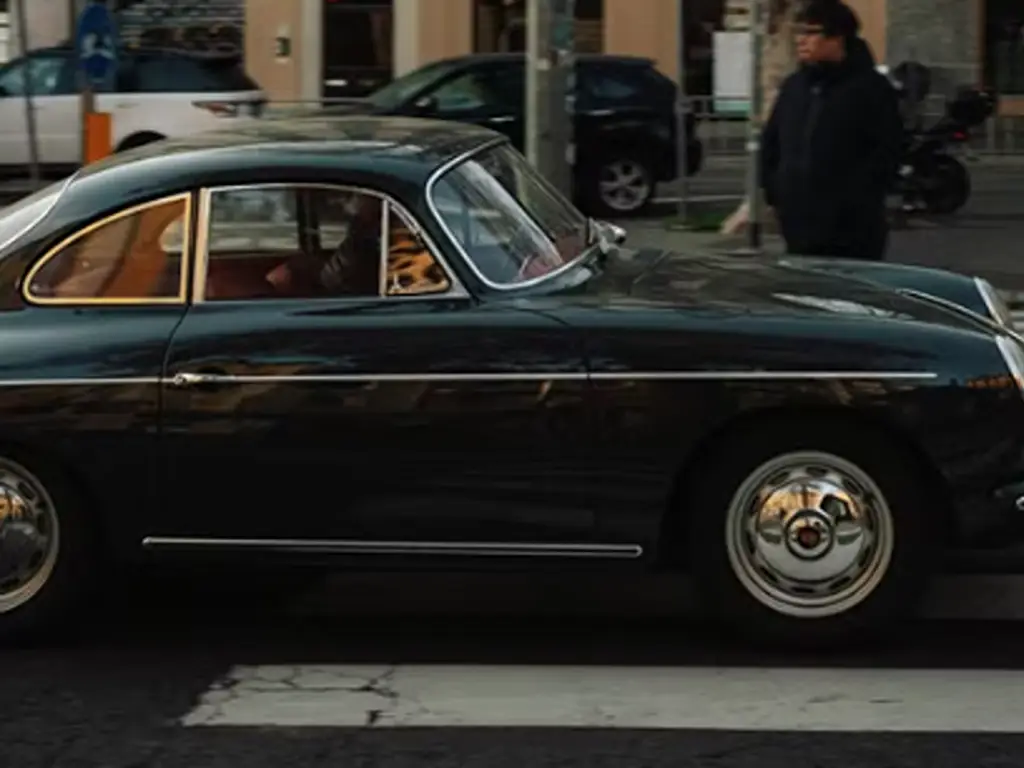
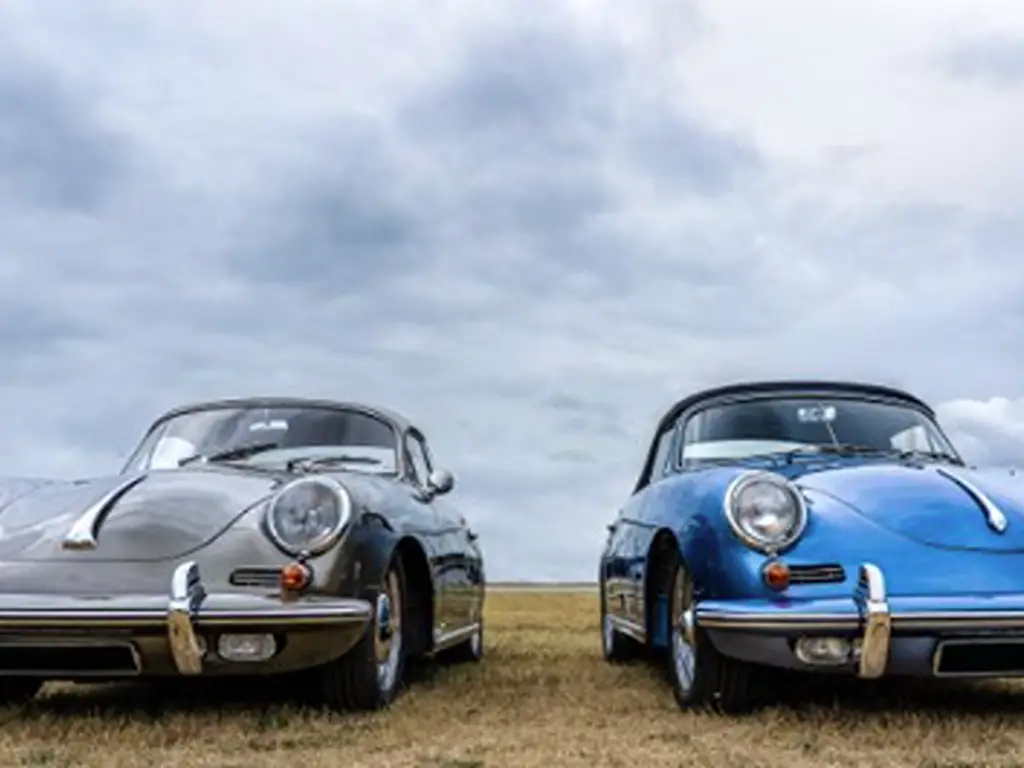
Before the 911, there was the 356. Built by Ferry Porsche in a small Austrian sawmill in Gmünd, it established the formula: rear engine, air cooling, lightweight body, manageable power. Over four generations (Pre-A, A, B, C), roughly 76,000 were produced. The 356 Carrera GS used Porsche’s first performance engine — the Fuhrmann four-cam — and today, any surviving 356 is a collector’s trophy. Parts? The aftermarket for 356 components has thinned dramatically. Original tooling is long gone. Body panels are gold dust.
The Mid-Engine Experiment — 914 (1970–1976)
A joint venture with Volkswagen, the 914 was supposed to replace the entry-level 912. Mid-engine, targa-top, and — in its 914/6 form — powered by the same 2.0L flat-six as the 911T. Only about 3,300 six-cylinder 914s were built. The four-cylinder 914/4, using VW’s Type 4 engine, sold over 115,000 units. Today, the 914/6 is the collector’s sleeper: overlooked for decades, now climbing in value. But parts availability is a patchwork — interior trim and body panels are especially scarce.
The Front-Engine Grand Tourers — 924, 928, 944, 968 (1976–1995)
This is Porsche’s most underappreciated chapter. Four front-engine, water-cooled models that together span two decades:
| Model | Years | What It Was |
|---|---|---|
| 924 | 1976–1988 | Entry-level four-cylinder, originally designed for Volkswagen. The affordable Porsche. |
| 928 | 1978–1995 | V8 grand tourer, meant to replace the 911 entirely. Won European Car of the Year in 1978 — the only sports car to ever do so. |
| 944 | 1982–1991 | The 924’s full-Porsche evolution. Wider, faster, all-Porsche engine. The Turbo version was a giant-killer. |
| 968 | 1992–1995 | The 924/944 lineage perfected. 3.0L with VarioCam. The Club Sport is one of the purest driver’s cars Porsche ever built. |
The 928’s V8 still has decent parts support. But for the 924, 944, and 968, the situation is different: specific interior pieces, body panels, and trim have entered the “find it if you can” zone. These cars are mechanically robust, but cosmetically, they demand resourcefulness.
What Each Porsche Type Means for Owners
Having the knowledge is one thing. Deciding which Porsche fits your life is another. Here’s the cheat sheet:
Whichever path you choose, owning a Porsche means eventually confronting a practical question: when something breaks, where do the parts come from?
Keeping Classic Porsches on the Road — The Parts Reality
Here’s something most car guides won’t tell you: the biggest difference between Porsche models isn’t horsepower or lap times. It’s how easy — or how hard — it is to find replacement components, making the search for the best place to buy Porsche parts a crucial part of the ownership experience.
The good news is that the 911, especially the air-cooled generations, has the strongest aftermarket support of any classic car on the planet. Porsche Classic maintains over 80,000 genuine parts for out-of-production models. Independent OE manufacturers continue producing engine components, exhaust systems, and body panels. Porsche has even reissued magnesium crankcases for 1968–1976 models — a level of factory commitment almost unheard of in the automotive world.
The less-discussed reality: non-911 classic Porsches live in a different world. The 356, 914, 924, 928, 944, and 968 have far thinner aftermarket support. Original tooling is mostly gone. Independent suppliers focus overwhelmingly on the 911. For owners and restoration shops working on these models, finding trim pieces, interior components, and body panels often means waiting, searching, and compromising.
The solution — whether you’re restoring a single 944 S2 or stocking a warehouse for a classic Porsche parts business — is depth of supply chain. A supplier who can reach across materials (metal, rubber, plastic, glass), across processing types (stamping, injection molding, chrome plating), and across hundreds of product categories isn’t just convenient — they’re essential. Companies like Sunway Autoparts, with nearly 200 partner factories and 18 years focused on vintage and classic car components, exist precisely because the one-brand, one-material approach doesn’t work for cars that went out of production decades ago. For anyone serious about keeping a classic Porsche on the road — especially the models the mainstream aftermarket ignores — the question isn’t “can I find this part?” It’s “who has the sourcing network to find it for me?”
Source Classic Porsche Parts Through One Supply Chain
From 356 to 968 — find the parts mainstream suppliers overlook. One partner, 200 factories, 18 years of classic car expertise.
Talk to a Sourcing Specialist
 English
  Spanish
  French
  German