
Introduction
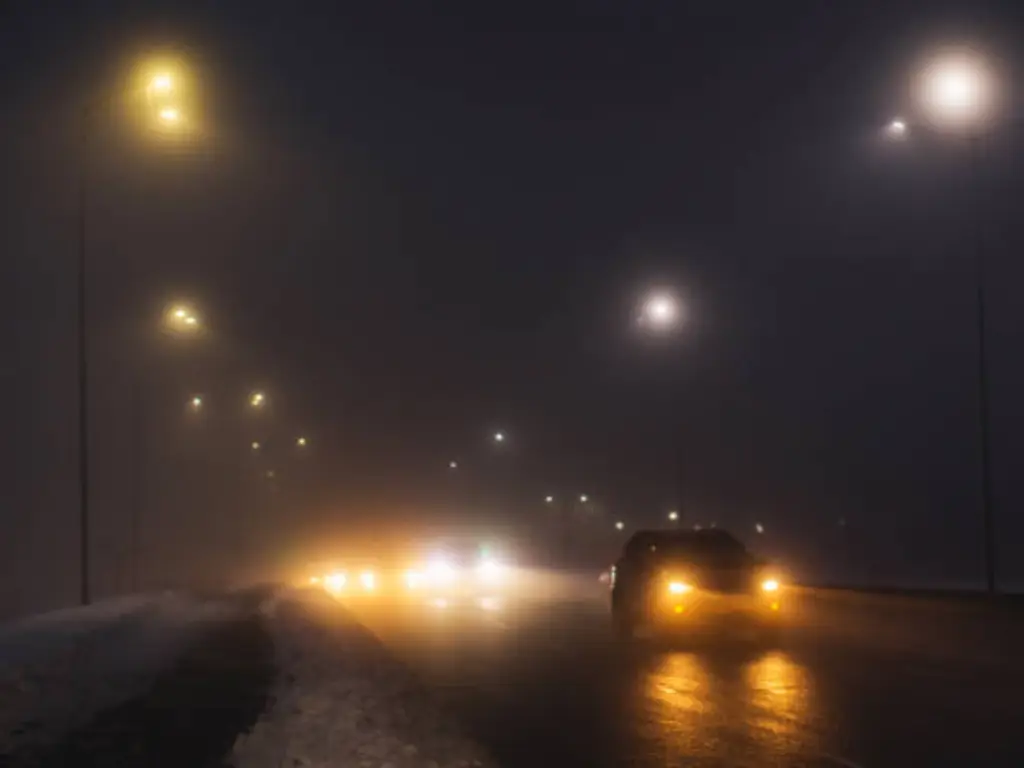
The Federal Highway Administration reports that it is the fog that causes more than 38,700 vehicle crashes every year in the United States alone. But fog is not the sole adversary; snowy conditions, heavy rains, and desert dust have their own optical issues that cannot be easily resolved using standard 6000K cooler light.
The query intent of amber vs yellow fog lights is usually a result of a misconception of the Kelvin scale. Most of the drivers interchange the terms, yet optically, they undertake varied functions under various weather conditions. A bad decision may result in eye strain during long flights or a lack of light when you need it the most.
You can be on your way to work in Foggy Seattle in your daily driver or be on a mountain road rally with your vintage Jaguar E-Type, but first thing first, it is essential to grasp the difference between these two light spectrums to improve your road safety.
Science Behind the Glow: Why Not White Light?
To understand why yellow and amber lights are the ideal choice in bad weather, we must first know why the regular white light performs so disastrously in such conditions.
Contemporary automotive demand is strongly inclined to the use of LEDs of a cool white color (usually between 6000K and 6500K). Although these lights are crisp and modern, and they resemble daylight during a sunny day, they are full of blue light. This has put them at the blue end of the spectrum, which has the shorter wavelengths and the most energy in the visible spectrum.
The Scattering Problem: Physics in Motion
You might have heard about Rayleigh Scattering, which is what is usually referred to explain why the sky is blue. Although it is commonly abused in automotive forums (fog droplets are simply too large to undergo Rayleigh scattering, and they fall under the Mie scattering), the idea about the human eye and perception is correct.
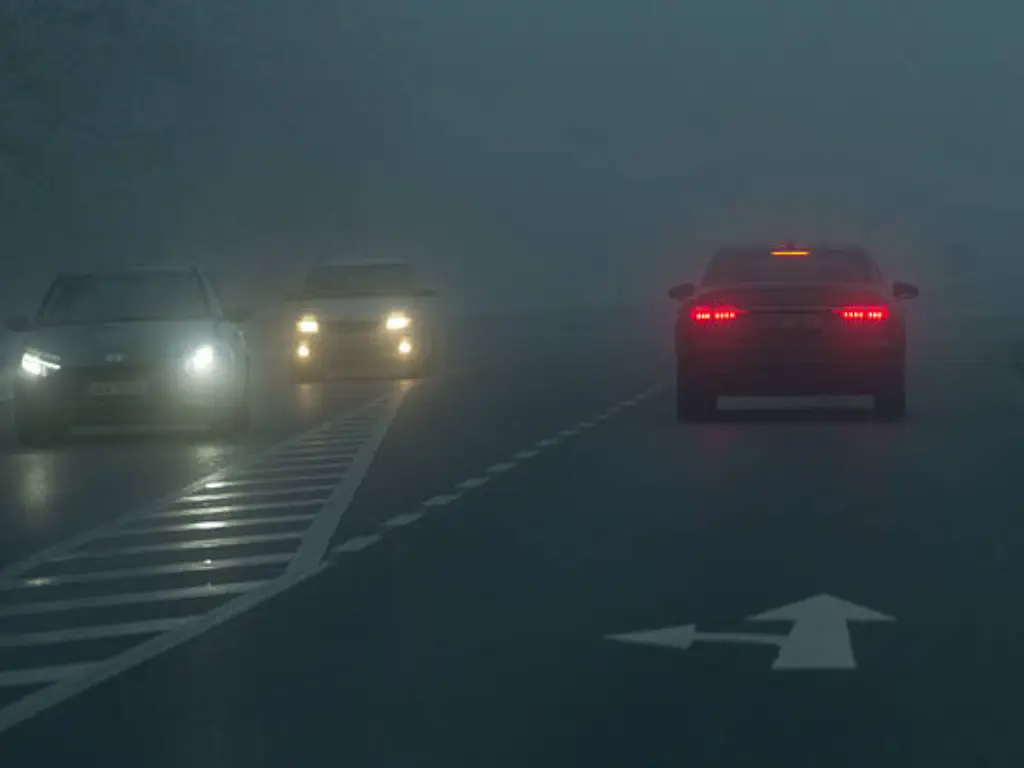
Shorter wavelengths (blue and violet) are more easily and chaotically dispersed as they strike water droplets, ice crystals, or dust particles. As soon as you make white fog lights blast into dense fog, the blue portions of that spectrum are scattered out. The light bounces off the moisture in the air and reflects directly back into your retina. This effect results in internal scattering of the eye structure itself and produces two dangerous results, namely:
- Veiling Glare: This is a fog of bright-transparent light that produces the illusion of a white wall and hides the objects and the road in front of the fog.
- Pupil Constriction: It is a natural response of your driver’s pupils to the bright glare, as it constricts the pupils. This biological response is ironic in that it greatly complicates the ability to see the darker road surface and dangers in the area behind the light wall.
Yellow and amber fog lights are aimed at having minimal reflection by the filtering of the harsh blue light. They operate by letting the light go through the wetness instead of shining the wetness, hence a clearer illumination of the road.
Amber vs Yellow Fog Lights: Performance in Different Weather Conditions
There is a distinction between Yellow and Amber that is technically determined by the specific fog light color and its location on the Kelvin (K) scale. Knowledge in this color temperature range is very important when choosing the right fog lights for your setting.
- Selective Yellow: The selective yellow is around the range of about -3000K. (Think: Early French headlights, shiny gold, stereotypical JDM fog lights).
- Amber: Approximately ~2000K to 2500K. (Reflect: Deep orange, sunset tints, clumsy construction machinery illuminations, or a unique amber hue).
A breakdown of a more detailed comparison of the performance of these temperatures in unpredictable weather conditions is as follows.
| Feature | Selective Yellow (3000K) | Amber (2500K & Below) |
| Light Output (Lumens) | High lumen output. Retains approx. 85-90% of raw light output. | Moderate. The heavy filters block more light to achieve the deep amber lighting tone, reducing total output. |
| Glare Reduction | Good. Filters out most blue light for general adverse weather. | Excellent. Almost zero blue light; offers better eye comfort in extreme glare. |
| Best For | Rain, urban fog, general night driving, and poor weather. | Heavy snow, thick dust, dense mountain fog, and smoke. |
| Visual Contrast | Sharp definition of lane markings and asphalt. | Increased contrast for 3D terrain textures (snow drifts/sand dunes). |
When to Choose Yellow (3000K)
Selective Yellow is the all-purpose general. When you live in an area such as the Pacific Northwest or the UK, and it always rains, and the fog is usually at a low altitude, then 3000K will probably be your greatest ally.
- The Lumin Advantage: Blue light is blocked by the yellow lenses, which work well in letting different wavelengths through, the green and red spectrums. This translates to the fact that you are able to get exceptional lumen output, which is almost as bright as white light without the glare.
- Wet Roads: When it pours, the asphalt becomes a reflector of the white light and reflects the street lamps. The yellow light has better contrast compared to the black wet tarmac, and this will help you to identify the lane markings and potholes that would otherwise be covered by the glare of the oncoming traffic.
- Peripheral Vision: 3000K offers superb width (throw) to see deer, road signs, or pedestrians on the road without the tunnel vision brought about by the glare of harsh white LEDs.
When to Choose Amber (2500K and below)
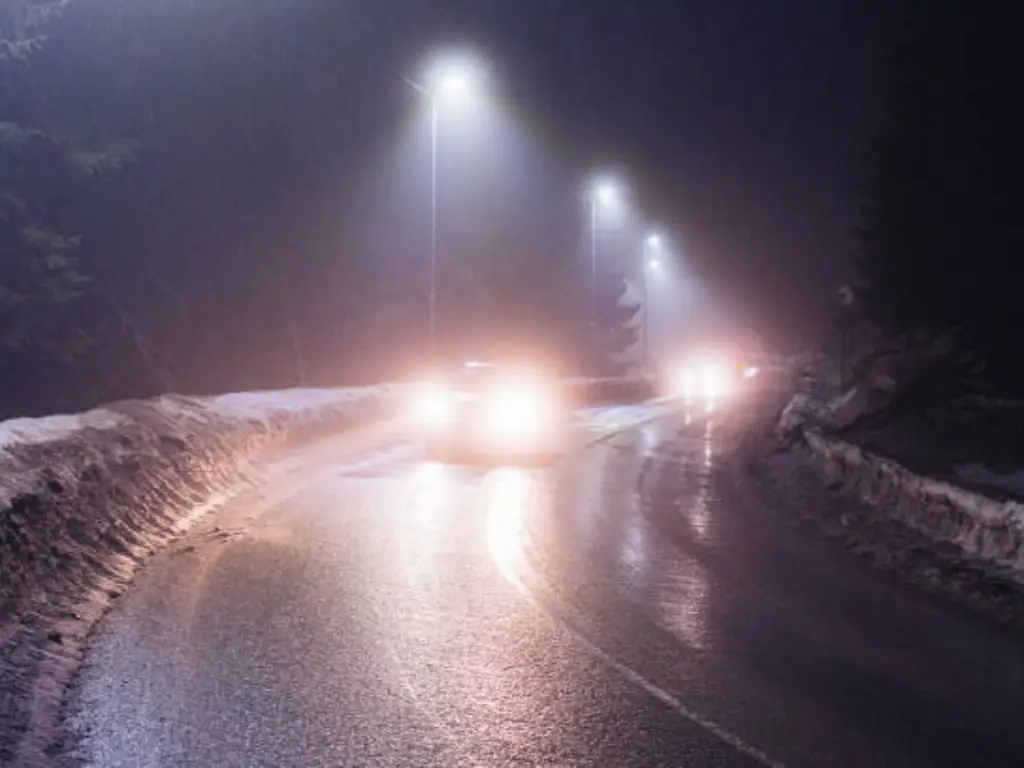
Amber is the expert product for harsh weather and severe conditions. Amber is needed by you in case you are an off-roader, in Rust Belt snow zones, or in desert dust.
- The Contrast King: As the color temperature of light passes to a lower temperature, longer wavelengths have a higher ability to penetrate particulates. Raw brightness is your enemy in a “whiteout” blizzard or dust storm. You do not require more light, but controlled light.
- Terrain Definition: The shadowing of the terrain generated by amber fog lights is of high contrast. The ground can appear in 2D in a white, snowy, flat landscape made with white or yellow light. The amber light assists the driver in observing the depth of the snow drifts or the texture of the sand dunes and gives a perfect picture of the topology of the surface.
- The Trade-off: The darker the color, the more the light output you lose. A 2000K light will be much lower compared to a 3000K light. But in dense fog, having 50 feet of visibility with a lesser range of color temperature is much safer than having 100 feet of visibility with a blinding white light.
Eye Fatigue and Reaction Time: The Hidden Safety Factor
Safety does not only exist in what you see, but in the way that your brain perceives it. The work of driving at night is very hard in terms of concentration, and the problem of eye comfort is a very essential and neglected concept. The human eye is evolutionary and is best suited to work in the sunlight. During the dark, we use rod cells (scotopic vision) that we are sensitive to, but colorless.
The “Blue Light Hazard”:
Looking at the blue spike of high-intensity observed in the cool white LEDs suppresses melatonin and prevents the brain from remaining in a hyper-awake state. Although this is a good idea, it causes a lot of visual fatigue on a 4-hour drive. The striking difference between the pitch-black and the stark white beam makes the eye muscles always change focus.
The Warm Light Benefit:
Yellow and Amber lights are far less fatiguing on the eyes of a human being. They cause less scattered light in the eyeball itself.
- Reduced Strain: Drivers complain of a much lower number of headaches and of reduced squinting when 3000K lights are used during long distances. This leads to better eye comfort during a trip.
- Reaction Time: Since yellow light offers better eye comfort (the object stands out against the background), the brain reacts to the existence of an obstacle more quickly. When it comes to seconds, high-contrast yellow light could be the difference between avoiding an accident due to braking in time and being in an accident.
Choosing the Right Color Tone for Your Vehicle’s Era and Style
Where physical laws dominate performance, the aesthetic advantage rules out decisions.
- Modern Vehicles (2010+): The owners of such modern rigs as the Jeep JL of the largest Jeep clubs tend to combine modern light bars with amber pods. The highly defined appearance of 3000K is in line with the body lines of the modern era.
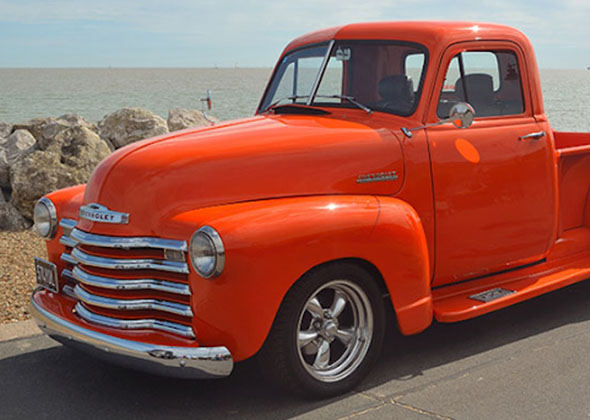
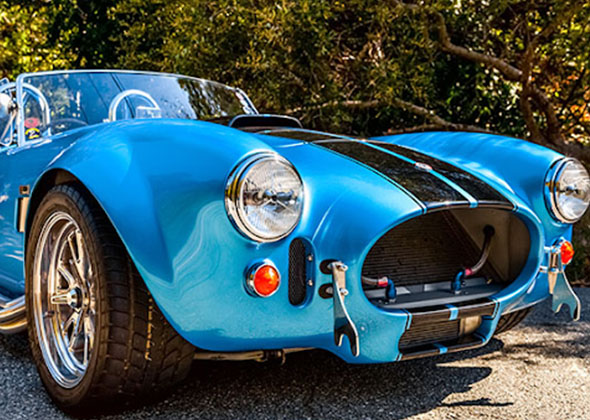
- Period Correctness (1920s -1990s): In the case of the classic cars, the piercing white LED bar appears like a disaster. It collides with the soul of the car. In the case of classics, the issue of lighting revolves around the desire to have the aesthetic edge and the functional benefits.
The “Restomod” Challenge: Balancing Modern Visibility with Vintage Looks
There is always a tug-of-war with restoring or keeping a classic car: either you desire the uncompromisingness and security of the 21st century, or you want to keep the spirit of the 20th. Various owners of classic cars find it difficult to work with off-the-shelf lighting systems. Aftermarket fog lights usually need to be cut into the original bumpers, voltage incompatibilities (many pre-1955 vehicles are 6V systems), or just an acceptance of a plastic lens that is cheap compared to vintage steel.
Moreover, it is also extremely difficult to locate a fog light that produces that particular, cozy amber hue but uses the durability of current materials, in a market overrun with generic cool-white LED lights.
How Sunway Autoparts Engineers Period-Correct Lighting Solutions
It is here that niche production fills the gap. In the case of Sunway Autoparts, we have realized that a part must suit a classic car owner in terms of both the chassis and the period.
We have been in our niche since 2007, the models that are overlooked by the mass-market producers, and that are Classic Auto Parts between the mid-1920s and the late 1990s. It is Ford, Volkswagen, Jaguar, Buick, or Chevrolet, and we have a solution that does not harm the original design, but it enhances the underlying technology.
The importance of sourcing to a Classic Specialist:
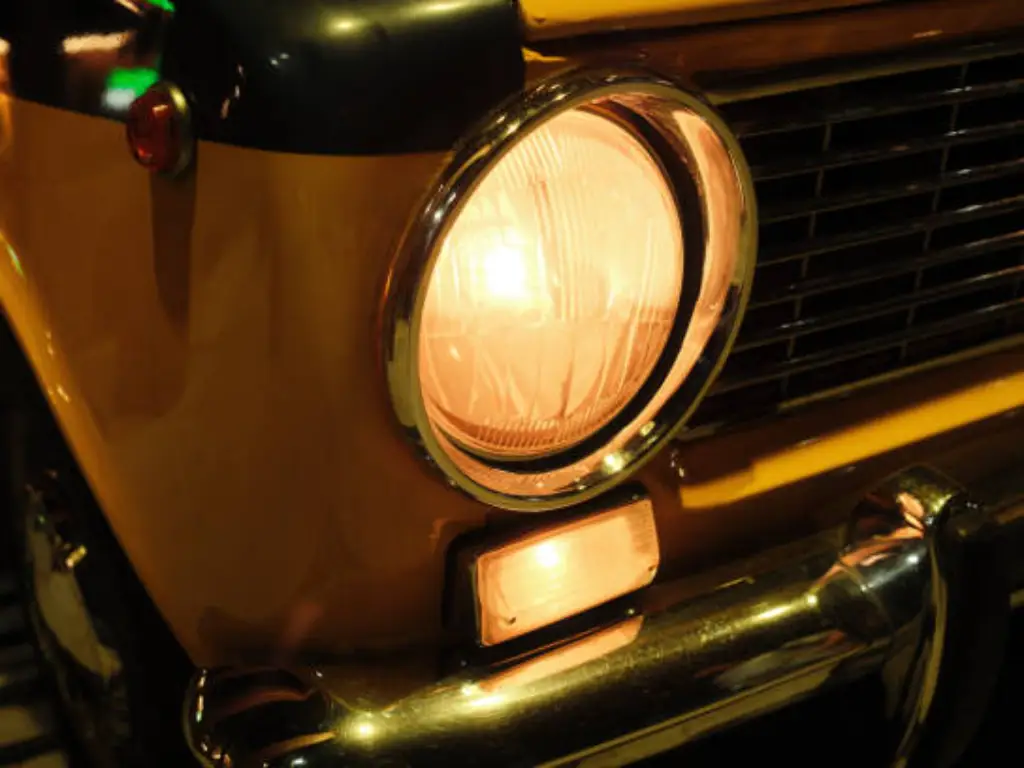
- Real Aesthetics, Contemporary Reliability: We make lights that are strictly OEM in terms of size, fitment, and appearance. We, however, use modern tooling and high-end plastic injection molding. This is to say that our amber lenses are resistant to fading and cracking–the major bane of 50-year-old parts of New Old Stock (NOS)–and retain that beautiful vintage feel and excellent build quality.
- Supply Chain Advantage: The search for definite fog light housings of a no longer available model could prove to be a nightmare. We source pain relievers, as we manage a supply chain with almost 200 suppliers and hundreds of product lines, and then it is all solved. We sell to wholesale clients, restoration shops, tail lights, and fog lights that were discontinued many years ago by generic catalogs and are difficult to find.
- The Road Reliability: We support our manufacturing with a 12-month unlimited-mileage warranty. We know that these cars should not only be parked, but also driven. Our products have been designed to withstand the vibration and electricity realities of vintage motoring, offering dealers and restoration shops a non-speculative alternative with a stable and high-quality product.
You do not need to sacrifice the soul when making your classic more visible.
Installation Styles: Films vs. Replacement Bulbs vs. Dedicated Lenses
When you have determined the color (Amber in the snow/ dust, Yellow in the fog) and have selected the appropriate style that suits your car, you need to decide how to do it. These are the three major methods that have advantages and disadvantages in terms of easy installation and performance.
1. Laminates and Films (The Budget Option)
This will entail using a yellow or amber vinyl coating on your already existing white fog lights.
- Pros: Extremely inexpensive; the lens is covered against rock hits; completely removable.
- Cons: Significant light loss. The work of films is light filtering (blocking). There is a possibility that a coat of amber will cut your light production by 30-50% or more. Moreover, in vintage vehicles having tinted glass, the lenses tend to bulge or peel off, destroying the beauty.
2. LED Replacement Bulbs
The most popular path that includes a yellow LED bulb is the replacement of your halogen bulb.
- Pros: Instant brightness upgrade; generally a plug-and-play product.
- Cons: Beam pattern issues. When the bulbs of the fog lights are not perfectly placed in line with the focus point of your ancient reflector housing, the light will be scattered everywhere. This may cause the blindness of the oncoming traffic and even the road not being lit. It can also contravene the local regulations on glare control.
3. Dedicated Lenses and Assemblies (The Professional Choice)
Changing the unit completely to one that is made to fit amber fog lights or yellow lights.
- Pros: Better visibility and optimal performance. The reflector and lens are designed to be used in a particular wavelength, giving the maximum throw and no glare.
- Why it matters for Classics: In the case of a vintage car, a special assembly (such as the one made by Sunway) is used to make sure that the mounting brackets fit the factory holes without ruining the bodywork of the car. It also gives the saturation of color that cannot be achieved in the films, and hence, the light seems factory-made. Additionally, it normally takes a minor adjustment of the beam to get it pointed where it is needed and for minimal reflection back of the driver.
Conclusion
Your surroundings decide on the argument of amber vs yellow. When it becomes heavy rain or poor weather, it is not pleasant all the time, so yellow fog lights have the advantage of giving you the required visibility. In extreme snow or dust, you have nothing so much in your favor as the lower color temperature of Amber.
With the selection of high-quality and period-correct parts, you make sure that your vintage car will not only be a showpiece but a working machine that is able to take on the road with excellent visibility despite the weather conditions.
Recent Blog
- Ford Mustang History Decoded: 60 Years of Chassis, Engine Swaps & Market Value
- How to Adjust Car Mirrors Properly: Eliminate Blind Spots for Modern & Classic Cars
- What Does GMC Stand For? The Full Story of GM’s "Professional Grade" Brand
- Antique Car VIN Lookup: The Forensic Guide to Decoding & Verification

 English
  Spanish
  French
  German