
Understanding Chevy truck generations is far more than a nostalgic exercise—it is the ultimate defense against costly sourcing errors, ruined restorations, and skyrocketing B2B return rates. When you order a control arm or an electrical harness, assuming “a 1999 Chevy truck is just a 1999 Chevy truck” will rapidly drain your budget. In this technical diagnostic guide, we bypass basic historical summaries and decode the engineering platforms, chassis milestones, and physical fingerprints that dictate true parts compatibility from 1947 to the modern era.
Pre-C/K Era (1947-1959): The Foundation of the Modern Pickup
This era transformed the Chevrolet pickup from a rudimentary agricultural implement into a consumer-friendly vehicle. For restoration shops and parts distributors, this timeline is divided into two distinct architectural platforms, riddled with crossover traps.
Generation Timeline & The 1955 Danger Zone
The timeline is strictly bifurcated, with 1955 acting as the most dangerous year for parts procurement:
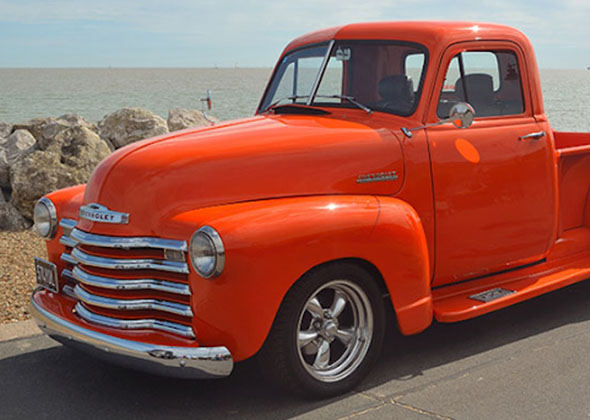
- Advance Design (1947–1955 First Series): Characterized by rounded, pontoon-style fenders and a more upright stance. These vehicles were purely utilitarian.
- The 1955 Split (The Danger Zone): If a vehicle is registered as a “1955,” it means nothing without verification. GM sold the old Advance Design as the “First Series” in early 1955, and the entirely new Task Force as the “Second Series” later that year. None of the body panels or core electronics intersect.
- Task Force (1955 Second Series–1959): Introduced a flatter, wider, and more modern aesthetic, laying the groundwork for the muscle truck era.
Engine, Voltage, & Mechanical Shifts
The drivetrain architecture saw its most significant leap during this 12-year window:
- Birth of the Small-Block (1955): The Second Series Task Force introduced the revolutionary 265 cu-in (4.3L) Small-Block V8. Engine mounts, radiators, and exhaust manifolds drastically changed at this node.
- The Electrical Voltage Shift (1955): Critical Warning: 1955 First Series trucks run on a 6-volt electrical system. The 1955 Second Series upgraded to a 12-volt system. Installing a 6V gauge cluster or wiper motor in a 12V harness will cause immediate thermal failure.
- Driveline Modernization: The archaic enclosed “Torque Tube” driveshaft was finally phased out in 1955 in favor of the modern open driveshaft (Hotchkiss drive), changing rear axle and transmission tail-housing compatibility permanently.
Parts Compatibility & Identification (How to Spot the Year)
- The Grille: 1947-1953 grilles feature 5 horizontal bars. 1954 shifted to the distinctive “Bullnose” cross-hair grille.
- The Windshield: 1947-1953 utilized a split, two-piece windshield. 1954 upgraded to a single-piece curved windshield (dashboard sheet metal is entirely incompatible across this shift).
- The Headlamps: 1958 introduced the dual quad-headlamp design. Front fenders and core supports from ’58-’59 will not interchange with ’55-’57 models.
The C/K Series (1st & 2nd Gen, 1960-1972): The IFS Revolution
The introduction of the C (Two-Wheel Drive) and K (Four-Wheel Drive) nomenclature established the naming convention GM would use for decades. This era represents the first major leap in chassis dynamics.
Mechanical Evolution: Suspension & Braking Milestones
1960 saw the abandonment of solid front axles on 2WD models in favor of Independent Front Suspension (IFS), radically improving steering geometry. Furthermore, while 1967-1970 models utilized four-wheel drum brakes, 1971 made front disc brakes standard equipment. Sourcing master cylinders, proportioning valves, or front spindles must strictly adhere to this pre-71/post-71 dividing line.
Common Flaws & Restoration Matrix
| Component Area | OEM Flaw (The Cons) | Owner Pain Point | Modern Solution |
|---|---|---|---|
| Hood Hinges (60-66) | Weak stamped metal design lacking structural rigidity. | Hoods frequently buckle or fold in half when attempting to close them. | Install heavy-duty aftermarket billet hinges or reinforced OE-style replacements. |
| Cab Roof (67-72) | Poor drainage in the factory drip rails. | Severe rust-through along the roofline, allowing water into the cabin. | Cut out and weld in aftermarket stamped drip rail patch panels. |
Parts Compatibility & Identification (The “Action Line” Fingerprints)
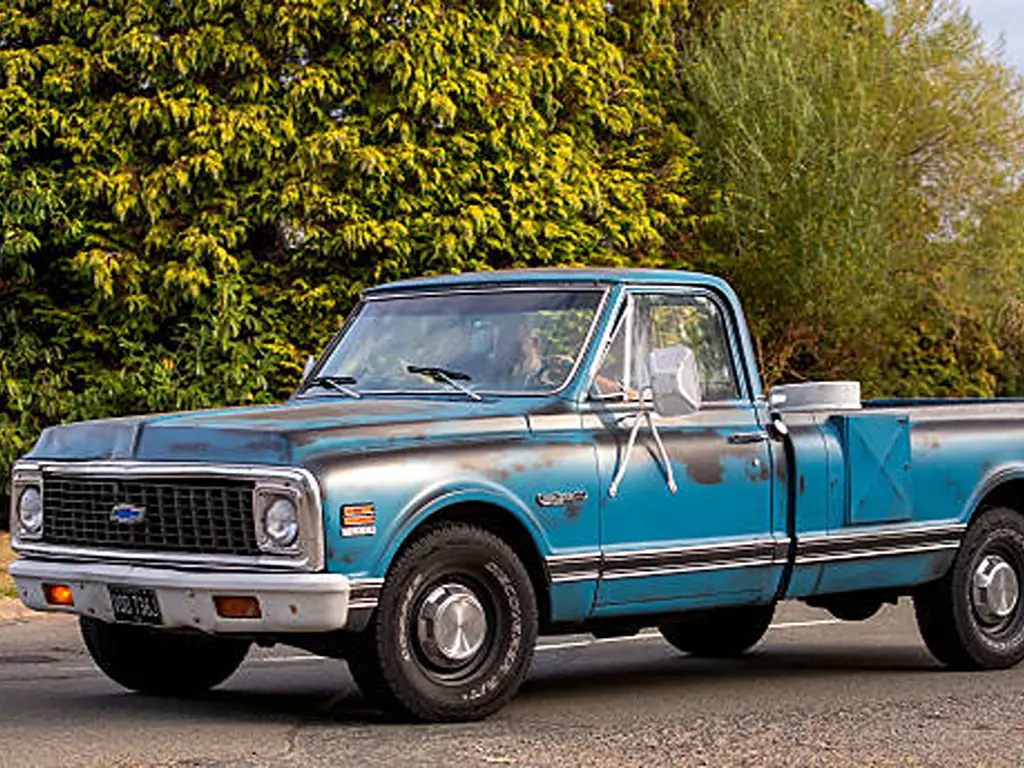
The 1967-1972 “Action Line” trucks look nearly identical to the untrained eye, but buying body panels requires knowing the exact year:
- Side Marker Lights: Federal law did not require side markers in 1967, resulting in smooth fenders. 1968 mandated marker lights. Buying a reproduction ’67 fender for a ’68 means manually cutting holes.
- Rear Window Glass: 1967 trucks came standard with a small rear window. 1968+ models featured a large panoramic rear glass. The rear cab sheet metal is completely non-interchangeable.
- Grille Materials: 1969-1970 utilized stamped aluminum grilles, whereas 1971-1972 introduced plastic “egg-crate” inserts.
3rd Gen C/K “Square Body” (1973-1987): The Heavy-Duty Golden Era
Currently dominating the aftermarket restoration industry, the “Square Body” generation is a high-volume platform. However, its 14-year production run hides multiple evolutionary breakpoints, culminating in a highly chaotic transition year.
The 1987 Chaos: C/K vs. R/V Transition
Because the new GMT400 platform was debuting in 1988 under the C/K badge, GM changed the name of the remaining Square Body trucks to R (2WD) and V (4WD) for 1987 to avoid cataloging overlaps. This transition year also introduced modern fuel delivery.
| Comparison Dimension | 1986 C/K Series (End of an Era) | 1987 R/V Series (The Transition) |
|---|---|---|
| Nomenclature Concept | Standard C (2WD) and K (4WD) designation. | Renamed to R (2WD) and V (4WD) to clear the C/K name for the upcoming ’88 GMT400. |
| Fuel Delivery System | Mechanical Carburetor (Quadrajet). | Electronic Throttle Body Injection (TBI). |
| Fuel Tank & Pump | Mechanical engine-mounted pump; basic tank sender. | High-pressure electric fuel pump mounted inside a baffled fuel tank. |
Common Flaws & Restoration Matrix
| Component Area | OEM Flaw (The Cons) | Owner Pain Point | Modern Solution |
|---|---|---|---|
| Cab Structure | Poor drainage behind doors and dual-wall bed design trapped moisture. | Cab corners, rocker panels, and wheel arches rot completely through. | Source high-quality OE-spec aftermarket heavy-gauge stamped patch panels. |
| Electrical System | Early reliance on fragile glass tube fuses in poorly sealed bulkheads. | Intermittent lighting failures and fire risks due to corroded fuse blocks. | Complete chassis wiring harness retrofits using modern blade-style fuse blocks. |
Parts Compatibility & Identification (Floor Pans & Front Clips)
The Hidden 1981 Chassis Overhaul: While the exterior received an aerodynamic facelift in 1981 (sloped hood, exposed wiper cowls), GM also drastically altered the cab’s floor pans to reduce weight. As a result, seat tracks, carpeting, and transmission tunnel humps from a 1973-1980 truck will not bolt into a 1981-1987 truck without extreme fabrication.
4th Gen C/K “OBS / GMT400” (1988-1998): Modern Aerodynamics & OBD-II
The Old Body Style (OBS), officially the GMT400 platform, represents the bridge to modern automotive computing. The physical dividing line for this generation rests entirely on interior components and engine diagnostics.
Platform Milestones & Engine Architecture
1996 marked the definitive power and computing shift. The mandate for OBD-II diagnostics coincided with the introduction of the Vortec engine cylinder heads, yielding massive horsepower gains. If you are engine-swapping, 1996 is the physical and digital dividing line—engine wiring harnesses, ECMs, and intake manifolds from a ’95 will simply not function on a ’96 block.
Common Flaws & Restoration Matrix
| Component Area | OEM Flaw (The Cons) | Owner Pain Point | Modern Solution |
|---|---|---|---|
| Exterior Hardware | Brittle interior plastics used in the door handle assembly. | Door handles frequently snap off in the user’s hand during winter. | Upgrade to aftermarket reinforced metal door handle assemblies. |
| HVAC Controls | Weak soldering on the climate control circuit board. | Backlights burn out and AC compressor fails to engage. | Install remanufactured control heads with upgraded LED soldering. |
Parts Compatibility & Identification (The 1995 Interior Shift)
1988-1994 interiors featured a flat, blocky dashboard with a distinct “half-moon” gauge cluster in early models. 1995 introduced a completely overhauled curved, driver-centric dash with a passenger airbag. Radio bezels, AC vents, and gauge clusters are 100% incompatible across the 1994/1995 boundary. Furthermore, always verify your driveline before buying brakes: 2WD models (C1500) utilize a 5-lug rotor, while 4WD models (K1500) utilize a 6-lug hub assembly.
The GMT800 Platform (1999-2006): The NBS Reliability Benchmark
The New Body Style (NBS) GMT800 officially launched the “Silverado” nameplate. Powered by the legendary Gen III LS-based engines, this platform is revered by fleet managers and enthusiasts alike.
The LM7 V8 Legend & Platform Pros
The GMT800 is a benchmark for longevity due to the 5.3L iron-block LM7 V8. Crucially, this generation avoided the disastrous early iterations of Active Fuel Management (AFM) that plagued later models, allowing these engines to frequently exceed 300,000 miles with basic maintenance.
Common Flaws & Diagnostic Matrix
| Component Area | OEM Flaw (The Cons) | Owner Pain Point | Modern Solution |
|---|---|---|---|
| Instrument Cluster | Defective factory stepper motors produced between 2003-2006. | Speedometer and tachometer stick, die, or read entirely incorrectly. | Send cluster out for professional motor and solder rebuild services. |
| Hydraulic Brakes | Factory mild-steel brake lines run adjacent to frame rails in salt zones. | Catastrophic brake line rust leading to sudden loss of pedal pressure. | Replace entirely with pre-bent Nickel-Copper (NiCop) line kits. |
| ABS Module | Kelsey-Hayes ABS pump modules suffer from cold solder joint fractures. | Permanent ABS and Brake warning lights on the dash. | Module removal and internal circuit board re-soldering. |
Parts Compatibility & Identification (The 1999-2002 Classic Trap)
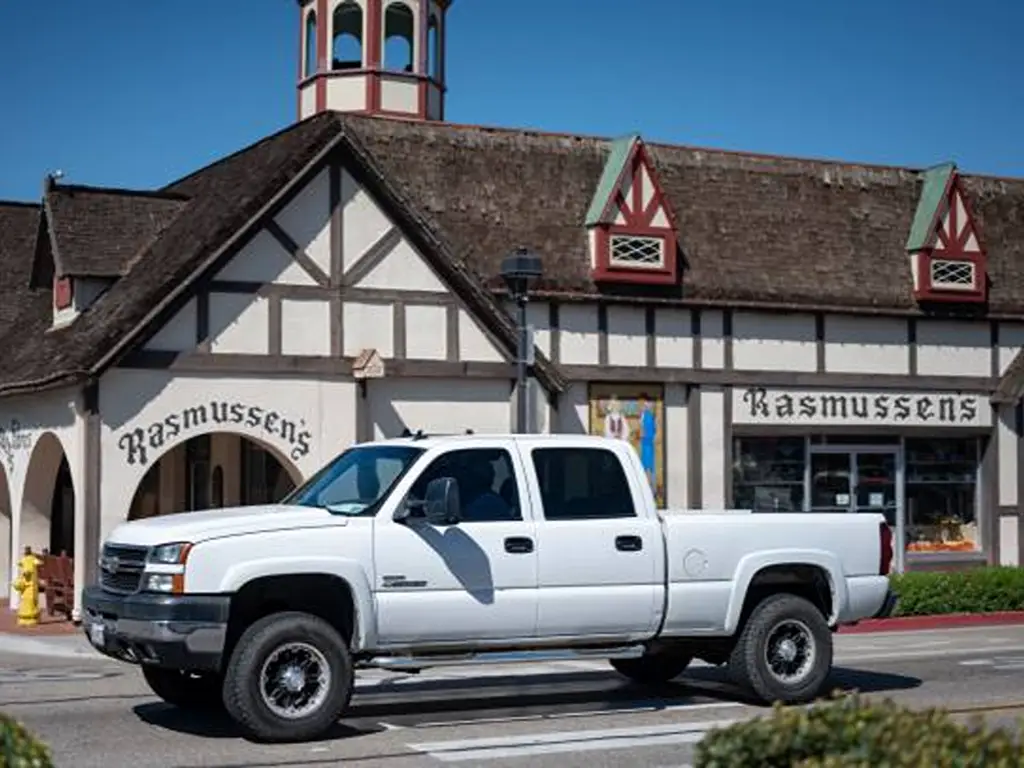
The 1999 transition is a parts-ordering minefield. GM sold the new GMT800 Silverado 1500 alongside the old GMT400 (OBS) C/K 1500 Classic for several years. The Visual Trick: Look at the door handles. If they are flat and flush with a thumb push-button, it’s an OBS Classic. If they are pull-style loops, it’s the new GMT800. Additionally, when ordering electronic throttle (TAC) modules, strictly verify the wire harness colors, as early and late NBS pedal sweeps differ.
The Modern Silverado Era (2007-Present): GMT900, K2XX, & T1XX
Covering nearly two decades of production, the modern era shifted focus toward strict emissions compliance, extreme weight reduction, and interconnected smart-vehicle technology.
Generational Overview
- GMT900 (2007-2013): Introduced heavily raked windshields for aerodynamics and fully boxed frames.
- K2XX (2014-2018): The weight-reduction era. GM began incorporating aluminum into the hood, engine block, and suspension components while refining interior luxury.
- T1XX (2019-Present): The smart-truck era featuring mixed-material construction (high-strength steel frames with aluminum swing panels) and the high-volume “Durabed” cargo box design.
Common Flaws & Diagnostic Matrix (The AFM Crisis)
| Component Area | OEM Flaw (The Cons) | Owner Pain Point | Modern Solution |
|---|---|---|---|
| Engine Valvetrain (GMT900) | Early Active Fuel Management (AFM) lifter design flaws. | Lifter collapse, engine ticking, and severe oil consumption. | Complete AFM delete kits (camshaft, lifters, and ECU reprogram). |
| Transmission (K2XX) | 8L90 8-speed transmission torque converter glazing. | Severe shifting shudder, hesitation, and harsh downshifts. | Updated Mobil 1 fluid flush and torque converter replacement. |
Parts Compatibility & Identification (Aluminum & Electronics)
The Digital Lockdown: In the modern T1XX platform, hardware is secondary to software. Almost all control modules (including seemingly basic items like radio head units and headlight control modules) are digitally locked to the vehicle’s VIN via the CAN-FD network. Purchasing used salvage yard electronics without performing a dealership-level Tech II / Global A security relearn will result in a dead module.
Ultimate Identification Guide: Eradicating Parts RMAs
This is where OEM supply chains and amateur restorations break down. Below is the definitive playbook for avoiding the most expensive cataloging errors in the automotive aftermarket.
The B2C Individual Buyer Playbook: 4 Steps to Decode Your Truck
- Ignore the “Year Only” Search: Because of the chaotic overlap in 1955, 1987, 1999, and 2007, simply selecting your year from a drop-down menu guarantees a 50% failure rate for certain parts.
- Decode the SPID Sticker (RPO Codes): Open your passenger glovebox and locate the silver Service Parts Identification sticker. Never buy suspension components without verifying this. Code Z85 means standard handling; Z71 means off-road. Your shock absorber dimensions depend entirely on these 3-digit codes.
- Physically Count Your Hardware: Before buying wheels or brake rotors, count your studs (5-lug vs 6-lug vs 8-lug HD). Before buying a Mass Airflow (MAF) sensor, unplug it and count the pins (3-pin vs 5-pin). Mid-year wiring harness changes are notorious.
- Verify VIN for Electronics: When purchasing any module containing a circuit board (ECU, BCM, ABS pump), ensure the seller can verify compatibility with your exact 17-digit VIN to prevent GM Passlock anti-theft triggers.
The B2B Supplier Strategy: 5 Tactics to Prevent Catalog Mismatches
For parts distributors, high Return Merchandise Authorization (RMA) rates destroy profit margins. Implement these 5 strict supply chain defenses:
- 1. Force “Sub-model” UI Gating: For transition years like 1999, your e-commerce platform must block checkout until the customer explicitly selects “Classic Body” or “New Body Style.”
- 2. Electronic Disclaimer Matrices: Product pages for modules must feature a mandatory checkbox stating “I understand Programming/VIN Flashing is Required” before allowing the item into the cart.
- 3. Map ERPs to RPO Codes: Tie your chassis and suspension SKUs directly to Z71, Z85, or Z60 parameters rather than broad model years to eliminate fitment guesswork.
- 4. The 24x/58x Reluctor Firewall: When selling used Gen III/Gen IV LS engines, mandate that your sales team verifies the crankshaft sensor plug color (Black = 24x, Gray = 58x). Mixing these up results in an engine that cranks but never fires.
- 5. Overcome the NLA (No Longer Available) Crisis: For 1940s-1980s Advance Design or early Square Body parts, OEM catalogs are dead and salvage parts are exhausted. The ultimate supply chain moat is Reverse Engineering.
Are discontinued GM parts creating dead zones in your product catalog? Stop losing revenue to unpredictable junkyard salvage and out-of-stock notices.
Partner with Sunway for Custom Reverse Engineering Solutions



 English
  Spanish
  French
  German