
Decoding the lineage of Ford trucks is more than a history lesson—it is a financial necessity. For the individual buyer, failing to understand generational cutoffs means unknowingly purchasing a year plagued by engine timing issues. For the B2B auto parts distributor, confusing a chassis update for a mere “facelift” results in thousands of dollars in mismatched inventory and skyrocketing Return Merchandise Authorization (RMA) rates.
Ford Truck Generations: Complete Year-by-Year Overview and Evolution
The generational evolution of Ford trucks represents a fundamental shift in how pickup trucks are utilized by society. Early generations were defined by purely commercial attributes, acting as agricultural workhorses with cramped single cabs and bone-rattling solid front axles. As the American highway system expanded, the pickup transitioned into a personal vehicle, pushing Ford to rapidly increase cab sizes to the now-dominant SuperCrew configuration. Ride quality evolved simultaneously, abandoning stiff leaf-sprung front ends for sophisticated independent suspensions that rival modern sedans in NVH (Noise, Vibration, and Harshness) control. Today, the modern Ford truck is a technology-focused platform, boasting advanced towing telemetry, CAN-bus networks, and onboard generators. Understanding this evolution is crucial, as these shifting design philosophies directly dictate the parts compatibility and maintenance realities for both owners and aftermarket distributors today.
| Generation | Years | Key Models | Major Changes & Milestones |
|---|---|---|---|
| Gen 1 – 2 | 1948 – 1956 | F-1 to F-100 | “Bonus-Built” era; Three-digit naming convention begins; Y-Block V8 introduced. |
| Gen 3 – 5 | 1957 – 1972 | F-100, F-250 | Twin I-Beam independent front suspension revolutionizes ride quality (1965). |
| Gen 6 – 7 | 1973 – 1986 | F-100, F-150 | Birth of the F-150 (1975); The aerodynamic “Square Body” era begins. |
| Gen 8 – 9 | 1987 – 1996 | F-150 (OBS) | Electronic Fuel Injection (EFI) standard; “Old Body Style” teardrop shapes. |
| Gen 10 | 1997 – 2003 | F-150 | The Chassis Schism: F-150 and Super Duty platforms permanently separate. |
| Gen 11 – 12 | 2004 – 2014 | F-150 | Boxed frames; Introduction of the 3.5L Twin-Turbo EcoBoost V6. |
| Gen 13 – 14 | 2015 – Present | F-150, Lightning | Military-grade aluminum body (2015); Pro Power hybrid electrification (2021). |
How to Identify Your Ford Truck Generation (And Why It Dictates Parts Fitment)
Identification is important because the wrong generation inevitably leads to purchasing the wrong parts. While front grilles and headlights provide quick visual cues, they are frequently modified in the aftermarket.
Visual Cues vs. The Fitment Reality
Generational shifts are often marked by distinct lighting architecture, such as the Gen 7 “Square Body” flat fascia or the Gen 13 “C-shaped” daytime running lights. However, relying purely on these visual indicators is the leading cause of fitment disasters for B2B distributors. Because a Gen 11 front clip can often be bolted onto a Gen 12 with minimal fabrication, a visual inspection alone cannot confirm the underlying suspension geometry or engine control module layout. You must move past aesthetics and audit the vehicle’s true mechanical DNA to ensure parts compatibility.
Decoding the VIN, Door Stickers, and Crossover Years
To secure guaranteed parts compatibility, execute this verification funnel: Visual ID → Door Sticker Year → VIN 10th Digit → Engine Code → Bed/Cab Dimensions. This strict protocol is mandatory because of dangerous “crossover years” where Ford sold two completely different generations simultaneously. For example, when the revolutionary Gen 10 F-150 launched in 1997, Ford continued selling the older Gen 9 chassis as the “F-250 HD.” Similarly, in 2004, the new Gen 11 debuted while the old Gen 10 was still sold as the “F-150 Heritage.” If a buyer simply orders suspension parts for a “2004 F-150” without checking the VIN’s engineering code, suppliers face a catastrophic 50% chance of shipping completely incompatible components.
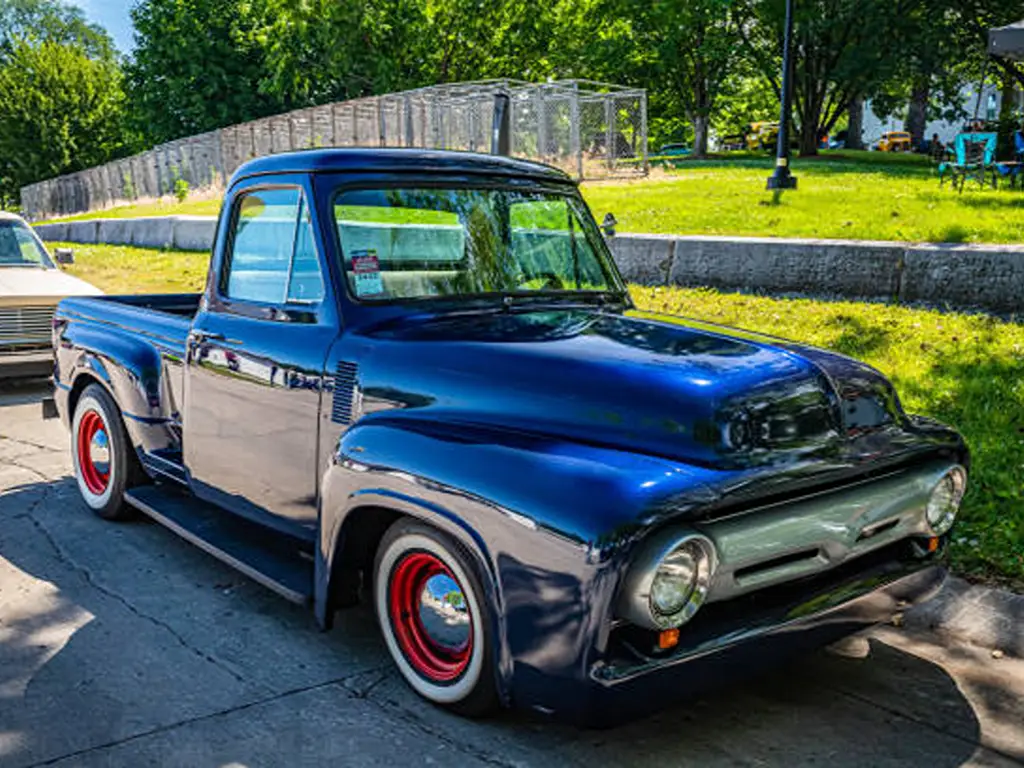
The Classic Heritage: Generations 1 to 5 (1948-1972)
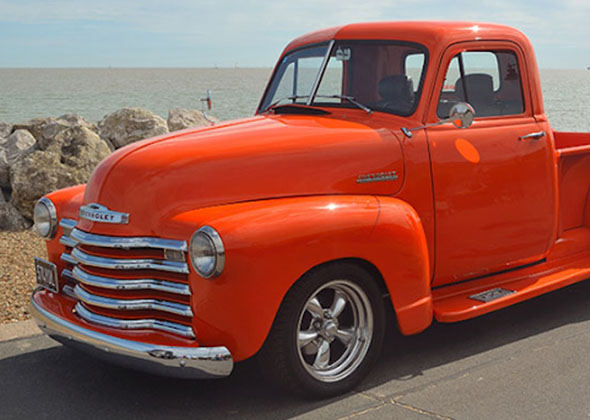
The Bonus-Built Era and the 1953 Naming Shift (Generations 1-2)
The Breakpoint: The year 1953 marked a definitive turning point as Ford officially transitioned to the legendary F-100 naming structure and introduced the all-new Y-Block V8 engine. Ford recognized that the rapidly expanding American interstate system required engines capable of sustained high-speed cruising. The defining advantages of this generation include a massive engine bay space perfect for modern Coyote V8 swaps, thick vintage sheet metal that resists modern dents, and the iconic 1956 wrap-around windshield that currently commands extreme premiums at auto auctions.
The Ownership Reality: Despite their undeniable visual appeal, owning a first or second-generation Ford truck requires significant mechanical patience. The primary flaws are the dangerously outdated 6-volt electrical systems that suffer frequent generator failures, zero factory power steering, and terrifyingly weak unassisted drum brakes. The Solution: Buyers must preemptively rewire the truck with a modern 12-volt harness (like a Painless Performance kit), retrofit an electric power steering (EPS) unit, and install a front disc brake conversion before attempting highway speeds.
For classic car builders and B2B distributors, the total absence of OEM exterior trim pieces and specialized chassis brackets is a nightmare. Relying on rusty junkyard salvage is no longer viable. Smart distributors bypass this bottleneck by partnering with manufacturers like Sunway Autoparts. Utilizing industrial reverse engineering and 3D laser scanning, Sunway can take a single degraded original sample and digitally reconstruct perfect, OEM-spec metal and plastic components, unlocking massive profit margins in the classic restoration market.
The 1965 Twin I-Beam Revolution (Generations 3-5)
The Breakpoint: In 1965, Ford fundamentally altered truck chassis engineering by introducing the Twin I-Beam independent front suspension. This radical change was driven by consumer feedback from tradesmen exhausted by the punishing ride of traditional solid front axles. The immediate advantages were an exceptionally plush highway ride quality compared to solid axles, superior chassis torsional rigidity, and the introduction of factory-integrated 4WD systems that democratized off-road utility for the masses.
The Ownership Reality: While the Twin I-Beam delivered a plush ride for the era, it introduced long-term maintenance headaches that continue to plague vintage owners today. The critical flaws include a suspension geometry that makes perfect four-wheel alignment virtually impossible (leading to severe “cambered-out” tire wear), and factory pivot bushings that degrade extremely fast under load. The Solution: Mechanics must invest in specialized camber correction bushings and drop brackets to fix the geometry. Owners should immediately replace old rubber bushings with high-durometer polyurethane to extend the suspension’s lifespan and cure highway wandering.
The Transition to Modernity: Generations 6 to 9 (1973-1996)
Birth of the F-150 and the Square Body Era (Generations 6-7)
The Breakpoint: The legendary F-150 nameplate was born in 1975 as a brilliant engineering loophole to combat strict EPA emissions regulations. By engineering the F-150 with a payload capacity tuned just above the light-duty weight threshold, Ford legally bypassed the requirement for expensive catalytic converters. This generation’s distinct advantages include a perfect balance of heavy payload capacity without power-choking emissions equipment, fantastic panoramic driving visibility, and the industry-first extensive use of galvanized steel that heavily resisted rust.
The Ownership Reality: Generation 6 and 7 trucks represent the pinnacle of analog simplicity, but they are not without fault. The major flaws include primitive vacuum lines that are notoriously prone to cracking (causing erratic idling), early emissions carburetors that are a nightmare to cold-start, and 1980s interior plastics that degrade rapidly under UV exposure. The Solution: Owners must completely delete and cap off non-essential vacuum leaks, upgrade to a modern self-tuning EFI throttle body (such as Holley Sniper) to permanently cure cold-start issues, and source aftermarket ABS plastic dash covers to hide UV cracking.
The 1987 EFI Transition and OBS Era (Generations 8-9)
The Breakpoint: In 1987, Ford executed a massive powertrain leap by becoming the first manufacturer to standardize Electronic Fuel Injection (EFI) across its entire pickup truck lineup. This was heavily motivated by tightening Corporate Average Fuel Economy (CAFE) standards. By Generation 9 (the OBS or Old Body Style), Ford softened the exterior angles and introduced safety features like driver-side airbags. The core advantages are instant and reliable cold starts regardless of elevation, incredibly smooth linear power delivery from the 4.9L I-6 and 5.0L V8, and crash safety improvements that elevated it to a reliable daily family vehicle.
The Ownership Reality: Today, the OBS Generation 9 is considered the best entry point for DIY mechanics. However, potential buyers must navigate specific failures. The main flaws are early E4OD automatic transmissions that are highly prone to overheating under heavy tow, dual fuel tank selector valves that frequently seize, and instrument cluster circuit boards that suffer from degraded solder joints. The Solution: Install an oversized aftermarket transmission cooler to save the E4OD, replace the entire dual-tank selector valve assembly immediately upon purchase, and send the gauge cluster to a specialized electronics shop to reflow the solder joints.
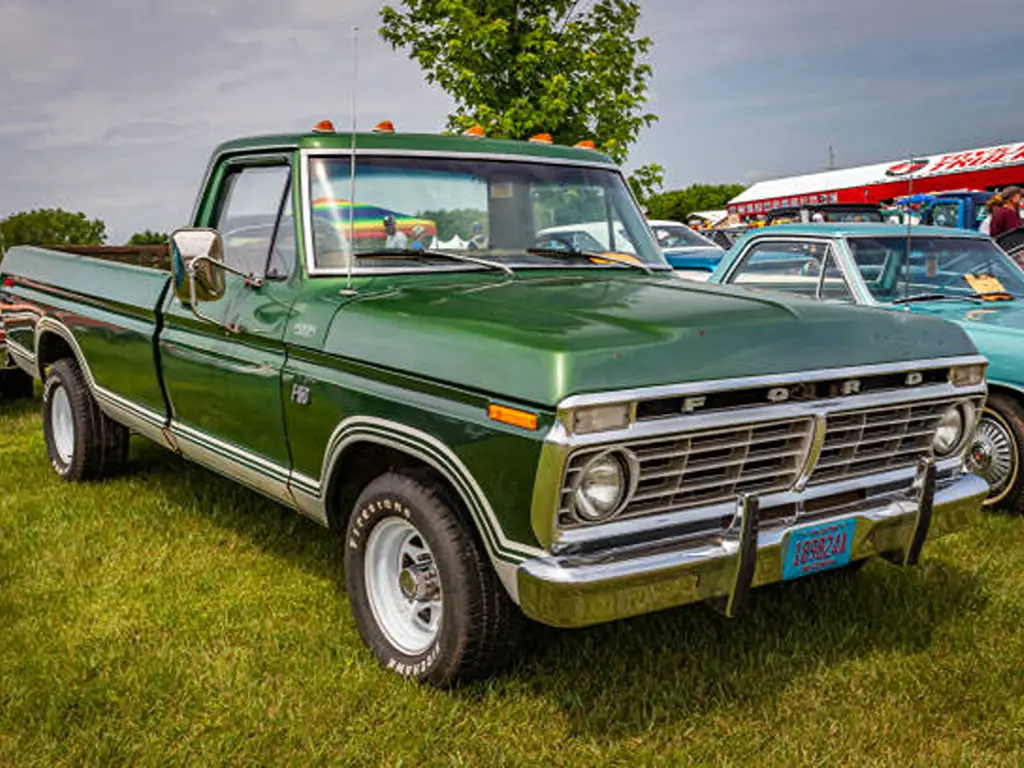
The Great Chassis Schism and Tech Dawn: Generation 10 (1997-2003)
The Breakpoint: The year 1997 marks the most disruptive and permanent physical breakpoint in the history of the Ford F-Series. Realizing they could no longer use a single chassis for both suburban families and commercial fleets, Ford executed the “Platform Split.” The half-ton F-150 transitioned to the highly aerodynamic PN-96 platform, while the F-250 and heavier trucks were spun off into the distinct “Super Duty” line with dedicated, heavy-duty ladder frames. The immense advantages of the Gen 10 F-150 included a quantum leap in passenger car-like handling via the new SLA independent front suspension, massive reductions in interior NVH, and vastly improved modern crash safety cell structures.
Parts Fitment & Ownership Reality: For B2B auto parts distributors, the 1997 schism is an impenetrable firewall; suspension components and chassis mounting points between the F-150 and F-250 are entirely incompatible. For the vehicle owner, mechanical reliability took a hit. The most fatal flaws include early 5.4L Modular V8s featuring insufficient cylinder head threads that violently blow spark plugs out of the block, and the F-150 Heavy Duty utilizing a bizarre 7-lug wheel pattern making aftermarket wheel sourcing impossible. The Solution: Pre-emptively install steel spark plug thread inserts (like Time-Sert) to permanently fix the 5.4L head flaw. Buyers and suppliers alike must strictly avoid the 7-lug models unless prepared to machine custom brake rotors, and catalog managers must rigidly segregate Super Duty and F-150 SKUs to prevent catastrophic RMA rates.
Powertrain Evolution and Material Revolution: Generations 11 to 14 (2004-Present)
The 2009 EcoBoost Era (Generations 11-12)
The Breakpoint: Following the reliability struggles of the 3-Valve V8s in Generation 11, Ford shocked the automotive industry in Generation 12 by introducing the 3.5L twin-turbocharged EcoBoost V6. This radical departure was engineered to satisfy stringent federal fuel economy mandates while offering extreme low-end torque. The unparalleled advantages are diesel-like low-end torque that easily out-tows traditional V8s, fully boxed frames offering the highest rigidity in class history, and advanced factory-integrated trailer sway control.
The Ownership Reality: Generation 12 trucks offer cross-class towing capabilities, but they come with severe mechanical caveats. The defining flaws are Gen 11 5.4L engines suffering from fatal cam phaser failures (a loud diesel ticking), and early Gen 12 EcoBoosts suffering from severe timing chain stretch under heavy load. The Solution: Demand complete timing component replacement receipts before buying any 5.4L. For EcoBoost models, exclusively use high-quality full-synthetic oil at shortened 5,000-mile intervals, and install an aftermarket oil catch can to prevent intake valve carbon buildup and protect the turbos.
The 2015 Aluminum Body & 2021 Electrification (Generations 13-14)
The Breakpoint: Generation 13 represented a monumental gamble for Ford as they transitioned the entire truck body to military-grade aluminum alloy. Generation 14 pushed the envelope further into the digital age with the Pro Power Onboard system and a highly complex CAN-bus architecture. The ultimate advantages are a 700-pound weight reduction directly increasing payload capacity, complete immunity to traditional body panel rust, and the Pro Power system that turns the truck into a rolling 7.2kW hybrid generator for off-grid camping or job sites.
Parts Fitment & Ownership Reality: The aluminum body eradicated rust but introduced devastating fitment traps for the aftermarket. The critical flaws include aluminum bodies suffering from severe galvanic corrosion when touching raw steel aftermarket parts, altered bed dimensions rendering old tonneau covers incompatible, and strict CAN-bus networks that will immediately lock down the ECU if wires are improperly spliced. The Solution: B2B distributors and owners must always specify rubber isolation pads when installing steel bumpers. Verify generation-specific SKUs for bed accessories, and exclusively use OBD-II pass-through or OEM plug-and-play harnesses for all electrical lighting additions to avoid voiding warranties or triggering limp mode.
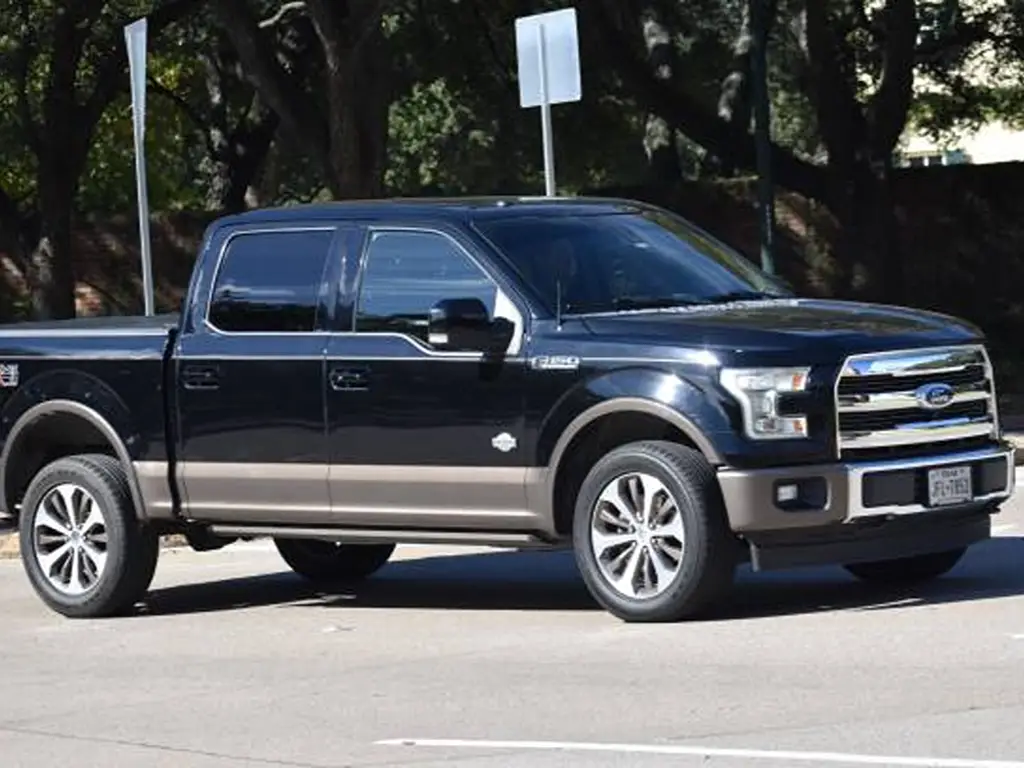
Which Ford Truck Generation Should You Buy? A Conditional Guide
There is no absolute “best” generation; your purchase must be dictated by your budget, mechanical aptitude, and intended use case.
Best for Classic Restoration
Top Pick: Generation 2 (1953-1956)
With its iconic wrap-around windshield and bulbous fenders, the Gen 2 holds the highest premium at auto auctions. The drawback is the extreme scarcity of original parts and high fabrication costs. It is strictly reserved for high-budget collectors.
Best for DIY & Restomod
Top Pick: Generation 9 (1992-1996 OBS)
The OBS era pairs a reliable EFI system with a beautifully simple, analog chassis. Parts are universally cheap and abundant. The main drawback is hunting for an E4OD transmission that hasn’t been abused. Ideal for first-time builders.
Best for Heavy Towing
Top Pick: Late Gen 12 (2013-2014) 5.0L V8
This specific combination avoids the early EcoBoost timing chain issues and the earlier Triton spark plug flaws. The naturally aspirated 5.0L Coyote offers unmatched thermal stability on long mountain passes, perfect for heavy RV towing without turbo anxiety.
Never buy based on generation alone. Use this formula: Generation (Baseline) → Specific Engine (Avoid known flaws) → Transmission Health → Chassis Condition (Frame rust) → Parts Availability = Final Decision. A perfectly maintained Gen 11 is always a better buy than an abused, oil-starved Gen 12.
The Dual-Perspective Decision Guide: Buyers vs. B2B Distributors
Data without operational execution is useless. Apply these strict rules to defend your wallet and your supply chain.
The Individual Buyer’s Playbook: Avoiding Lemons and Securing Value
- The Maintenance Veto: If purchasing a 2004-2008 (Gen 11) 5.4L Triton, demand physical receipts for spark plug extraction and cam phaser replacements. If absent, immediately deduct $2,000 from your offer.
- The Magnet Test: On any steel-bodied truck (2014 and older), run a magnet along the rear cab corners and wheel arches. If it doesn’t stick, you are looking at Bondo hiding fatal structural rust.
- The Cold-Start Rattle: Test-driving a 2011-2014 EcoBoost requires a dead-cold engine. If you hear a distinct metal “rattle” for the first 3 seconds of ignition, the timing chain has stretched—a $2,500 repair.
- The 7-Lug Trap: When buying a 1997-2003 F-150 Heavy Duty, count the lug nuts. Seven lugs mean aftermarket wheels and replacement brake rotors are nearly impossible to find.
- Aluminum Blistering: On 2015+ models, check the leading edge of the hood. Improper factory surface prep often causes the paint to bubble and peel away from the aluminum substrate.
The Distributor’s Blueprint: Supply Chain & Compatibility Strategy
- The 1997 Firewall: Enforce strict catalog isolation. Never group 1997+ F-150 and F-250 suspension or chassis components under the same SKU; the platforms are physically divorced.
- Bed Dimension Micro-Shifts: When manufacturing 2015+ (Gen 13/14) tonneau covers, you cannot reuse 2014 tooling. The interior bed rail widths and tailgate arches shifted just enough to render rigid accessories incompatible.
- The Insulation Mandate: If supplying steel exterior accessories (bumpers, headache racks) for 2015+ aluminum trucks, your Bill of Materials (BOM) must include rubber isolation pads to prevent catastrophic galvanic corrosion.
- Circuit Plug-and-Play (Anti-Lockdown): For 2021+ models, LED lighting and tow harnesses must utilize OBD-II pass-throughs or dedicated OEM harnesses. Splicing triggers the CAN-bus to cut power.
- The NLA Reverse Monopoly Strategy: Distributors should pivot away from the red-ocean price wars of standard filters and brake pads. The highest margins lie in discontinued, high-demand exterior trim and specific brackets for Gen 9 and older trucks. By partnering with a tier-one source like Sunway Autoparts, distributors can utilize 3D reverse engineering to remanufacture perfect replicas of these NLA parts, securing an absolute monopoly in the lucrative classic truck restoration market.
Are discontinued parts or cross-generational fitment issues causing massive RMA losses in your catalog?
Secure Your Supply Chain with Sunway’s Reverse Engineering Solutions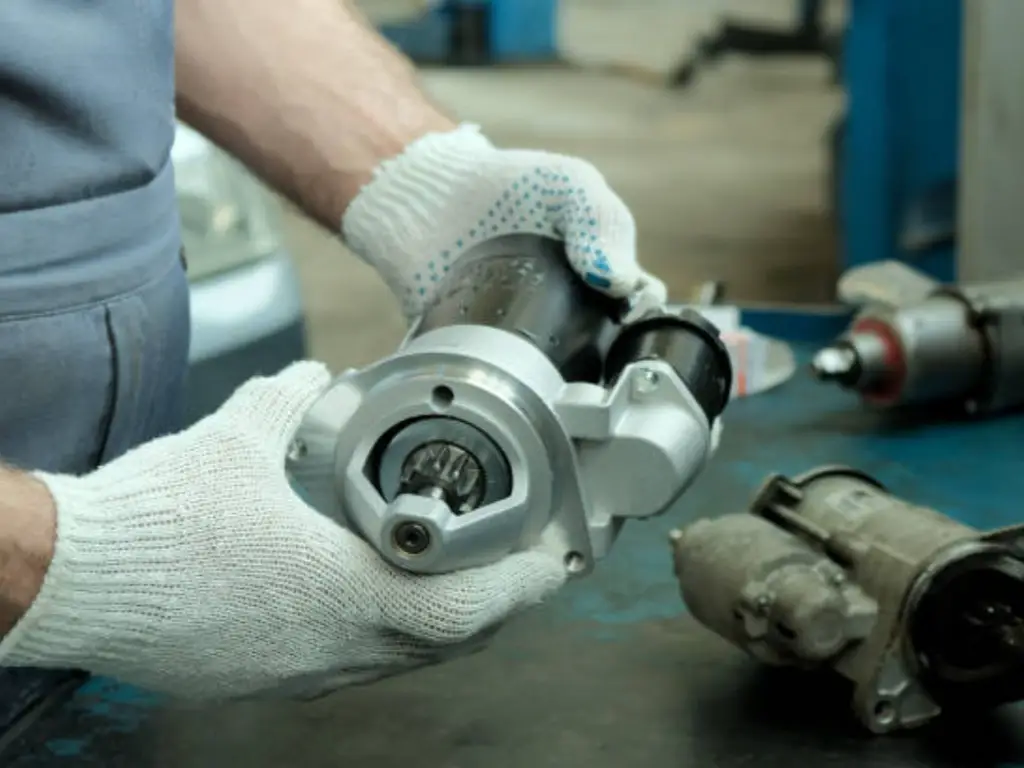

 English
  Spanish
  French
  German