
Walk into a Porsche dealer and ask for a replacement tail light, a set of brake pads, or a new ignition coil. Then check the price. That moment — the gap between what you expected and what you’re being charged — is exactly where the search for the best Porsche parts online begins.
Not all Porsche parts are created equal. And “Genuine Porsche” doesn’t always mean “best value.” Understanding the difference between the three tiers of Porsche parts is the single most important thing you can do for your wallet before you buy your next replacement component.
| Tier | What It Is | Who Makes It | Price vs. Genuine | Best For |
|---|---|---|---|---|
| Genuine Porsche (OE) | Porsche-branded parts sold through dealer networks in Porsche packaging | Porsche AG and its contracted suppliers | 100% (baseline) | Warranty-period cars, safety-critical engine internals, concours-level restorations |
| OEM | Parts made by the same factories that supply Porsche, sold under the manufacturer’s own brand — same part, white box, no Porsche logo markup | Bosch, Beru, Mahle, Brembo, Textar, Hella, Bilstein, LuK, Behr, Zimmermann | 40–70% of Genuine | Routine maintenance, brakes, suspension, filters, ignition components |
| Aftermarket | Parts made by third-party companies not involved in original production. Quality spans from “better than factory” to “dangerous.” The differentiator is whether the manufacturer commits to OE-specification standards. | Independent manufacturers worldwide | 25–60% of Genuine | Discontinued/NLA parts, cosmetic components (lights, trim), bulk wholesale purchasing |
The smart money knows when to go Genuine, when to go OEM, and when a quality OE-spec aftermarket part is the best play. For engine internals and safety-critical components on a car still under warranty, Genuine is the safe bet. For routine maintenance — oil filters, brake pads, spark plugs, ignition coils — OEM is the no-brainer: you’re buying the exact same component from the exact same factory, minus the Porsche tax. And for discontinued parts, cosmetic components, and bulk purchasing, OE-spec aftermarket is where the real value lives.
The Magnuson-Moss Warranty Act in the United States legally protects your right to use non-Genuine parts without voiding your warranty — as long as the parts meet OE specifications and you keep service records (Federal Trade Commission, 2025).
How to Find Your Porsche Part Number — Catalogs, Diagrams, and Lookup Tools
Every Porsche parts purchase starts with one thing: the correct part number. Get this wrong, and you’re returning a box. Get it right, and you control the search — you’re no longer at the mercy of the dealer’s parts counter.
Here are the three most effective ways to find your part number, ranked by authority and ease of use:
1. Porsche PET (Parts Electronic Catalog) via Partslink24
The official factory parts catalog used by Porsche dealer parts departments. Access through porsche (~$25/month). Enter your VIN and browse the complete exploded parts diagrams for your exact vehicle. This is the gold standard — if a part exists for your Porsche, it’s listed here.
2. Pelican Parts & FCP Euro Catalogs
Best for modern Porsche owners (996 and newer). Both sites offer year/model drill-down catalogs with user reviews, OEM alternative recommendations, and — in FCP Euro’s case — a lifetime warranty on every single part they sell, including consumables like oil and brake pads.
3. Porsche Classic Genuine Parts Catalog
If your Porsche is more than 10 years old, the Porsche Classic catalog is essential. It contains over 80,000 genuine parts spanning the 356 through the 997, 986/987 Boxster/Cayman, and first-generation Cayenne. Approximately 60,000–80,000 of these parts are kept in active warehouse stock, and Porsche reissues roughly 200–300 previously discontinued parts every year (Porsche Classic, 2025).
Modern Porsche Parts (996–992) — Where OEM Savings Are Biggest
For any Porsche built after 1997, the aftermarket has you covered — from oil filters to brake rotors to complete suspension kits. The question isn’t “can I find it?” but “which tier do I choose?”
Engine, Brakes, and Suspension — The Safe OEM Switch
These categories offer the biggest savings with the least risk. The manufacturers that supply Porsche’s assembly lines also sell directly to the aftermarket — same production line, same specifications, different box.
- Oil & air filters: Genuine Porsche oil filter $30–35 vs. Mahle OEM $12–15. The Mahle OC295 fits 996, 997, 986, and 987 models — and Mahle is Porsche’s OE filter supplier.
- Brake rotors & pads: Genuine Porsche front rotors for a 997 Carrera run $430–480 per rotor. Zimmermann (an OE supplier to Porsche) sells the same rotor for $180–210. Brake pads follow the same pattern: Textar T4302 front pads $85–95 vs. Porsche Genuine $210–230.
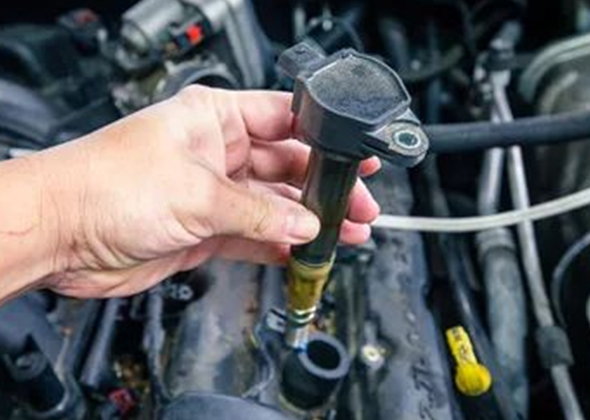
- Ignition coils: The infamous 996/997 coil failure item. Genuine Porsche: $110–130 per coil. Beru ZS177 (the factory that makes them for Porsche): $42–50. Same part, different box, 60% less.
- Suspension components: Bilstein B4 dampers are the OE replacement for most 996/997/986/987 models. A full set of four Bilstein B4 shocks costs roughly $650–800; the identical Genuine Porsche set runs $1,400–1,800.
| Part | Genuine Porsche | OE-Spec Alternative | You Save | |
|---|---|---|---|---|
| Oil Filter Mahle OC295 | $30–35 | $12–15 | ~60% | |
| Brake Pads 997 Front · Textar T4302 | $210–230 | $85–95 | ~60% | |
| Tail Light Assembly 997 Carrera | $980–1,200 | $280–400 | ~65% |
Body, Lighting, and Electrical — Where Aftermarket OE-Spec Shines
Appearance and electrical components represent Porsche’s highest-margin parts categories at the dealer level. They’re also the categories where aftermarket alternatives offer the most dramatic savings — with the least functional risk.
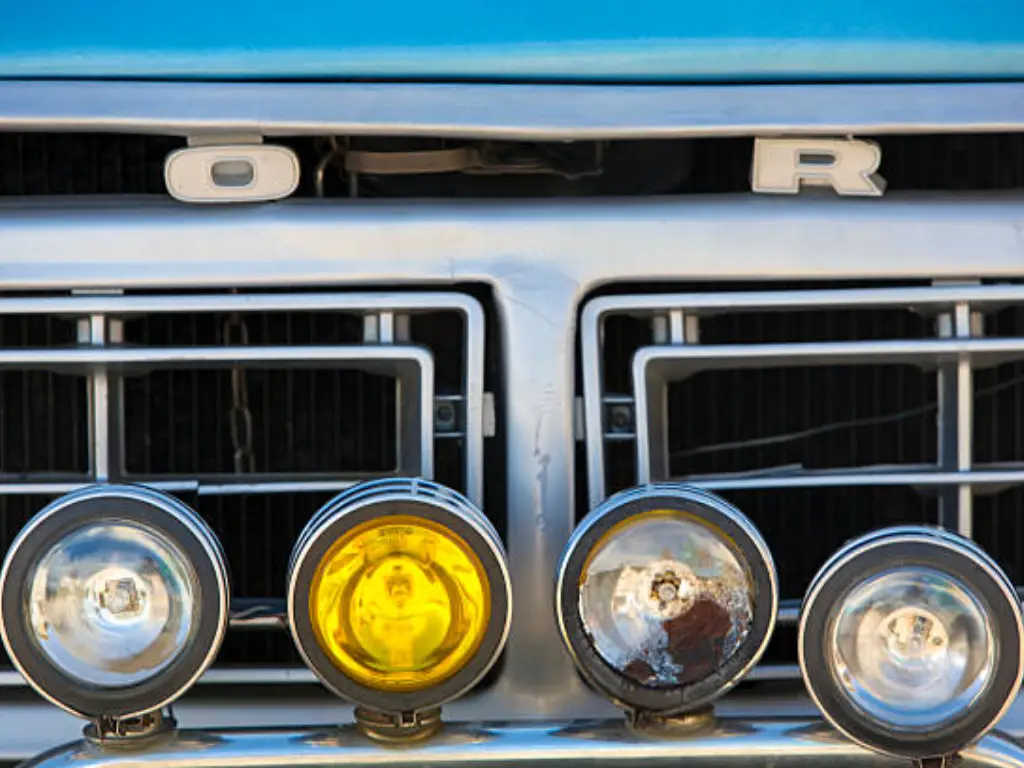
A 997 tail light assembly from Porsche: $980–1,200 per side. An OE-spec aftermarket alternative: $280–400. The functional requirements are straightforward — correct brightness, correct color, correct fit. A well-made aftermarket unit meets all three at one-third the price. The same pattern holds for fog lights, turn indicators, grilles, badges, mirror assemblies, and window regulators.
What matters for appearance parts isn’t the brand name on the box. It’s the manufacturing quality. Chrome-plated exterior trim should use a three-layer process: copper base for corrosion resistance, nickel for brightness, chromium for that distinctive blue tint and hardness. Plastic injection-molded components need precision tooling — ideally EDM (electrical discharge machining) for complex cavity work — to guarantee fit and finish that matches the original.
These are the categories where paying for the Porsche logo offers zero functional benefit. The parts are identical in fit and function. The only difference is what’s printed on the box — and whether you paid $1,200 or $350.
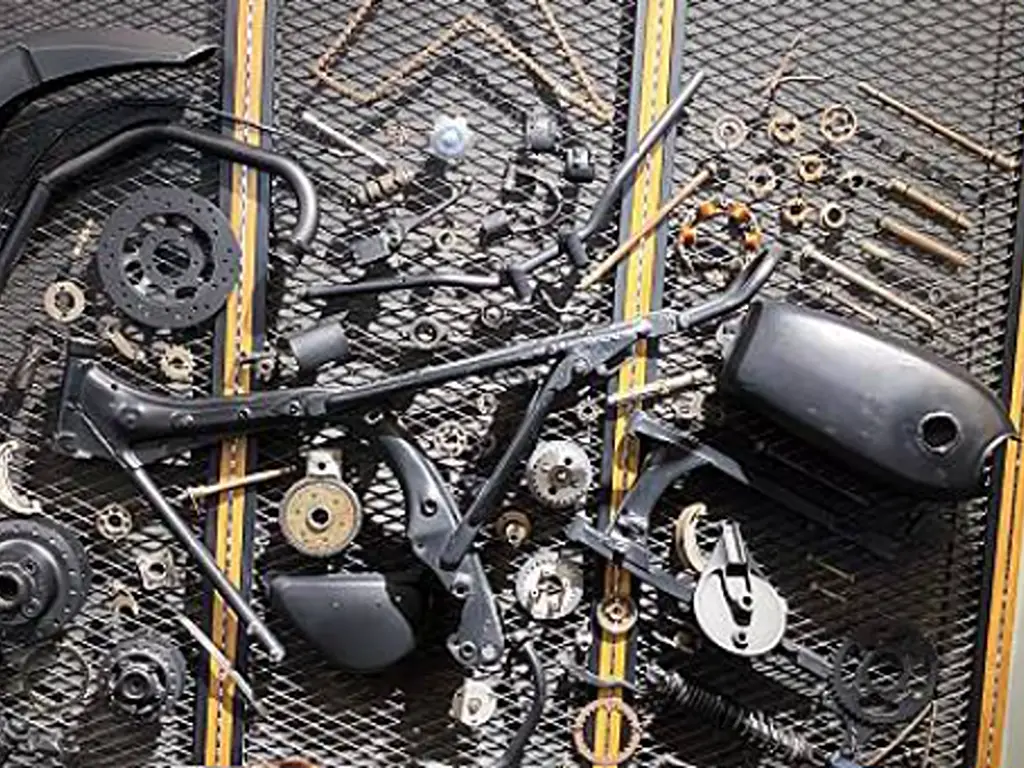
Classic Porsche Parts (356–993) — Solving the NLA Problem
Porsche stopped making parts for your 1975 911 twenty years ago. But that doesn’t mean the parts don’t exist. It means you need to look beyond the dealer’s computer screen.
The Three-Tier Classic Parts Reality
Tier 1: Porsche Classic Genuine. Over 80,000 parts across all road-legal classic models from the 356 onward. About 60,000–80,000 are in active warehouse stock worldwide, with roughly 200–300 newly reproduced parts added each year. This is the best option when the part you need is available — correct fit, full traceability, factory-backed. But it’s expensive, and coverage for non-911 models (356, 914, 924/944/968, 928) is thinner than you’d hope.
Tier 2: NOS & Specialist Reproductions. New Old Stock — original parts manufactured decades ago but never sold. Specialized vintage suppliers maintain inventories of NOS and high-quality reproduction parts. The catch: inventory is unpredictable. A part available today might be gone tomorrow. And when it’s gone, it’s gone.
Tier 3: OE-Spec Aftermarket Manufacturing. This is the most underrated option in classic Porsche ownership — and the one that most owners never discover. OE-spec aftermarket manufacturers produce parts to the original factory specifications: same dimensions, same materials, same tolerances. At 30–60% of Tier 1 pricing. The critical advantage: even if a part has been discontinued for 30 years, an aftermarket manufacturer with reverse-engineering capability can reproduce it from a physical sample. No drawings required. No original tooling needed. Just the part you already have.
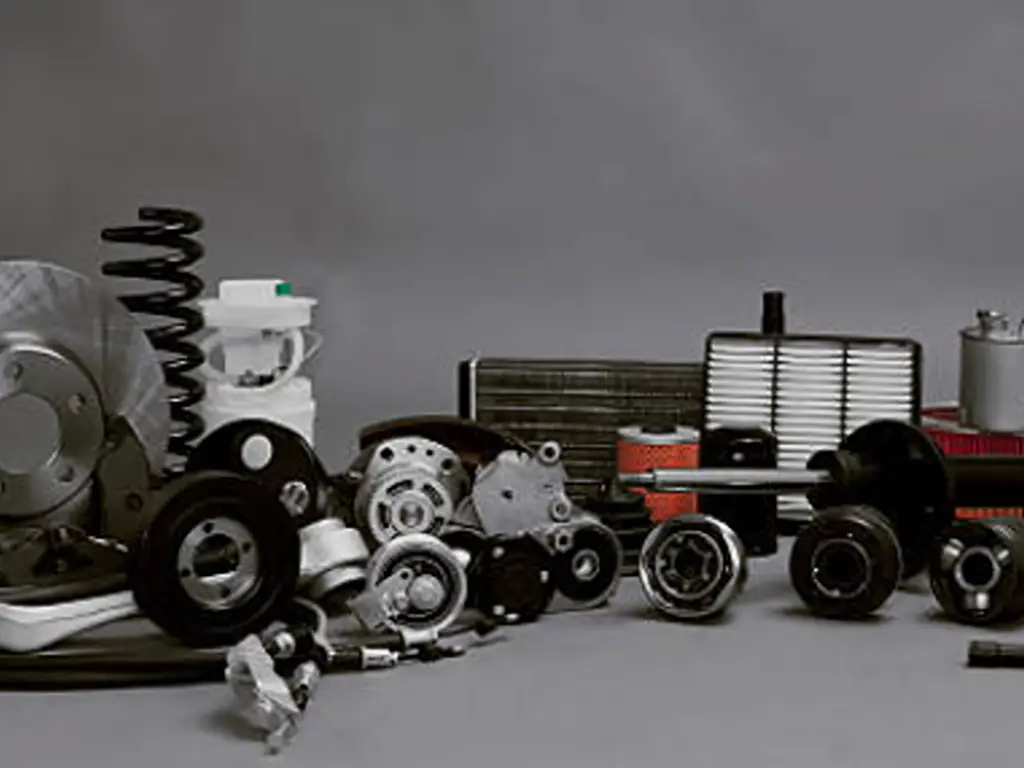
The Reverse Engineering Solution
Here’s how it works in practice. You have a 1965 356C with a cracked tail light lens. The part has been out of production for 40 years. You send your old lens to a manufacturer with 3D scanning and EDM machining capability. They scan the sample, create a CAD model, machine a precision mold via EDM (electrical discharge machining, capable of tolerances within ±0.02mm), produce test samples for fitment verification, apply the correct surface finish, and deliver production units. Three months later, you have brand-new, OE-spec lenses.
The catch is minimum order quantity (MOQ). Reverse engineering isn’t economical for one or two pieces — typical MOQs start around 100 units for in-production SKUs and 200–500 for new tooling, varying by material and process complexity. That’s too many for an individual owner. But it’s entirely workable for a classic Porsche club group buy, an independent repair shop stocking for regular customers, or a parts distributor serving a model-specific market.
How to Evaluate Aftermarket Porsche Parts Quality — A 6-Point Checklist
Not all aftermarket parts are worth your money. But the difference between a quality OE-spec component and a waste of $200 isn’t mysterious — it’s knowable. And you can evaluate it yourself. Here are the six things that actually matter:
1. OE-Spec Commitment. Does the manufacturer explicitly state that their parts are manufactured to original equipment specifications? Look for specific language about tolerances, material grades, and testing standards — not just “high quality.” Red flag: marketing language with zero technical specifics.
2. Material Transparency. Can the manufacturer tell you what materials they use and why? For injection-molded plastic parts — what grade of raw material? For metal components — what steel alloy? For chrome-plated trim — how many layers? Copper → nickel → chromium is the industry standard for durability. A manufacturer that understands and communicates materials controls its process. Red flag: vague answers about materials.
3. Manufacturing Process Visibility. Does the manufacturer show their production process? EDM mold machining, injection molding parameters, chrome plating stages, quality control checkpoints. A factory willing to show you how they work has nothing to hide. Red flag: no factory photos, no process documentation, refusal to do a virtual tour.
4. Warranty & After-Sales. One year is the minimum acceptable warranty on aftermarket Porsche parts. Beyond that: what happens when a part fails? Is there a clear replacement or refund process? A manufacturer that stands behind their product with a written warranty trusts their own quality control. Red flag: no written warranty terms.
5. MOQ Flexibility. For B2B buyers — shops, distributors, retailers — the manufacturer’s minimum order quantity tells you whether they’re built for partnerships or only for mega-volume clients. A manufacturer offering MOQs as low as 100 units on in-production SKUs, with flexibility to negotiate lower for sample orders, signals a partner-oriented business model. Red flag: only accepts large container-volume orders.
6. Reverse Engineering Capability. For classic Porsche parts, this is the ultimate differentiator. Does the manufacturer have 3D scanning equipment? EDM machines for complex mold cavities? An in-house mold design team? The ability to take your physical sample and reproduce it is what separates a genuine manufacturing partner from a reseller with a catalog. Red flag: “we can try” with no case studies or equipment list.
These six criteria give you a framework that works whether you’re buying one tail light for your 996 or sourcing a container of parts for your distribution business. One manufacturer that demonstrates all six — from OE-spec manufacturing with extruded die steel tooling and three-layer chrome plating, through a transparent 10-step production chain from 3D scanning to final assembly, to flexible MOQs and a one-year warranty on every part — is Sunway Autoparts, whose Porsche parts catalog covers both classic (pre-1990) and modern Porsche models, backed by an in-house mold design team and full production process visibility. Whether or not they’re the right fit for your needs, the six-point framework above is what lets you make that judgment objectively — for any supplier, in any country.
Smart Sourcing — Where to Buy Porsche Parts at Every Budget Level
You now know the tiers. You have your part number. You can evaluate quality. The final question: where do you actually buy? The answer depends on who you are.
The DIY Porsche Owner. For routine maintenance and repairs on a 996 or newer Porsche: FCP Euro (lifetime warranty on everything — yes, even brake pads and oil) and Pelican Parts (the best DIY technical article library in the Porsche world, plus competitive pricing). For Genuine-only purchases, shop between Suncoast Parts, Sunset Porsche, and Delaware Porsche Parts — dealer pricing varies more than you’d expect.
The Classic Porsche Enthusiast. Start with the Porsche Classic catalog to confirm the part exists and get the correct number. If available and budget allows, buy it. If it’s NLA or priced beyond reason: search specialized vintage suppliers for NOS stock, check Rennlist and Pelican Parts forum classifieds for used originals, and — if those come up empty — find an OE-spec aftermarket manufacturer who can reproduce the part. The reverse-engineering path takes longer. It also guarantees supply for parts that literally don’t exist anywhere else.
The Independent Porsche Shop. Your primary channel is wholesale OEM: Worldpac, SSF, and IMC are the three major European parts wholesalers in North America, and most independent shops have accounts with at least one. For NLA parts and cosmetic components, building a direct relationship with an OE-spec aftermarket manufacturer cuts out the wholesale markup entirely. You pay factory-direct pricing. Your customer gets a better price than the dealer charges. Everyone wins except the middleman.
The Parts Distributor or Retailer. This is where the B2B aftermarket manufacturing channel delivers its strongest value. By sourcing directly from an OE-spec manufacturer — rather than through a multi-tier wholesale chain — you capture the margin that would otherwise go to middlemen. The same six-point quality framework from Section 5 applies, with three additions: factory audit capability, production capacity transparency, and shipping/logistics integration. A manufacturer with 18 years of experience, a network of 200+ supplier partners for multi-material sourcing under one roof, and flexible MOQs starting at 100 units gives you the supply-chain reliability that your downstream customers depend on.
Whether you’re keeping one 911 on the road or stocking parts for a hundred Porsches a year, the smartest money in Porsche parts isn’t spent at the dealer. It’s spent on knowing where to look — and knowing what you’re looking at when you find it.
References:
- Federal Trade Commission. “Businessperson’s Guide to Federal Warranty Law.” 2025. ftc.gov
- Porsche AG. “Porsche Classic Genuine Parts Catalogue.” 2025. porsche.com
- Sunway Autoparts. Porsche parts catalogs, production, contact. sunwayautoparts.com

 English
  Spanish
  French
  German