
Are Chevy and GMC parts interchangeable? The short answer is yes—many underlying mechanical and chassis components bolt up perfectly—but electronics, exterior panels, and specific trim packages are highly segregated. The most expensive assumption in the automotive parts industry is that a “shared platform” automatically equates to “universal fitment.” While General Motors (GM) utilizes a shared engineering foundation to radically reduce manufacturing and R&D costs across its Chevrolet and GMC truck lines, the final assembly floor execution is vastly different.
Traditionally, Chevy is positioned as the utilitarian, heavy-duty workhorse, while GMC is engineered with higher trim levels, luxury suspension calibrations, and far more complex electronic modules. Assuming parts are 100% interchangeable based solely on visual similarity is the leading cause of skyrocketing Return Merchandise Authorization (RMA) rates for B2B distributors, and catastrophic diagnostic failures for independent mechanics.
Before you even look at a stamped part number, verify these four macro-level data points:
- Vehicle Generation: Do both vehicles share the exact same chassis engineering code (e.g., both are GMT900)?
- Body Style: Is the cab length and bed configuration mathematically identical?
- Engine Option: Are the displacement and exact engine family (e.g., Gen III LS vs. Gen IV) a perfect match?
- Production Year: Are they within the exact same mid-cycle refresh window? (Mid-year electrical harness changes are notorious in GM trucks).
The Core Architecture: GM Truck Platform Cross-Reference
Before investigating individual engine sensors or body panels, you must establish the engineering baseline. If the donor vehicle (or the part’s original application) and the receiving vehicle do not share a generational platform code, major mechanical interchangeability drops to near zero. Use this matrix as your primary diagnostic index to prevent foundational sourcing errors:
| Generation Years | Chevy Model | GMC Model | Platform Code |
|---|---|---|---|
| 1973 – 1987 | C/K Series Pickup | C/K Series Pickup | Square Body |
| 1988 – 1998 | C/K (Silverado Trim) | Sierra | GMT400 (OBS) |
| 1999 – 2006 | Silverado 1500 | Sierra 1500 | GMT800 |
| 2007 – 2013 | Silverado 1500 | Sierra 1500 | GMT900 |
| 2014 – 2018 | Silverado 1500 | Sierra 1500 | K2XX |
Deciphering Fitment Data: OEM Part Numbers and RPO Codes
The Problem: Buyers frequently order heavy drivetrain components based purely on engine displacement and model year (e.g., “I need a rear axle for a 2005 Silverado 5.3L”). When the heavy freight arrives, they discover the shock mounts, brake caliper brackets, or ABS wheel speed sensors do not align with their vehicle.
Why It Happens: Vehicles built on the exact same day, on the exact same assembly line in Fort Wayne, can feature drastically different internal hardware based on their Regular Production Option (RPO) codes. The RPO sticker is the vehicle’s true mechanical DNA, overriding any generic model year catalogs. Relying on aftermarket catalogs without verifying the RPO is a guaranteed way to order the wrong part.
How to Solve It: Never guess based on aesthetics. Locate the silver Service Parts Identification (SPID) sticker—typically found inside the passenger glovebox, on the driver’s side door jamb, or underneath the spare tire cover on SUVs. This sticker contains a block of 3-character alphanumeric codes that dictate the exact factory build sheet.
Imagine you have two 2005 5.3L vehicles side-by-side (one Chevy, one GMC). One features the GU6 RPO code (indicating a 3.42 gear ratio with a standard open differential). The other features the G80 RPO code (Eaton Locking Differential). Physically swapping these without verification will drastically alter driveline dynamics, disrupt the transmission shift points, ruin the speedometer calibration, and trigger immediate StabiliTrak and ABS fault codes. Always match the exact RPO codes.
The Fitment Verification Matrix (Green/Yellow/Red)
For procurement managers and parts distributors, cross-referencing Chevy and GMC OEM part numbers through an Electronic Parts Catalog (EPC) is a daily task. To prevent massive return rates, enforce this traffic-light compatibility rule for your purchasing team:
Green Zone: Direct Swap
Condition: OEM numbers (or official GM superseded part numbers) match exactly.
Action: 100% physically and electronically compatible. Safe to merge inventory SKUs and install across brands without hesitation.
Yellow Zone: Verify VIN & RPO
Condition: The physical structure appears identical, but the stamped part numbers differ.
Action: Stop. Do not guess. Check the RPO codes and input the specific 17-digit VIN into a dealer EPC database to unlock the exact fitment profile and verify suspension/drivetrain packages.
Red Zone: Programming Required
Condition: The component involves a control module (ECM/BCM/TCM) or anti-theft system.
Action: Physical fitment is irrelevant. Software flashing via a GM Tech II scanner is absolutely mandatory before the vehicle will start or operate safely.
The “Green Zone”: High-Wear Parts for SKU Consolidation
The Problem: Auto parts distributors, import wholesalers, and e-commerce retailers often stock redundant SKUs—keeping one box branded for the Chevy Silverado and another seemingly identical box for the GMC Sierra. This ties up massive amounts of working capital, complicates logistics, and wastes valuable warehouse space.
Why It Happens: Fear of fitment-related returns (RMAs) causes buyers to strictly follow consumer-facing brand catalogs. They assume that because GMC is marketed as “Professional Grade,” it must use bespoke suspension or filtration components. In reality, GM does not waste engineering capital redesigning unsprung weight components for different badges.
How to Solve It: By understanding the shared structural geometry within a specific generation, B2B suppliers can safely consolidate high-wear SKUs, dramatically increase inventory turnover rates, and reduce procurement shipping costs.
| Component Category | Compatibility Level | Verification Requirement before Swapping or Consolidating |
|---|---|---|
| Brake Pads, Rotors & Calipers | High | Verify platform generation (e.g., both must be GMT900) and gross vehicle weight rating. 1500 vs 2500HD use entirely different 6-lug vs 8-lug hub setups and rotor diameters. |
| Oil Filters & Air Elements | Very High | Simply match the exact engine family. Virtually all Gen III/Gen IV 5.3L LS-based engines share the PF46 or PF48 oil filter, regardless of the badge on the grille. |
| Suspension (Control Arms, Shocks) | Medium-High | Confirm identical platform code. *Crucial Exception: Off-road specific packages (like Chevy’s Z71 or GMC’s AT4 equivalent) will have different shock valving and spring rates than standard street models. |
| O2 & MAF Sensors | Medium | Verify the engine displacement and visually check the connector pinout shape to ensure mid-year wiring harness changes (e.g., 5-pin vs 3-pin MAF) haven’t occurred. |
Strategic Note for Distributors: For businesses handling multiple classic and modern vehicle brands, partnering with a primary manufacturer capable of consolidating these high-wear categories with flexible Minimum Order Quantities (MOQs) is the fastest way to streamline your global sourcing operations and optimize cash flow.
Powertrain Interchangeability: Engine and Transmission Matrices
This is the high-risk, high-reward deep water of automotive repair and parts brokering. Assuming a 5.3L Vortec engine from a GMC will perfectly drop into a Chevy simply because the aluminum block looks identical is a devastating financial error that costs shops thousands of dollars in wasted labor.
Engine Block Compatibility and The Reluctor Wheel Trap
What is it? The reluctor wheel is a toothed, magnetic signal generator mounted directly on the crankshaft inside the engine block. It tells the Engine Control Module (ECM) exactly where the pistons are positioned at any given millisecond so it can perfectly time the spark and fuel injection.
Why it matters: Pre-2007 GM LS/Vortec engines utilize a 24x tooth reluctor wheel. 2007 and newer models utilize a much higher resolution 58x tooth wheel. Even if the engine blocks and bell housings are mechanically identical, an older 2002 ECM physically cannot comprehend the high-speed data signal from a 2008 (58x) reluctor wheel.
A customer purchases a low-mileage 2008 GMC Sierra 5.3L engine to swap into their 2002 Chevy Silverado. The engine bolts to the frame mounts perfectly. The transmission aligns without issue. However, when turning the key, the engine cranks infinitely but never fires. The Result: The buyer failed to verify electronic compatibility. Fixing this requires either a complete custom wiring harness and ECM swap, or tearing the “new” engine down to the bare block to replace the crankshaft reluctor wheel—a labor-intensive job costing more than the engine itself.
Engine Swap Buyer Checklist:
Before purchasing or supplying a replacement GM truck engine, confirm these 4 critical variables:
- ✅ Engine Generation: Are both engines Gen III or Gen IV architecture?
- ✅ Reluctor Type: Verify 24x vs 58x. (Pro tip: Check the crank sensor plug color located behind the starter. Black = 24x, Grey = 58x).
- ✅ Throttle System: Mechanical cable-driven vs. Electronic Drive-by-Wire (TAC Module). They use completely different pedal assemblies and harnesses.
- ✅ Active Fuel Management (AFM): Does the donor engine feature cylinder deactivation? This requires specific lifters, valley covers, and ECM programming that standard engines lack.
Cross-Year Transmission Swaps (The 4L60E Factor)
When sourcing or swapping the industry-standard 4L60E automatic transmission across Chevy and GMC models, do not rely on the bell housing shape. Before purchasing, you must verify:
- Input Shaft Design: Early LT-style vs. later LS-style input shafts differ in length and torque converter lockup design. Mixing them up will destroy the transmission pump upon installation.
- Solenoid & Wiring Pinouts: Internal valve body solenoids were updated around 2003, altering the electrical resistance. A physical bolt-up guarantees nothing if the vehicle’s Transmission Control Module (TCM) cannot electrically communicate with the internal solenoids due to mismatched wiring harness pinouts.
The “No-Go” Zone: Exterior Body Panels and Lighting
The Problem: Customers frequently attempt to purchase a premium GMC Denali grille to install on their base-model Chevy Silverado, assuming the mounting clips will automatically align because the underlying steel chassis is the same.
Why It Happens: While the frame rails, suspension hardpoints, and cab structures match perfectly, the core brand differentiation and aerodynamic profiles are heavily segregated in the exterior sheet metal, plastics, and lighting housings. GM designers intentionally create physical isolation zones to protect brand identity.
How to Solve It: You must clearly define the goal of the parts procurement and educate the buyer on the physical limits of GM platform sharing:
- Repair Replacement (Collision/Damage): You must strictly purchase brand-matching parts. Grilles, headlight assemblies, front bumpers, lower valances, and hoods are absolutely non-interchangeable across brands without major structural modifications.
- Custom Conversion (Front-End Swaps): If a customer genuinely wants to convert a Chevy front end to a GMC aesthetic, they cannot buy individual pieces. They must procure a complete conversion package that includes the grille, headlights, bumper, hood, both front fenders, and critically, the radiator core support. The radiator core support is the master bracket for the front end, and its mounting holes for headlights differ entirely between the two brands.
The “Red Zone”: Electronic Protocols and RMA Traps
The Problem: An e-commerce distributor sells a pristine, used GMC instrument cluster to a Chevy owner. The customer plugs it in, it physically fits the dashboard perfectly, but the display flashes “LOCKED” and the vehicle refuses to start. Furious, the customer immediately initiates a chargeback or RMA, damaging the seller’s metrics and eating up return shipping costs.
Why It Happens (Physical Fit ≠ Electronic Compatibility): General Motors utilizes the Passlock immobilizer security system. Modules like the ECM, BCM (Body Control Module), and even the factory radio and instrument cluster are digitally tied to the vehicle’s specific VIN through the CAN bus network. When a foreign module is introduced—even from the exact same year and model—the system detects a VIN mismatch. The BCM assumes the vehicle is being stolen and engages the anti-theft protocol, disabling the fuel pump or starter.
How to Solve It:
- For the Buyer: Before purchasing any electronic module, confirm with a local diagnostic mechanic that they possess a GM Tech II scanner (or J2534 equivalent pass-through device) and are capable of performing a security relearn and VIN flash.
- For the Seller/Distributor: You must aggressively manage customer expectations to lower your RMA rate. Every single product page featuring a computerized module must prominently display: “Programming Required,” “VIN Flash Mandatory,” and “Not Plug-and-Play.” This simple disclaimer shifts the liability back to the buyer’s technician, protecting your bottom line.
The Master Verification Protocol & Solving the NLA Crisis
To eliminate expensive guesswork, protect profit margins, and ensure the vehicle leaves the service bay on time, both individual mechanics and commercial procurement teams must execute this diagnostic checklist before completing any cross-platform transaction.
The 5-Step Pre-Purchase Verification Checklist
- Step 1: Identify the Vehicle Baseline. Accurately log the year, make, model, trim, and platform generation (e.g., 2005 Chevy Silverado 1500, GMT800).
- Step 2: Check the OEM Part Number & Supersession. Cross-reference the original part number against a current EPC database to see if GM has updated, revised, or officially superseded the part with a newer, compatible SKU.
- Step 3: Verify the RPO Codes. Match the 3-digit alphanumeric codes in the glovebox (SPID sticker) to ensure the internal gear ratios, suspension packages, and differential types are identical.
- Step 4: Confirm Electronics & Pinouts. If the part has a wiring harness, physically count the connector pins. Determine if the component requires GM Tech II programming or a security relearn.
- Step 5: Ask for Fitment Confirmation. Before processing payment, require the B2B supplier or retailer to explicitly confirm fitment against your exact 17-digit VIN, shifting the responsibility of accuracy to the vendor.
What To Do When A Part Is No Longer Available (NLA)?
Even after careful fitment checks, classic Chevy and GMC restorations often face one final challenge: discontinued OEM parts. When original data and salvage options fail, reverse engineering becomes the solution. As an OEM-spec manufacturer, Sunway Autoparts recreates hard-to-find parts using 3D laser scanning, in-house tooling, and mold development to deliver factory-matching replacements and overcome NLA limitations.
Are discontinued GM parts creating dead zones in your product catalog? Stop losing revenue to unpredictable junkyard salvage and out-of-stock notices.
Partner with Sunway for Custom Reverse Engineering Solutions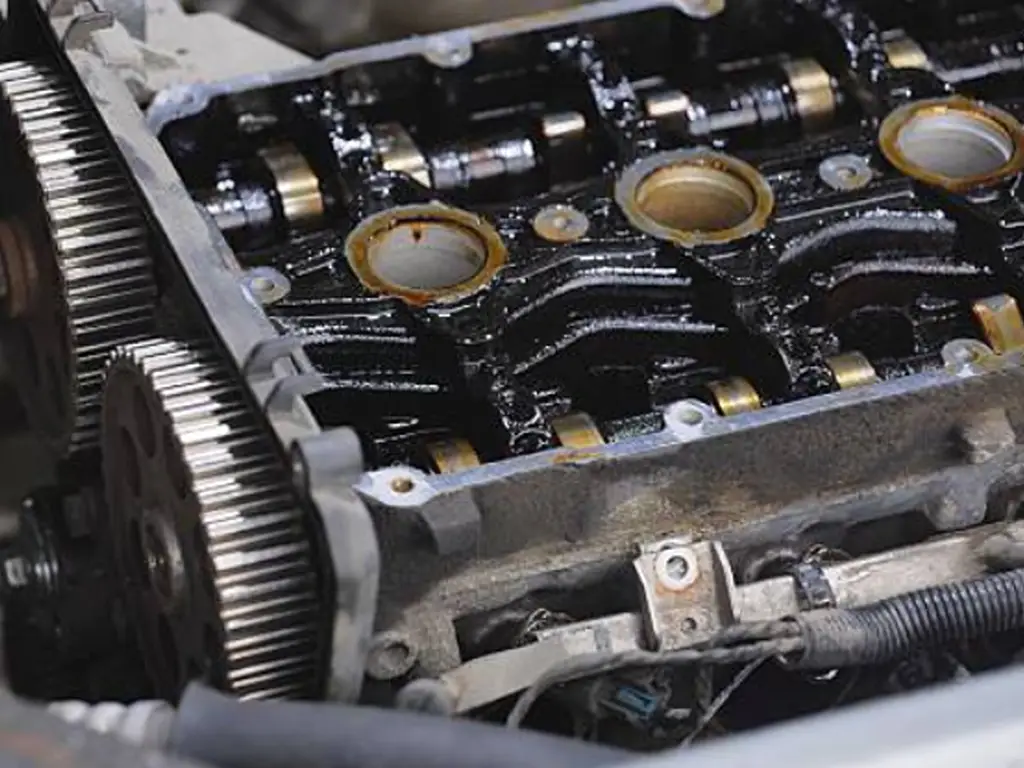




 English
  Spanish
  French
  German