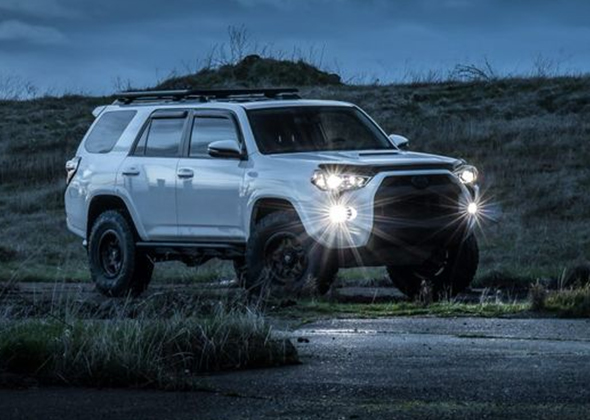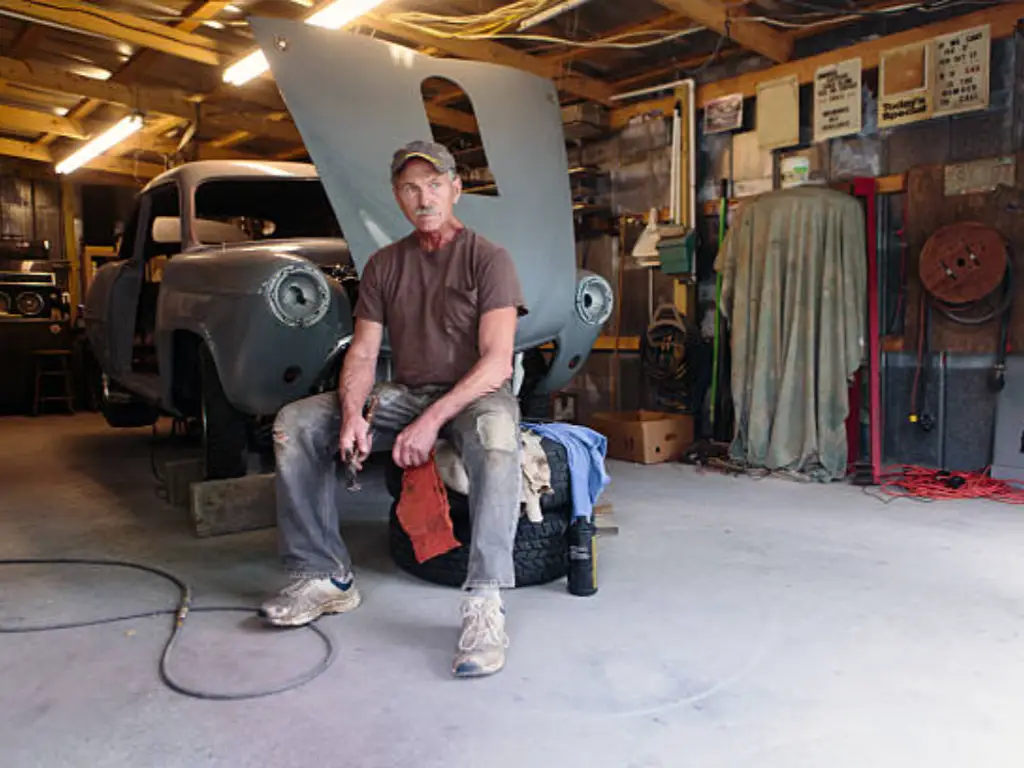
Every year, thousands of highway collisions occur simply because drivers rely on outdated adjustment techniques that guarantee massive blind spots. Whether you are driving a modern SUV or a vintage classic, the physical geometry of your mirrors remains your ultimate line of defense. Before calibrating your sightlines, understanding the different types of car mirrors equipped on your vehicle is essential. This guide will dismantle the dangerous habit of angling side mirrors to “see your own car” and introduce scientifically proven geometric calibrations. By reconstructing your field of view, we will ensure surrounding vehicles transition seamlessly across your visual continuum—completely eliminating blind zones and leaving zero room for catastrophic surprises.
The Foundation: Validating Your Driving Position First
Before touching a single mirror dial, you must establish a rigid, repeatable baseline. Mirrors are optical instruments calibrated to a specific focal point: your eyes. If your physical seating position fluctuates daily—slouching one morning, sitting rigidly upright the next—your carefully adjusted field of view will immediately collapse, reintroducing blind zones.
A proper driving position is not merely about comfort; it is about dynamic vehicle control and optical stability. Follow this mechanical sequence to lock in your baseline:
- Lower Body Leverage: Depress the brake pedal fully (or the clutch, if driving a manual transmission). Your leg must retain a slight bend at maximum extension to prevent joint injury during an emergency stop.
- Spinal Alignment: Adjust the seatback so your shoulders are firmly pinned against the bolster. Avoid the “racer lean”—your back should be near vertical, typically between a 95 to 100-degree angle.
- Steering Geometry: Extend your arms. With your shoulders still touching the seatback, your wrists should drape comfortably over the top center of the steering wheel. This ensures a slight bend in the elbows at the 9 and 3 o’clock driving positions.
The Baseline Imperative: This ergonomic posture ensures that your eyes remain locked in the optimal vertical and horizontal plane. Only when this physical baseline is perfectly established and saved should you proceed to optical calibration. Altering your seat height or recline angle by even an inch after adjusting your mirrors can shift your blind spot coverage by several feet at highway speeds.
The Absolute Reference: Calibrating the Interior Rearview Mirror
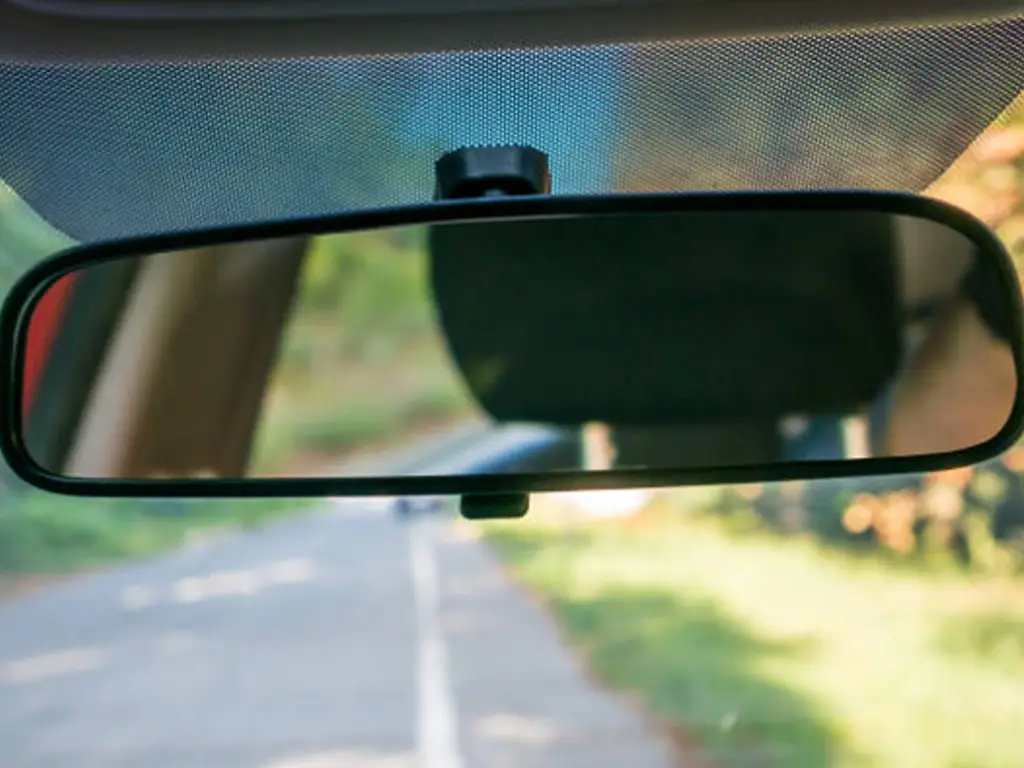
The interior rearview mirror acts as the central anchor of your entire spatial awareness system. It provides the true baseline of what is occurring directly behind your vehicle. The calibration of this mirror is straightforward but demands absolute precision.
Without physically moving your head from the established driving posture, manipulate the interior mirror housing until it perfectly frames the entirety of your rear windshield. You should not see your vehicle’s interior roof lining, nor should you be overly focused on the rear seats. The goal is to maximize the aperture looking straight out the back.
This mirror is the starting point of the target transition. When a faster-moving vehicle approaches from behind, it will first register here. Your side mirrors will be adjusted specifically to take the “baton” the exact millisecond that vehicle begins to exit the frame of your interior rearview mirror.
The BGE Method: Adjusting Your Side Mirrors to Eradicate Blind Spots
To eliminate the visual redundancy of seeing your own car’s flanks, we must pivot to the Blindzone/Glare Elimination (BGE) setting. This method mathematically pushes your side mirrors outward, forcing them to act as panoramic extensions of your interior rearview mirror rather than isolated, overlapping viewing portals.
| Optical Variable | Traditional Adjustment (Flawed) | BGE Adjustment (Optimal) |
| Primary Focus | Your vehicle’s door handles and rear quarter panel. | The direct center of the adjacent left and right lanes. |
| Blind Spot Size | Massive. Can completely hide a full-size sedan in the adjacent lane. | Virtually Eliminated. Creates a continuous visual sweep. |
| Night Driving Glare | Severe. Trailing headlights reflect directly into the driver’s eyes. | Mitigated. Side mirrors are angled outward, deflecting trailing beams. |
Driver-Side Mirror Adjustment (Left)
To properly calibrate the left mirror, you must temporarily break your perfect driving posture. Lean your head and torso all the way to the left until the side of your head lightly touches the driver’s side window glass. From this highly unnatural, displaced position, use the electronic controls to adjust the left mirror outward until you can just barely see the rear quarter panel of your own car.
When you sit back into your normal, centered driving position, the side of your car will completely vanish from the mirror. This is exactly what you want. By tilting the mirror approximately 15 degrees further out than traditional methods dictate, you have pushed the mirror’s gaze directly into the space where a car passing on your left usually hides.
Passenger-Side Mirror Adjustment (Right)
The right side requires a mirrored physical displacement. Lean your head to the right until it aligns vertically with the center console of the vehicle (roughly exactly between the two front seats). From this central vantage point, adjust the right-side mirror outward until the right flank of your vehicle is barely visible on the inner edge of the glass.
Return to your normal driving posture. The resulting optical array is a contiguous, non-overlapping sweep of the environment. The moment a vehicle leaves the right edge of your interior mirror, it will instantly appear on the inner edge of your newly adjusted right side mirror. There is no longer a gap for a vehicle to hide in.
Edge Case Calibrations: Adapting to Driver and Vehicle Variance
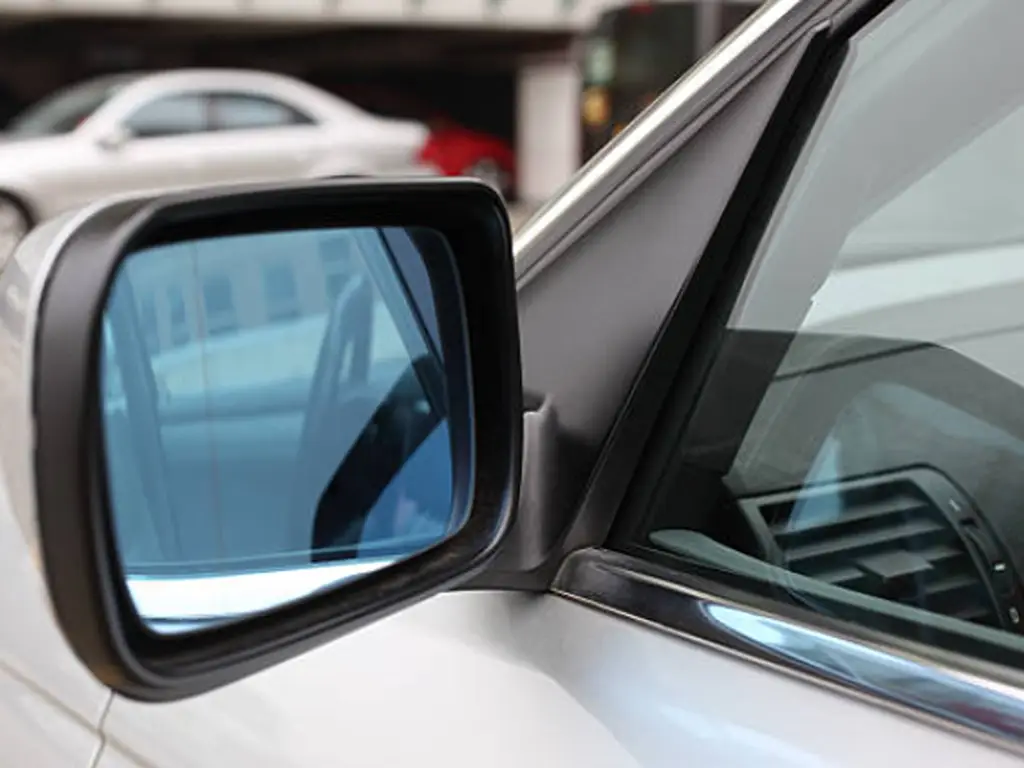
While the BGE method provides a universal geometric foundation, real-world application requires nuanced adjustments based on human physiology and structural vehicle dynamics.
Accommodating Height Extremes
Drivers who fall significantly outside the average height percentiles face unique optical challenges. A very tall driver positioned far back and low in the cabin will naturally alter the angle of reflection. In some vehicles, the physical housing of the side mirrors may “max out” its outward travel before the optimal BGE angle is reached. Conversely, very short drivers seated close to the steering wheel will have a wider natural field of view but may struggle with the vertical framing. In these cases, minor compromises must be made, prioritizing the outward horizontal sweep over seeing the ground directly next to the rear wheels.
SUV, Truck, and Towing Dynamics
High-riding vehicles, such as full-size SUVs and commercial trucks, fundamentally alter the downward trajectory of the mirror’s gaze. Due to the elevated H-point (the driver’s hip location), vehicles traveling in adjacent lanes sit significantly lower in the mirror’s frame, requiring a steeper downward calibration. However, the most critical difference between standard passenger cars and heavy-duty trucks lies in the absence of the central anchor: the interior rearview mirror.
While standard vehicles rely on the interior mirror to initiate the visual handoff in the BGE method, box trucks, fully loaded cargo vans, and vehicles towing large trailers often have their center rearward vision completely blocked. In these scenarios, the exterior side mirrors become the absolute and sole source of rearward telemetry, necessitating a specialized dual-pane architecture and a fundamentally different adjustment strategy.
| Adjustment Variable | Standard Passenger Cars | Commercial Trucks & Heavy Towing |
| Primary Visual Anchor | Interior rearview mirror (unobstructed center view). | Exterior main flat mirrors (due to blocked cabin view). |
| Mirror Architecture | Single pane (flat driver side, convex passenger side). | Dual-pane system (large flat primary mirror + dedicated lower convex spot mirror). |
| Adjustment Strategy | Mirrors pushed outward ~15 degrees (BGE Method) to eradicate blind zones. | Main flat mirror angled slightly inward to track trailer chassis; lower convex mirror pushed outward to cover blind spots. |
When executing towing dynamics, the traditional BGE method must be temporarily adapted. Because a long trailer articulates and bends independently of the cab, extended tow mirrors cannot be pushed completely outward. The primary upper flat glass must remain angled slightly inward so the driver can continuously monitor the trailer’s rear tires, axle tracking, and clearance during cornering. To compensate for the blind spots created by this inward angle, truck drivers must rely heavily on properly calibrating the lower convex “spot” mirrors to aggressively sweep the adjacent lanes.
The Vintage & Classic Car Challenge: Overcoming Era-Specific Visibility Limits
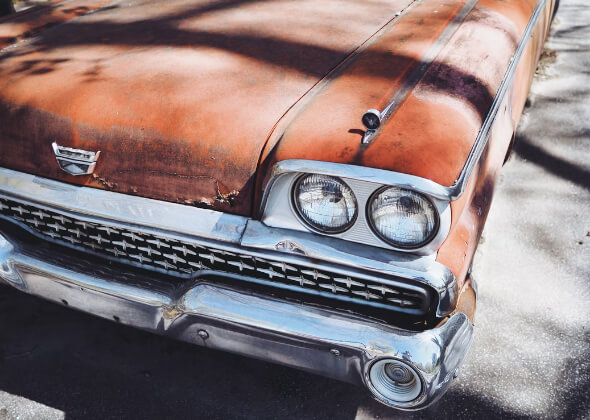
Applying modern optical safety standards to classic vehicles requires a deep understanding of historical automotive manufacturing. Unlike modern cars equipped with electronic Blind Spot Monitoring (BSM) radar arrays to mitigate aerodynamic blind spots, vintage vehicles rely entirely on analog glass as their absolute, sole line of defense against lateral collisions. Furthermore, these classics often feature entirely symmetrical flat glass mirrors on both sides—if they even possess a passenger mirror at all. This lack of curvature makes the BGE outward tilt even more critical, yet much harder to trust due to the mathematically narrower field of view.
To survive on fast-paced modern highways, retrofitting convex glass into a vintage housing is often the most effective way to artificially widen the FOV. Knowing the exact difference between a concave mirror and convex mirror for vehicles is crucial during this process. However, owners and restoration shops exploring classic car side mirror design ideas face a distinct dilemma: balancing period-correct aesthetics with modern optical safety realities. Upgrading vintage housings requires precision engineering, as poor-quality aftermarket glass can introduce severe distance distortion that renders any geometric adjustment completely useless.
This exact challenge is where partnering with a premium manufacturer like Sunway AutoParts provides a definitive restoration advantage, smoothly bridging the gap between vintage elegance and modern safety. Sunway eliminates the dangerous micro-distortions common in generic retrofits by delivering OEM-level optical clarity through advanced first-surface coatings. Beyond flawless reflection, their extensive manufacturing capabilities allow for the custom engineering of mirror housings that perfectly respect the original classic design language while securely integrating modern optical technology. Most importantly, because vintage engines transfer significantly more kinetic vibration through the chassis, Sunway incorporates robust, vibration-resistant internal architecture. This structural integrity isolates the glass, preventing the highway-speed blurring that would otherwise ruin a perfectly calibrated blind-spot adjustment.
The Dynamic Verification: Trusting Your New FOV
Adjusting to the BGE method can induce immediate psychological discomfort. For decades, seeing the side of your own car has acted as an optical safety blanket. Removing it feels unnerving. Therefore, you must actively verify and build trust in this new configuration under controlled dynamic conditions.
While driving in the center lane of a multi-lane highway, observe a vehicle overtaking you in the left lane. Track its progression:
- Phase 1: As it approaches, you will see it vividly in your interior rearview mirror.
- Phase 2: The absolute fraction of a second its front bumper exits the left edge of that interior mirror, it should seamlessly appear in your driver-side exterior mirror.
- Phase 3: As it continues forward, leaving the exterior mirror, its front bumper should immediately enter your physical peripheral vision through the driver’s side window.
If there is a delay—if the car disappears for a second between the rearview and the side mirror—your side mirror is angled too far outward. If the car overlaps heavily in both mirrors simultaneously, your side mirror is angled too far inward. Fine-tune until the transition is a flawless, uninterrupted relay of visual data.
Conclusion: Drive with Confidence and Complete Spatial Awareness
True driving safety begins long before you merge onto the highway; it starts with the precise geometric calibration of your vehicle’s optics. The BGE method mathematically forces your mirrors to stop acting as isolated viewing portals and start functioning as a cohesive, panoramic system.
Mastering this spatial continuum requires strict adherence to the fundamentals we have covered: locking in a rigid driving posture, establishing the interior rearview mirror as your absolute primary anchor, and pushing the exterior mirrors outward by 15 degrees to capture the exact space where passing vehicles typically hide. Whether you must account for the distorted convex glass of a modern SUV or navigate the flat-glass limitations of a vintage classic, the underlying physics of light reflection remain your ultimate fail-safe.
To ensure these geometric adjustments are never compromised by optical warping, sourcing high-quality glass from the best automotive mirrors manufacturers guarantees that you navigate every lane change with absolute confidence and uninterrupted spatial awareness.