
Introduction
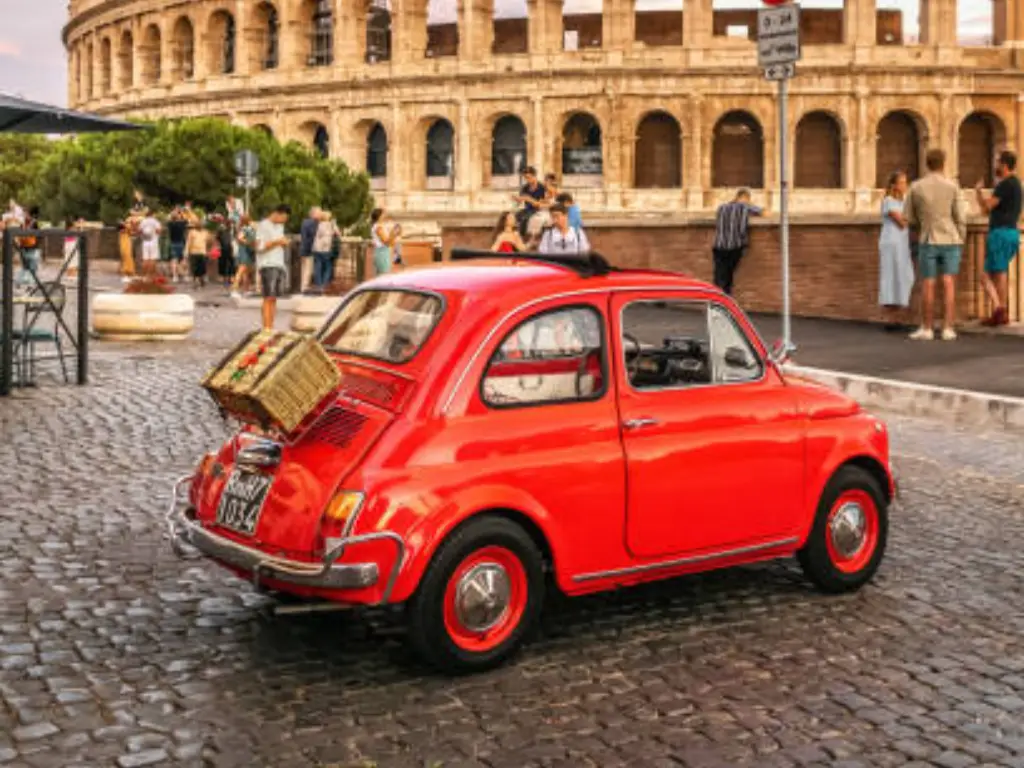
It has a very distinct and tangible moment of Italy and the Italian motoring heritage. It is not only a visual but also an aural and sensual experience. The rasp of a Weber-carbureted engine clearing its throat on a frosty morning, then the note of the exhaust–rising to a crescendo–a note which seems a machine, but it seems a music. To speak of the Italian classic cars is to speak of a meeting point of the finest art, state-of-the-art engineering, and almost heedless, neurotic pursuit of passion.
Even their German counterparts are usually praised in terms of clinical accuracy and rational improvement, or even the American classics that were characterized by displacement and brute force; Italians put a soul in their machines. The philosophy is similar; whether it is the high-revving clatter of their motorcycles or the grand touring grace of their coupes, it is not a mere form of transportation; it is an event. These cars were made to be dramatic, and this is apparent in the twisty, sun-dipped beaches of the Amalfi Coast, to the fog-filled, high-speed straights of Modena.
To the contemporary fan, though, the connection with a classic Italian sports car is complicated. It is a love affair that requires patience, a huge financial investment, and a huge knowledge of the history of mechanical. In recent years, the market has been growing explosively, with investors seeking to have a tangible asset, and nostalgic drivers seeking a connection to a more analog past. The article looks intensely into the automotive realm of the Italian peninsula, the mythical design houses, which customized the metal, the particular vehicles that make up the genre, and the reality on the ground of maintaining these rolling sculptures on the road in the 21st century, which is often a gritty one.
The Masters Behind the Metal: Pininfarina, Bertone, and Zagato
It is important to admit that the appeal of these cars is mostly aesthetic before one can fully enjoy the machinery. The design of Italian cars after the war became the International benchmark for the appearance of a car. The “Carrozzeria” (coachbuilders) contributed to such a leadership where they were the tailors of the automotive industry. Their handiwork was the style of the business over decades, and it was driving everything as simple as the Ford, as well as the most unique Porsche.
Pininfarina: The Aristocrat of Style
This design house was started by Battista Pinna, as he was also known, Farina, and this is the embodiment of automotive aristocracy. They are best known for having a relationship with Enzo Ferrari in the history of the industry. Elegance, proportion, and balance were the philosophy of Pininfarina. Shock value was rarely employed by them.
Rather, the cars such as Ferrari 250 GT Lusso or Ferrari Daytona (365 GTB/4) are known by long hoods, short decks, and curvy lines that resemble the wind. Their design was centered on how to make a car that would appear to be in motion even when at rest, and thus, the Grand Tourer (GT) appeared to be the car of the future.
Bertone: The Agent of Disruption
Bertone was a punk rocker, Pinnafri was a classical composer. It was with the hand of the mythic Marcello Gandini that Bertone was able to present the razor-sharp lines and aggression that would typify the 1960s and 70s.
They were the architects of the so-called Wage Era. Bertone is the one who took the risk of designing the Lamborghini Miura and then the Lamborghini Countach, and breaking the conventional curvy designs of the earlier years. Their designs were usually thought-provoking, and they aimed at using the visual impact and futuristic outlines instead of conventional loveliness.
Zagato: The Aerodynamic Eccentric
Zagato has always been the outcast. They were functional and were at times bordering on the bizarre.
Lightweight construction and aerodynamics obsessed with race cars, Ugo Zagato unveiled the so-called “duple-bubble” roof, one of the requirements of design: the drivers should be able to wear helmets in low-roofed coupes without destroying the aerodynamic appearance.
Zagato bodies, which were commonly used on Alfa Romeo, Lancia, and Maserati chassis, are nowadays one of the most collectible, because of being rare and having a polarizing, deliberate brutalist beauty.
Ghia: The Transatlantic Bridge
One of the other giants of the industry, Ghia, introduced a sophisticated, usually transatlantic, touch to the Italian manufacturing. Their most notorious achievement was to close the gap between American power and the European style that collaborated with such companies as Chrysler and Ford. The De Tomaso Vallelunga and its heir, the Pantera, are two of the most successful attempts of Ghia to combine an American powerhouse into a fine Italian-tailored suit.
7 Iconic Classic Italian Cars Every Enthusiast Must Know
The history of Italian automotive manufacturing is extensive. Although we are going to narrow down to seven major models below, there are other honorable mentions in the automotive world that require a mention. The Lancia Stratos relegated the art of rallying with its Ferrari V6 and other-worldly wheelbase; the Maserati Ghibli was a grand-touring car that competed with private jets; and the Iso Grifo also markedly blended Italian glamour with Chevy Corvette power. The very first true Gran Turismo is mentioned even in the graceful Lancia Aurelia B20 GT.
Nevertheless, the next seven cars are the absolute columns of the classic Italian cars market, which represent the various price segments, periods, and philosophies of driving.
Ferrari 250 GTO, 1962-1964
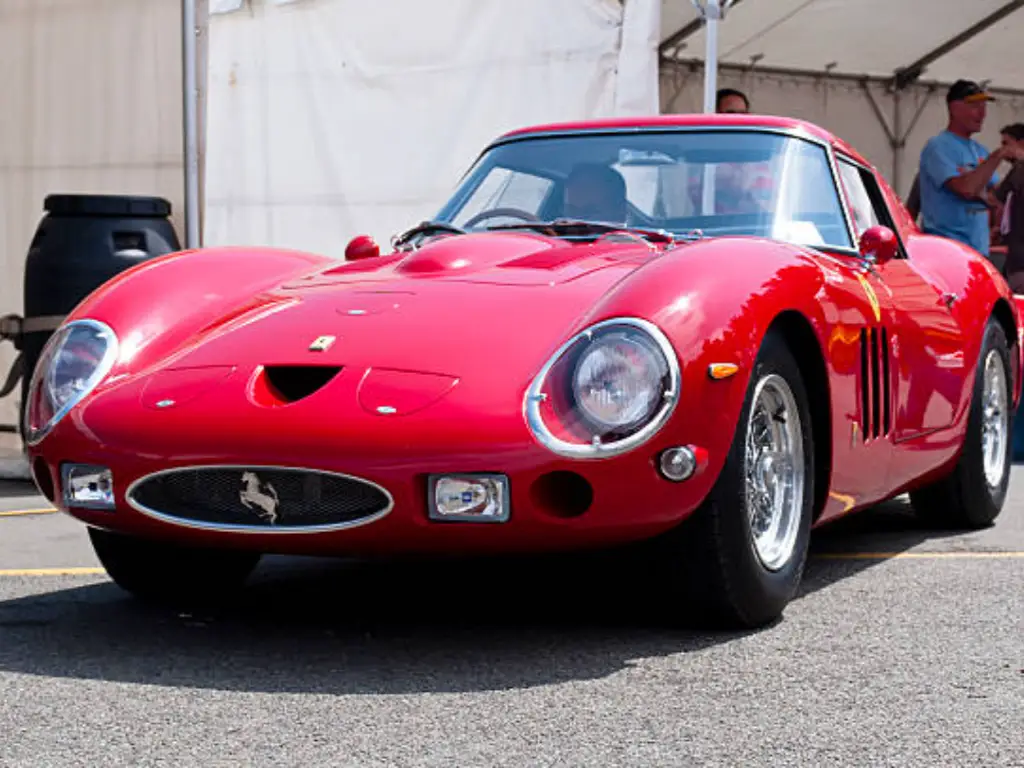
The Ferrari 250 GTO is not just a car; it is the Holy Grail of car collections. Only 36 were ever made. The “GTO” is an acronym that translates to Gran Turismo Omologato, meaning it was constructed to homologate the car to the Group 3 GT racing category.
It is mechanically the apogee of the front-engine, analog generation. In the long hood is the Giotto Bizzarini-designed 3.0-liter Colombo V12 with approximately 300 horsepower – a staggering amount in its day. Forget the computer-aided design; the bodywork, which Scaglietti had designed, is an aerodynamic masterpiece. It was a ferocious race car on the road, having won the International championship in the GT manufacturers, but it was a practical road car.
Nowadays, these cars are the ultimate asset category in the world, and the wealthy buy and sell them on private transactions, which are being reported to be worth more than 70 million dollars.
Lamborghini Miura, 1966-1973
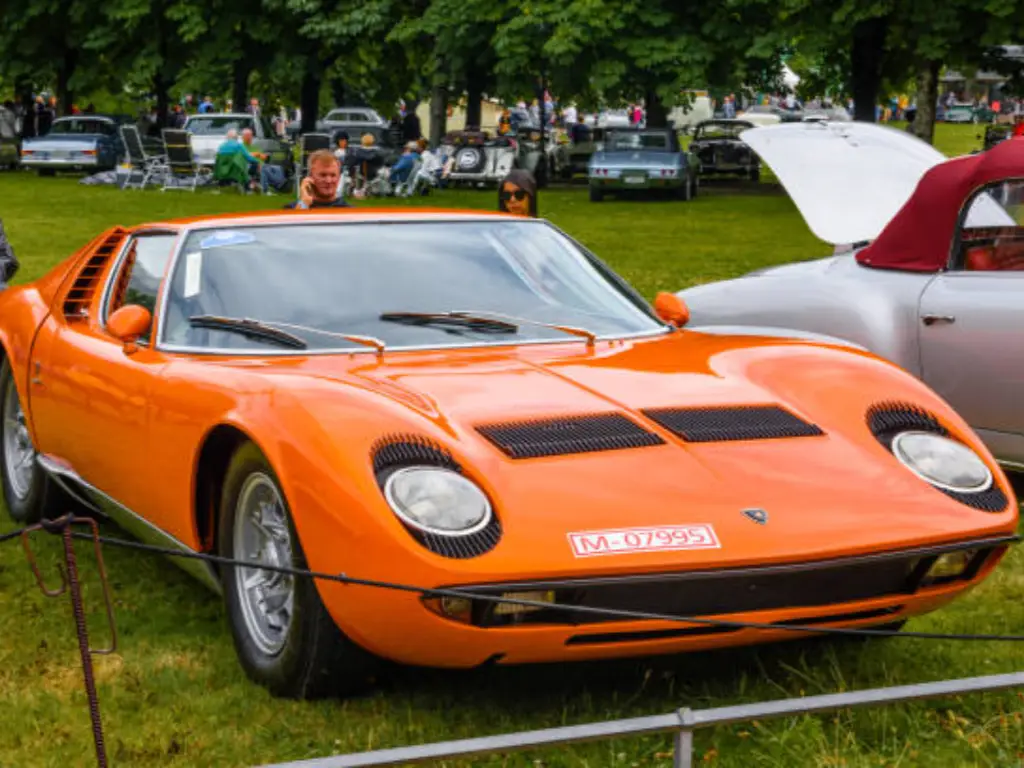
The Lamborghini Miura was the bloody birth of a new generation, in case the 250 GTO was the close of an era. Having been established by Ferruccio Lamborghini, the manufacturer of tractors, with the notorious purpose of retaliating against Enzo Ferrari after an incident with a clutch, the brand required a halo car.
It was a shock to the world when the rolling chassis was displayed at the Geneva Motor Show in 1965, and the entire car in 1966. The Miura, which was designed by Gandini at Bertone, had its V12 at the back of the car over the driver, a position that was previously exclusive to Formula 1 cars. It was the first supercar with its classic eyelashes and low, gritty posture that surrounded the headlights. Its maximum speed of 170 mph was horrifying to the competitors. But this was faulty; the front end was made light at speed by aerodynamic lift, at which no one was interested. It has rewritten the history of Lamborghini.
Fiat 500 (Nuova), 1957-1975
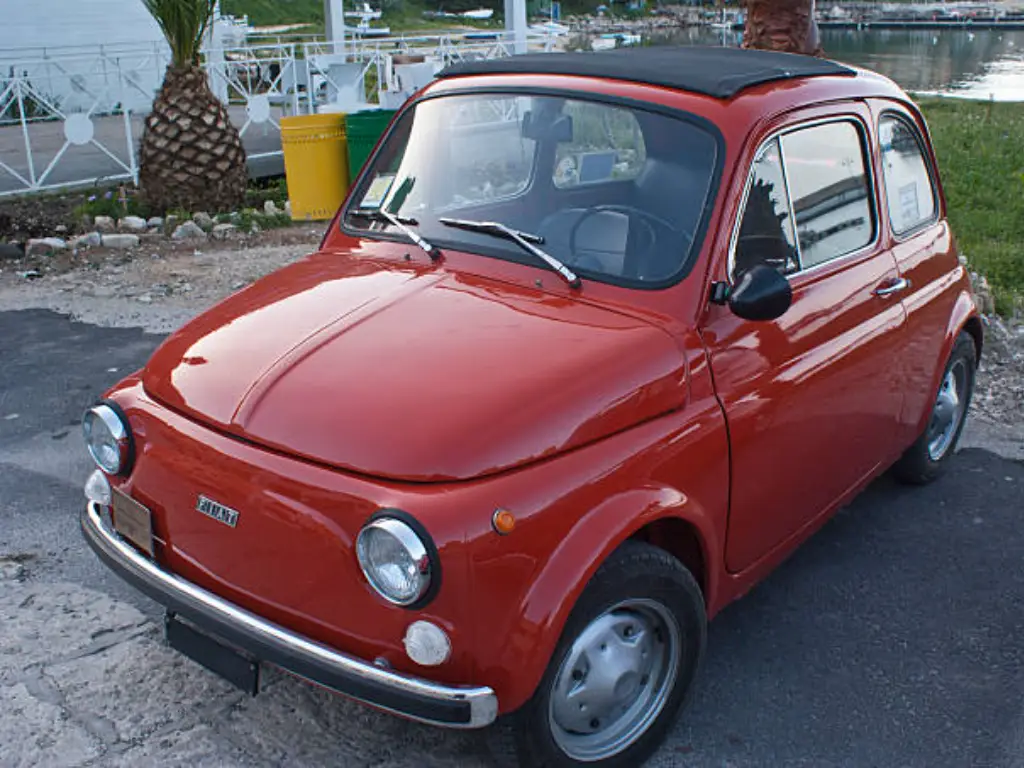
On the other extreme is the Cinquecento. As Ferrari was winning races, the Fiat 500 was moving to a country. It was a space-saving masterpiece of under 3 meters in length, the design of which was by Dante Giacosa.
It had a small 479cc two-cylinder air-cooled engine in the rear that never bothered it because it was about freedom. It had suicide doors (hinged at the back) on early models, and a roll-back canvas top that was done not only to look stylish, but also to reduce the booming sound of the engine in the cabin. The typical 500, later monitored by Karl Abarth to giant-killing racers, is the definition of the visual concept of La Dolce Vita. To fans in the present day, it stands as one of the most easily accessible means of becoming a hobby, a primordial, mechanical feeling of driving in the city.
Alfa Romeo Spider (Duetto), 1966-1969
The Series 1 Alfa Romeo Spider (also known as the Duetto), immortalized by Dustin Hoffman in the movie The Graduate, is arguably the most beautiful of all affordable convertibles. According to the mechanics of the Giulia sedan, the special characteristic is the rear end, which has the Osso di Seppia (cuttlefish bone) or boat-tail.
It had beneath the hood the advanced twin-cam all-aluminum of Alfa, fed by dual Weber carburetors. Combined with a smooth 5-speed gearbox (unusual in most cars, which had 4) and four-wheel disc brakes, it gave an enthusiastic performance that was far above its size. It is the ideal sports car of the weekend- engaging, stylish, and audibly gratifying to the senses.
Lancia Delta Integrale, 1987-1994
To jump to the time of extravagance, the Lancia Delta Integrale is an embodiment of the unquestioned supremacy of Italy in the world of motorsport. It is boxy, flared, violent, and not even close to the round lines of the 1960s.
A spin-off of the prohibition of Group B monsters, the Group A Delta Integrale possessed permanent four-wheel drive and a turbocharged engine, offering huge torque. The car was used to win the World Rally Championship among manufacturers six times in succession- a record which has not been beaten yet. It is a streetcar that is a favorite for its driving capabilities, its sharp steering, and the fact that it can move over any place or terrain at high speed.
Ferrari F40, 1987-1992
The Ferrari F40 became the last vehicle that had the personal endorsement of Enzo before his death. It was constructed as a direct reaction to the technological tour de force of the Porsche 959 when the company commemorated its 40th anniversary.
Ferrari made another choice: simplicity and lightness. The F40 lacked door handles (pull wires), no radio, no carpets, and carbon-kevlar weave could be seen through the thin red paint. It has a 2.9-liter twin-turbocharged V8 and is known to have huge turbo lag and then explode in power. It became the first production automobile that reach the mark of 200 mph. It is crude, unrefined, and perilous- the provisional supercar of its time.
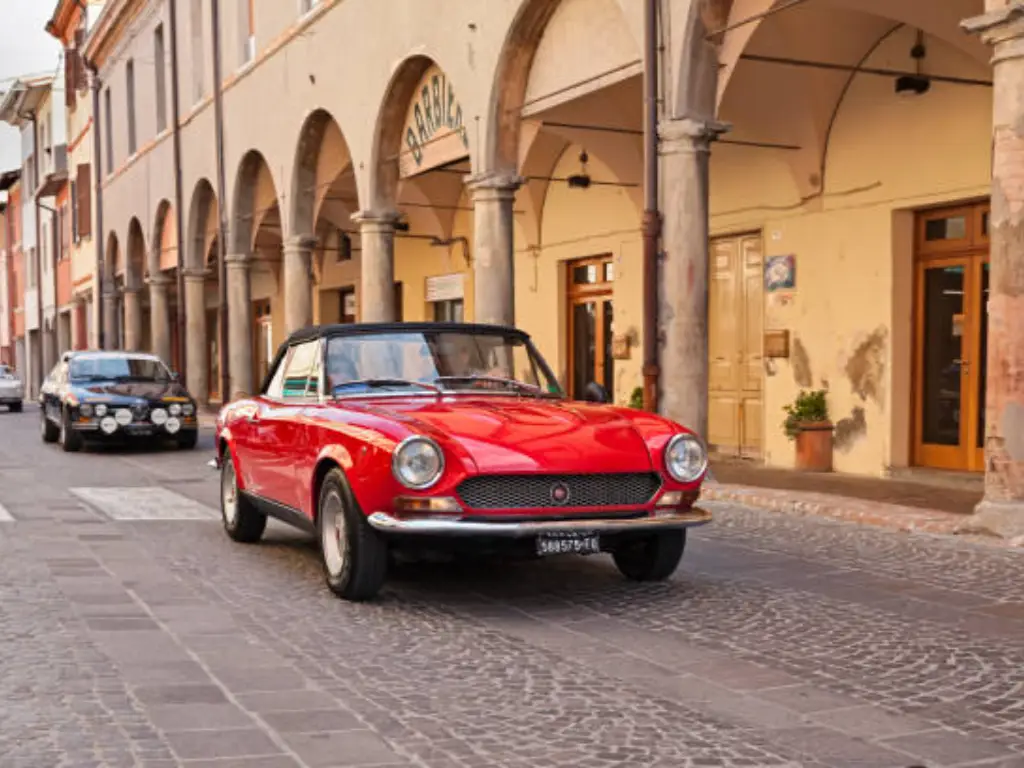
Fiat 124 Sport Spider, 1966-1985
The Fiat 124 Sport Spider was often eclipsed by the Alfa, but it was a masterpiece in engineering and was possibly a nicer car to live with. It was spacious, well-handled, and was in large production, which was designed by Tom Tjaarda at Pininfarina.
Ex former Ferrari engineer Aurelio Lampredi designed the engine, which is famous in terms of durability and tunability. The 124 Spider introduced the Italian roadster to the mass market, especially in the United States.
It is still one of the most feasible options for a first-time customer, as it has the traditional Pininfarina appearance at a Ferrari price.
Table 1: Market Positioning & Restoration Complexity
| Model | Primary Character | Approximate Entry Cost (USD)* | Mechanic Complexity | Parts Availability (General Market) |
| Fiat 500 | Urban Charm | $15,000 – $30,000 | Low | High (Reproduction) |
| Fiat 124 Spider | Weekend Cruiser | $15,000 – $35,000 | Moderate | Moderate |
| Alfa Romeo Spider | Style Icon | $25,000 – $60,000 | Moderate | Moderate to Low |
| Lancia Delta Integrale | Rally Legend | $50,000 – $120,000 | High (Turbo/AWD) | Low (Specific trims) |
| Ferrari F40 | Analog Supercar | $2.5M+ | Extreme | Rare/Specialist Only |
*Prices are estimates based on 2024-2025 market trends.
The Reality Check: Rust, Electricals, and “Quirks”
People tend to lose passion very fast when presented with the bill from the mechanic. Being an owner of a classic Italian car means being ready to accept some “characteristics” which would be just termed as a defect by the non-enthusiasts. It is important to know these facts before one can be a potential owner.
The most infamous adversary is Rust. During the 1970s, several Italian manufacturers began using recycled steel due to labor strikes and supply chain problems, some of which were allegedly obtained in the Soviet Union during trade dealings. Such steel usually contained impurities. As a result, models such as the Lancia Beta or the Alfa Romeo Alfasud were known to dissolve practically overnight. But even the elite models of 1960s Maserati and Iso cars were barely sealed in as regards rust protection. The popular locations of rotting are the rocker panels, wheel arches, and, shockingly, the structural shock towers. Structural integrity should always be ensured before any Pre-Purchase Inspection (PPI); a mechanically perfect engine may be rebuilt, but a Swiss-cheese chassis is usually a death sentence.
Then there are electricals. Italian vehicles tend to use Magneti Marelli parts with ineffective grounding points and insulation of their wiring that crack during decades of heat cycles. It is not unusual to have the headlights grow dim as the brake pedal is pushed, or to find the dials of the gauges shaking about.
And lastly, there are the ergonomics. The stereotypical driving posture of the Italians, the ape, with long arms and short legs, exists. Steering wheels are angled like bus tillers, and the pedals are usually offset towards the right to clear the wheel well. It involves physical accustomation to the machine, which makes the driver fit the car, and not vice versa.
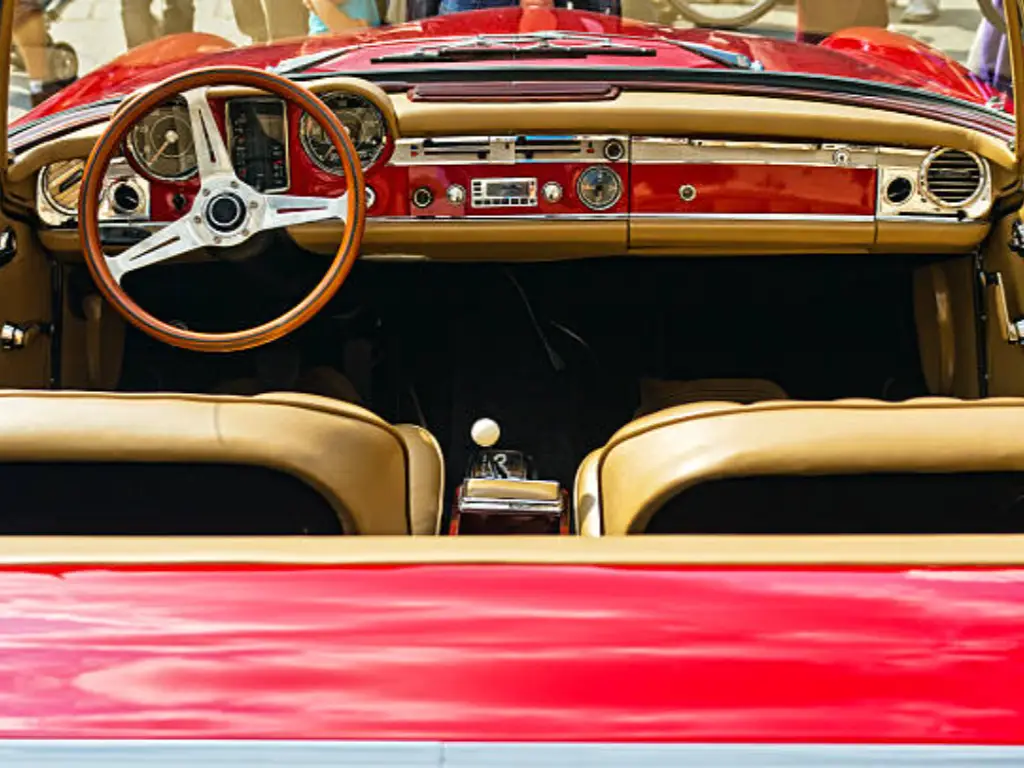
Restoration vs. Preservation: Choosing Your Path
The first thing that comes to mind for a new owner is What do I do with it?
The modern trend in the elite market is preservation. With aged paint, battered leather, and a provenance, an Iso Grifo or a Ferrari 250 can cost the buyer a lot more than a glossy, meticulously re-created one. This method respects the timeline of the vehicle, but it needs a keen strategy to avoid additional deterioration. It is a question of checking corruption, not turning it back.
Nevertheless, cars that are located in the barns or those that are affected by the rust described above often have to undergo restoration. A “Rotisseries Restoration” includes the removal of the chassis to a bare shell. This is costly, but it enables correction of factory defects – like additional application of modern epoxy primers, rust inhibitors, and sound dampers to the fragile bodywork.
One more direction has recently appeared, the Restomod. It means purchasing a vintage shell, such as an Alfa Romeo Giulia, and installing in it a contemporary engine, improved suspension, and a stable electronic system. This makes the aesthetics of the 1960s alive, but offers the reliability of a modern Ford or Toyota, which purists can sneer at.
Whatever route they take, be it preservation, restoration, or modification, both the preserver and the restorer have the same bottleneck, which is functionality. Even a preserved car requires safe brakes, and a restored car requires new rubber seals. This causes the greatest obstacle to the hobby.
The Biggest Ownership Challenge: The Parts Scarcity
The market of classic cars is booming, and the supply chain behind it is broken. In most of these vehicles, the New Old Stock (NOS) parts would have dried up many decades ago.
The choices available to owners are frequently two:
- Used Parts: eBay is betting on parts that are 40 years old. There is a chance that you could find a synchro gearbox with a Maserati, but this was probably out of use as long as the one you are replacing.
- Shoddy Reproduction: Purchasing cheap knockoffs that do not fit properly. An excessive thickness of the rubber seal can cause a door to have a hard time closing, and a suspension bushing consisting of subpar rubber will crack in a few months.
This scarcity is not just a nuisance; it prevents cars. Frequently, restoration shops have customer cars, be it a rare Pantera or a run-of-the-mill Fiat, suspended on lifts for months awaiting a single suspension bushing or a certain carburet float. The international system of distributors is impatiently awaiting a solution that will be consistent.
Reviving Classics with Sunway Autoparts: Precision Meets Heritage
At Sunway Autoparts, we know that a classic car is as good as its component that ensures that the car remains in operation. To date, in 2007, we have developed from an ordinary supplier into a specialized manufacturer that will take on the global problem of unobtainium. We fill the gap between the engineering of the present and the art of the past.
We do not simply imitate; we become better. Through fitment to absolute OEM standards, we combine modern materials, i.e., by substituting brittle old-fashioned cork gaskets with tough modern polymers, we know that our parts will fit like the original, but will take modern driving conditions. It is either Ford, Jaguar, or a rare Italian classic; we will reverse-engineer it to ensure accuracy.
On the distributors and restoration shops, we are your supply chain integrator. With almost 200 suppliers to deal with, we provide uninterrupted quality and adaptable bulk to buy that the small suppliers fail to deliver. Since it produces the mass-control parts of a Fiat 124 Spider to go into a De Tomaso, Sunway offers the infrastructure to make your business run. Don’t be slowed by component shortages; collaborate with us to have a controlled, high-quality supply.
Conclusion
Having a classic Italian car is not often a sensible choice, and it is almost always a satisfying one. It is a promise to a permanent slice of history, a slice of history that smells of unburnt hydrocarbons and roar and turns heads on every corner.
It is the same, whether you are hunting a Fiat 500 to get you through the city streets, managing a restoration shop to get a Lancia Delta Integrale refurbished to the demanding client, or investing in the next big Maserati classic and getting the cars to the streets where they belong.
The rust, electrical gremlins, and parts shortages are very real, but can be overcome. The dream of driving a piece of history is never far away, as now that with the right knowledge, a clear understanding of the market, and a partner like Sunway Autoparts that aids the supply of high-quality and precision-engineered components, the dream is never far.
Don’t let your project stall. Browse the catalog of Sunway Autoparts or call our staff and have a discussion about special manufacturing. With you, I want to make the passion burn and the engines go.
Recent Blog
- Ford Mustang History Decoded: 60 Years of Chassis, Engine Swaps & Market Value
- How to Adjust Car Mirrors Properly: Eliminate Blind Spots for Modern & Classic Cars
- What Does GMC Stand For? The Full Story of GM’s "Professional Grade" Brand
- Antique Car VIN Lookup: The Forensic Guide to Decoding & Verification


 English
  Spanish
  French
  German