
Defining the “best” Mercedes-Benz ever made requires stripping away automotive romanticism and looking at cold, hard data. It is a dual-lens evaluation: for the individual collector, it is about million-mile reliability and asset preservation; for the B2B aftermarket, it is about supply chain viability and parts ecosystems.
According to classic car valuation metrics from institutions, the true blue-chip Mercedes models are not necessarily the ones with the most horsepower. They are the chassis codes that represent the pinnacle of “cost-no-object” engineering—an era when engineers, not accountants, dictated the final product. However, as decades pass, a new variable defines greatness: Maintainability. A legendary chassis is only as good as the availability of its replacement parts.
We evaluate these legendary Mercedes-Benz chassis codes based on four critical pillars:
- Engineering: The mechanical redundancy and innovation at the time of manufacture.
- Reliability: Real-world, long-term durability in daily driving scenarios.
- Collectibility: Current auction block performance and asset appreciation.
- Parts Availability (B2B/B2C): The health of the OEM and aftermarket supply chain for vital components.
The Ultimate Classic Mercedes Comparison Matrix
Before diving into the mechanical deep-end of each model, use this macro-level matrix to understand how the greatest chassis codes stack up against each other across fundamental investment and ownership metrics.
| Chassis Code | Defining Characteristic | Primary Advantage | B2B Supply Chain Health |
|---|---|---|---|
| W123 (1976-1985) | The Million-Mile Benchmark | Indestructible OM617 mechanical diesel architecture | High (Strong aftermarket & OE-spec support) |
| W140 (1991-1998) | Peak Over-Engineering | Unmatched acoustic isolation and ride comfort | Medium (Complex electronics are scarce) |
| W124 500E (1991-1994) | The Porsche Connection | Zuffenhausen hand-assembly & V8 sleeper dynamics | Low (Bespoke body/suspension parts are NLA) |
| W100 Grosser (1963-1981) | Absolute Luxury | 220-bar silent hydraulic automation system | Critical (Requires elite global specialists) |
| W198 300 SL (1954-1957) | The Investment Icon | Tubular space frame & mechanical direct injection | Highly Specialized (Preservation over replacement) |
The W123 Series: The Million-Mile Benchmark
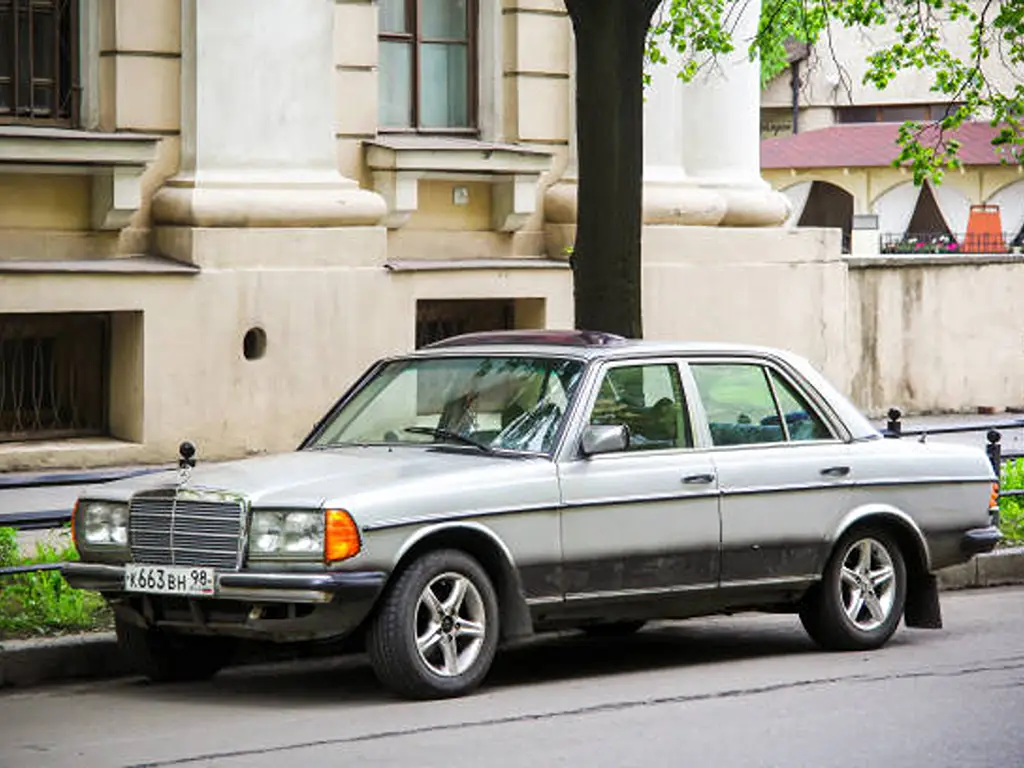
The W123 is the undisputed king of mechanical durability. It cemented Mercedes-Benz’s global reputation for building indestructible vehicles, heavily utilized as taxi fleets across Europe and Africa.
Core Engineering Advantages
The W123 earns its title through four distinct engineering triumphs:
- Unmatched OM617 Durability: Featuring a massive cast-iron block, the five-cylinder diesel engine is designed with immense mechanical redundancy to completely offset standard metal fatigue.
- Pure Mechanical Autonomy: The Bosch fuel injection pump is entirely mechanical. Without relying on an ECU, the engine is immune to complex electrical failures. Even if the battery dies while driving, a push-start keeps the engine firing.
- Overbuilt Suspension Geometry: Designed for global deployment, the W123 features suspension components thick enough to withstand decades of abuse on unpaved roads without catastrophic failure.
- Global Serviceability: Because it lacks complex environmental sensors (DPFs, modern EGRs), it can be serviced with basic hand tools by almost any mechanic worldwide.
The Flaw: Power output is notoriously anemic (0-60 mph often exceeds 20 seconds). More critically, 1970s rust-proofing was subpar, making structural corrosion the primary killer.
The Solution: Source vehicles from dry climates. B2B shops should offer comprehensive undercoating and chassis preservation services.
The W140 S-Class: The Peak of Over-Engineering
Reportedly costing over $1 billion in R&D, the W140 was the last S-Class designed with a “cost-is-no-object” philosophy. It was a technological marvel that set the standard for modern luxury.
Core Engineering Advantages
The W140 defined 90s luxury through these four uncompromising features:
- Vault-Like Acoustic Isolation: The introduction of double-pane soundproof glazing and extreme cabin insulation resulted in a vehicle where closing the door physically mutes the outside world.
- Parametric Power Steering: A highly advanced steering system for its era that provided feather-light feedback at parking speeds while dynamically tightening for high-speed Autobahn stability.
- Pioneering CAN-Bus Integration: One of the earliest comprehensive uses of Controller Area Network architecture, allowing disparate electronic modules (from climate to transmission) to communicate seamlessly.
- Ride Comfort Supremacy: Pneumatic door closing assists (soft-close) and a heavily isolated multi-link rear suspension created a ride quality that rivaled modern Rolls-Royces.
The Flaw: To comply with 1990s German recycling laws, Mercedes utilized biodegradable wiring harnesses (1992-1996). Engine heat turns the insulation to dust, causing short circuits, fried ECUs, and fires. The vehicle’s massive weight also rapidly destroys suspension bushings.
The Solution: Buyers must verify the installation of an updated, silicone wiring harness. B2B suppliers possess high-margin opportunities by stocking heavy-duty suspension rebuild kits.
The W124 500E: The Porsche Assembly Connection
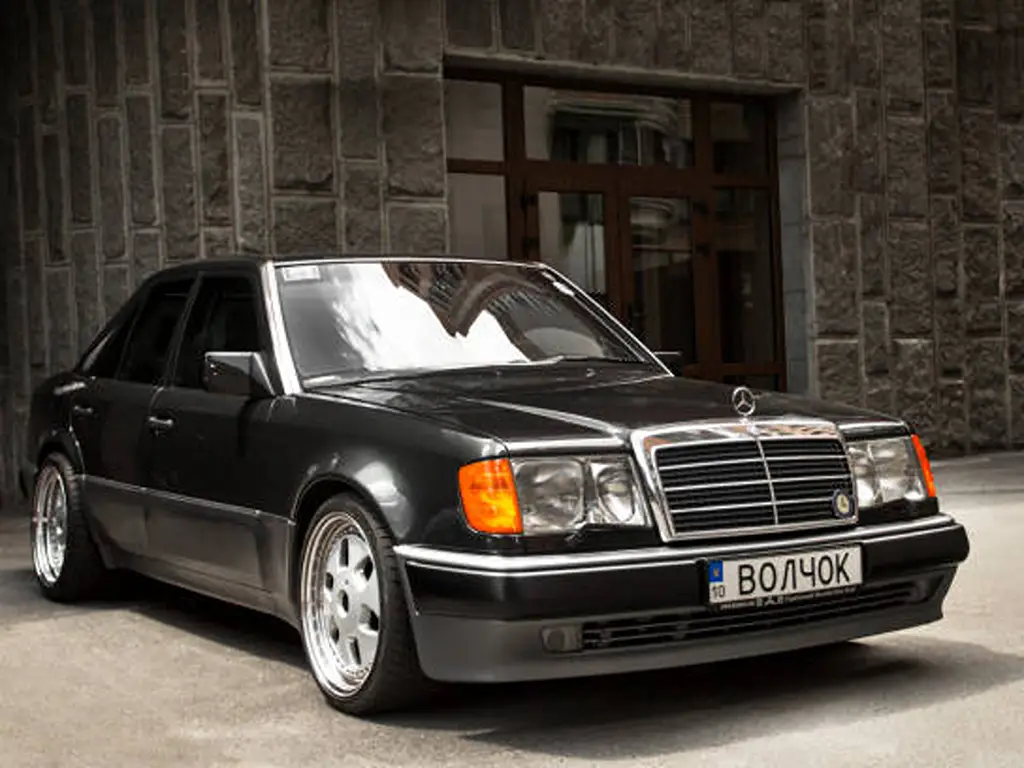
The 500E is the ultimate “sleeper” sedan. To fit the massive 5.0L M119 V8 into the mid-size W124 chassis, Mercedes contracted Porsche to redesign the geometry and hand-build the car.
Core Engineering Advantages
This legendary collaboration yielded four distinct benefits:
- Zuffenhausen Hand-Assembly: Each 500E took 18 days to build, being transported back and forth between Mercedes and Porsche facilities, ensuring bespoke, hand-crafted precision.
- M119 V8 Linear Power: The 322-horsepower quad-cam V8 provided relentless, naturally aspirated torque, making it one of the fastest four-door vehicles of its era.
- Bespoke Widebody Track: Porsche engineers widened the track and hand-flared the wheel arches, drastically improving lateral grip and high-speed cornering stability compared to standard W124s.
- Perfect Sleeper Duality: It maintained the understated, conservative aesthetic of a standard executive sedan while housing supercar-level performance components.
The Flaw: Stuffing a V8 into a compact bay causes severe engine heat soak. More dangerously for owners, the bespoke Porsche-designed suspension links and widened body panels are No Longer Available (NLA) from Mercedes-Benz.
The Solution: Upgraded aluminum radiators and independent transmission coolers are necessary. Because a minor fender-bender can total the car due to parts scarcity, Paint Protection Film (PPF) is mandatory.
The W100 Grosser: Absolute Luxury
The Mercedes-Benz 600 “Grosser” represents the absolute ceiling of automotive prestige, famously owned by royalty and celebrities. Beneath the wood and leather lies an intimidating engineering matrix.
Core Engineering Advantages
The W100 established its dominance through these four engineering extremes:
- 220-Bar Komfort-Hydraulik: Instead of electric motors, a central 3,200 psi mineral oil hydraulic system operates the windows, seats, sunroof, and trunk with silent, violent speed.
- Armored-Grade M100 V8: The 6.3L V8 was specifically engineered to produce massive torque capable of propelling heavy, armored, long-wheelbase Pullman variants effortlessly.
- Advanced Air Suspension: Utilizing engine-driven compressors, the complex air suspension provided a cloud-like ride that completely isolated the cabin from road imperfections.
- Coachbuilt Exclusivity: The interior and exterior could be endlessly customized, cementing its status as a bespoke masterpiece rather than a production car.
The Flaw: If a 50-year-old rubber O-ring perishes under 3,200 psi of pressure, hydraulic oil instantly detonates throughout the cabin, permanently ruining irreplaceable interiors.
The Solution: There are no DIY shortcuts. The valve blocks must be sent to a handful of global experts (e.g., Karl Middelhauve) for complete, precision rebuilds.
The 300 SL Gullwing: The Ultimate Investment
The W198 300 SL is a blue-chip alternative asset. Its iconic “Gullwing” doors were not a styling exercise, but a strict engineering compromise forced by its racing DNA.
Core Engineering Advantages
This mid-century masterpiece revolutionized the sports car world via four key innovations:
- Mechanical Direct Injection: It was the world’s first production car to feature a 4-stroke mechanical direct fuel injection system, courtesy of Bosch, vastly improving power and efficiency.
- Tubular Space Frame: Originating from Le Mans racing, the ultra-rigid, lightweight steel tube frame provided unprecedented torsional stiffness, though it required the high door sills that necessitated the Gullwing doors.
- Aerodynamic Optimization: The bodywork featured a drag coefficient that was decades ahead of its time, allowing for a top speed exceeding 160 mph.
- Blue-Chip Asset Status: As the definitive post-war sports car, its historical significance guarantees multi-million-dollar valuations at auction, functioning as a highly stable financial asset.
The Flaw: The cabin is famously hot (windows do not roll down), the dry-sump oil system requires tedious warm-up procedures, and the early swing-axle rear suspension is prone to dangerous snap-oversteer during limit driving.
The Solution: Value is entirely dictated by “Matching Numbers.” Maintenance focuses on climate-controlled preservation, OEM-correct fluid flushes, and gentle mechanical exercise rather than aggressive modification.
Modern AMG Classics & Technology Transfer
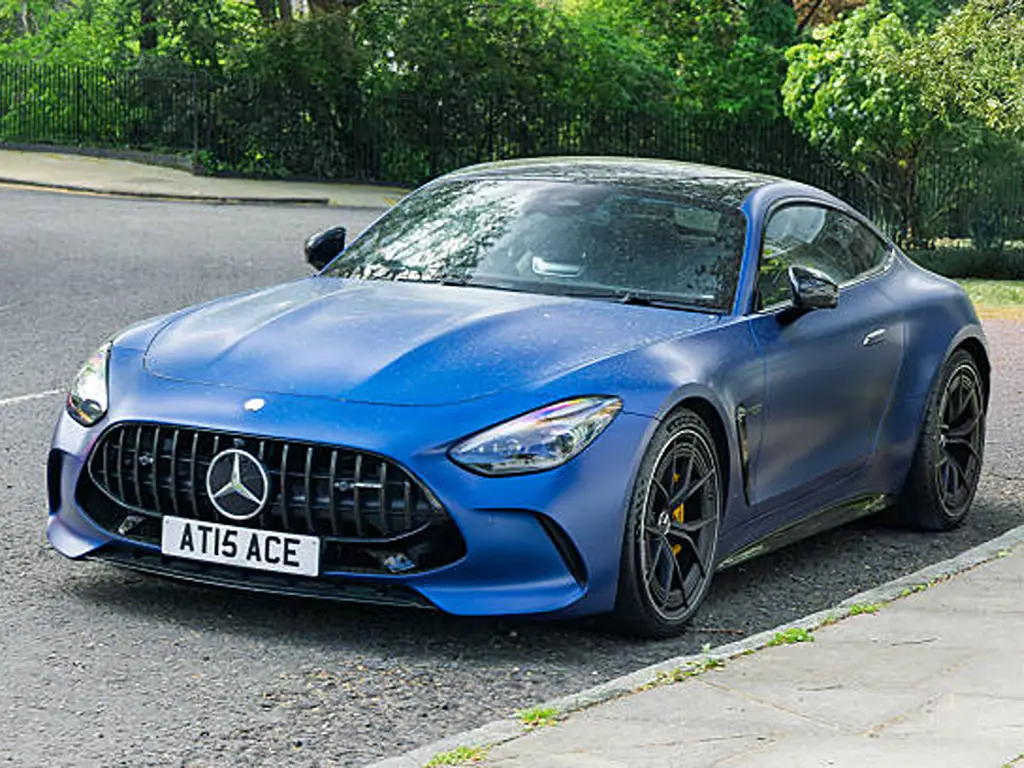
Modern vehicles like the SLS AMG and AMG ONE bridge the gap between analog aggression and hyper-modern telemetry, rewriting the rules for modern classic valuation.
Core Engineering Advantages
Modern AMGs justify their place on the “best ever” list through four modern benchmarks:
- M156 Acoustic Signature: The 6.2L naturally aspirated V8 is widely considered one of the greatest sounding and most responsive engines in modern automotive history.
- F1 Hybrid Tech Transfer: Current hypercars directly scale down Formula 1 MGU-H and MGU-K kinetic and thermal energy recovery systems for street use.
- Carbon-Ceramic Stopping Power: The integration of massive carbon-ceramic rotors provides fade-free deceleration even under brutal track conditions.
- Active Aerodynamics: Moving beyond static wings, modern AMGs utilize dynamic DRS systems, underbody flaps, and active diffusers to perfectly balance drag and downforce.
The Flaw: Extreme complexity. Highly sophisticated thermal management systems are prone to track-day heat decay, and electronic CAN-bus diagnostics require specialized, expensive software.
The Solution: Maintenance shifts from turning wrenches to software flashing. B2B aftermarket providers focus on high-margin consumables, such as replacement carbon-ceramic rotors (often $15,000+) and custom active aero protection.
The Final Verdict: Which Classic Mercedes Should You Choose?
We have analyzed the engineering marvels, but a legendary chassis is only the “best” if it aligns with your specific goals. Stop guessing. Here is the definitive conclusion based on real-world buyer intents, maintenance realities, and market data.
The Best Overall Historically
Winner: W140 S-Class
It represents the absolute zenith of the “cost-is-no-object” engineering era. It successfully bridges the gap between classic vault-like build quality and modern daily usability (double-pane glass, powerful AC, advanced suspension). It is the quintessential Mercedes-Benz experience.
The Most Reliable & Durable
Winner: W123 (Specifically 300D)
No other vehicle on earth can match the OM617 diesel engine for sheer refusal to die. It is the million-mile champion. With zero dependency on complex ECUs, it is the only classic Mercedes you could confidently drive across a desert continent tomorrow.
The Most Collectible
Winner: W198 300 SL Gullwing
It is no longer just a car; it is a blue-chip financial asset. With values consistently in the multi-millions, it is immune to standard market depreciation. It is the ultimate crown jewel for high-net-worth preservation portfolios.
The Best to Buy Right Now
Winner: W124 500E
It offers the perfect storm for modern collectors: Porsche assembly pedigree, modern V8 power that keeps up with today’s traffic, and a rapidly appreciating market value, all packaged in a chassis that doesn’t require $50,000 hydraulic rebuilds like the W100.
The Easiest to Restore & Maintain
Winner: W123 & W124 Series
For DIY enthusiasts and B2B restoration shops, these chassis codes are goldmines. They are mechanically logical, and most importantly, they benefit from an incredibly robust aftermarket and OE-spec reproduction parts supply chain. You won’t find yourself permanently stranded by an NLA (No Longer Available) critical component.
Navigating the Classic Mercedes-Benz Ecosystem
Keeping your chosen legendary chassis on the road requires a masterful understanding of the global supply chain. Below is the operational playbook for buyers and B2B suppliers.
Individual Buyers: The 4-Step Sourcing Guide
Step 1: VIN & Data Card Verification
Never buy based on badges. Use the Mercedes EPC (WIS/ASRA) system to extract the original Data Card. Verify the engine, transmission, and exact factory options.
Step 2: Part Tier Hierarchy
Strictly prioritize your budget: Use Genuine (OEM-stamped) for engine internals. Use OES (Original Equipment Supplier) for cooling/electronics. Use high-quality aftermarket for cosmetic trim.
Step 3: Physical Wiring Inspection
Specifically for 90s chassis (W140/W124), physically inspect the engine wiring harness. Use a multimeter to test resistance. Brittle, flaking insulation is a red flag.
Step 4: Maintenance Prioritization
Force a rigid spending sequence: Safety/Brakes ➔ Drivetrain ➔ Suspension ➔ Cosmetics. Do not spend money on paint while riding on decayed ball joints.
Suppliers: Supply Chain Strategy
For auto parts distributors, classic Mercedes-Benz parts are lucrative, provided you manage inventory risk and navigate the severe discontinuation of OEM support.
- High-Turnover Inventory Mapping: Focus working capital on high-volume legacy chassis (W124, W201, W140, W126). Stock control arm bushings, engine mounts, and ignition modules.
- NOS vs. OE-Spec Balance: New Old Stock (NOS) parts command massive premiums but are unreliable. Build a hybrid supply chain utilizing reliable OE-spec reproduction parts for daily fulfillment.
- Supply Chain QC: When importing rubber parts, mandate ozone and thermal aging test reports. 20-year-old shelf-aged rubber degrades instantly upon installation.
- Defeating the NLA Dead End: When Mercedes marks a component as No Longer Available (NLA), distributors must secure exclusive reproduction pipelines to maintain catalog viability.
The Ultimate TCO (Total Cost of Ownership) Matrix
| Chassis Code | Est. Annual Maintenance | Biggest Red Flag / Catastrophic Risk | Parts Availability & Supply Chain |
|---|---|---|---|
| W123 (300D) | $500 – $1,000 | Severe structural chassis rust (Floor pans/Sills) | High – Excellent aftermarket & OE-spec reproduction. |
| W140 (S-Class) | $2,500 – $4,000 | Biodegradable wiring fires / A/C Evaporator | Medium – Electronic modules require specialized sourcing. |
| W124 (500E) | $3,000 – $5,000 | Bespoke Porsche suspension wear & heat soak | Low – Widebody panels & unique suspension are NLA. |
| W100 (600) | $10,000+ | 220-Bar Hydraulic line explosion ruining interior | Critical – Requires global specialist networking. |
| W198 (300 SL) | Asset Preserv. Costs | Snap-oversteer crashes / Improper cold starts | Specialized – Sourced directly via Classic Centers. |
Are discontinued NLA parts bottlenecking your restoration projects or B2B distribution catalog?
The best Mercedes ever made is the one you can still maintain. Sunway Autoparts utilizes advanced 3D reverse engineering to seamlessly reproduce discontinued parts for W123, W124, W126, and W201 chassis, strictly built to OE specifications. Explore Sunway’s OE-Spec Manufacturing Solutions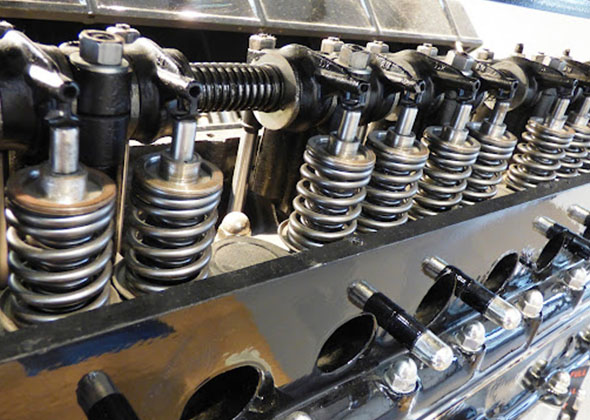


 English
  Spanish
  French
  German